
In The Descent of Man Darwin addresses many of the issues raised by his notorious Origin of Species: finding in the traits and instincts of animals the origins of the mental abilities of humans, of language, of our social structures and our moral capacities, he attempts to show that there is no clear dividing line between animals and humans. Most importantly, he accounts for what Victorians called the ‘races’ of mankind by means of what he calls sexual selection. This book presents a full explanation of Darwin’s ideas about sexual selection, including his belief that many important characteristics of human beings and animals have emerged in response to competition for mates.
This was a controversial work. Yet Darwin tried hard to avoid being branded as a radical revolutionary. He is steeped in Victorian sensibilities regarding gender and cultural differences: he sees human civilization as a move from barbarous savagery to modern gentlefolk, and women as more emotional and less intellectual than men, thus providing a biological basis for the social assumptions and prejudices of the day. The Descent of Man played a major role in the emergence of social Darwinism.
This complete version of the first edition gives the modern reader an unparalleled opportunity to engage directly with Darwin’s proposals, launched in the midst of continuing controversy over On the Origin of Species.
Janet Browne is the author of the prize-winning biography, Charles Darwin: Voyaging and Charles Darwin: The Power of Place.
1116994665
This was a controversial work. Yet Darwin tried hard to avoid being branded as a radical revolutionary. He is steeped in Victorian sensibilities regarding gender and cultural differences: he sees human civilization as a move from barbarous savagery to modern gentlefolk, and women as more emotional and less intellectual than men, thus providing a biological basis for the social assumptions and prejudices of the day. The Descent of Man played a major role in the emergence of social Darwinism.
This complete version of the first edition gives the modern reader an unparalleled opportunity to engage directly with Darwin’s proposals, launched in the midst of continuing controversy over On the Origin of Species.
Janet Browne is the author of the prize-winning biography, Charles Darwin: Voyaging and Charles Darwin: The Power of Place.
The Descent of Man
In The Descent of Man Darwin addresses many of the issues raised by his notorious Origin of Species: finding in the traits and instincts of animals the origins of the mental abilities of humans, of language, of our social structures and our moral capacities, he attempts to show that there is no clear dividing line between animals and humans. Most importantly, he accounts for what Victorians called the ‘races’ of mankind by means of what he calls sexual selection. This book presents a full explanation of Darwin’s ideas about sexual selection, including his belief that many important characteristics of human beings and animals have emerged in response to competition for mates.
This was a controversial work. Yet Darwin tried hard to avoid being branded as a radical revolutionary. He is steeped in Victorian sensibilities regarding gender and cultural differences: he sees human civilization as a move from barbarous savagery to modern gentlefolk, and women as more emotional and less intellectual than men, thus providing a biological basis for the social assumptions and prejudices of the day. The Descent of Man played a major role in the emergence of social Darwinism.
This complete version of the first edition gives the modern reader an unparalleled opportunity to engage directly with Darwin’s proposals, launched in the midst of continuing controversy over On the Origin of Species.
Janet Browne is the author of the prize-winning biography, Charles Darwin: Voyaging and Charles Darwin: The Power of Place.
This was a controversial work. Yet Darwin tried hard to avoid being branded as a radical revolutionary. He is steeped in Victorian sensibilities regarding gender and cultural differences: he sees human civilization as a move from barbarous savagery to modern gentlefolk, and women as more emotional and less intellectual than men, thus providing a biological basis for the social assumptions and prejudices of the day. The Descent of Man played a major role in the emergence of social Darwinism.
This complete version of the first edition gives the modern reader an unparalleled opportunity to engage directly with Darwin’s proposals, launched in the midst of continuing controversy over On the Origin of Species.
Janet Browne is the author of the prize-winning biography, Charles Darwin: Voyaging and Charles Darwin: The Power of Place.
10.5
In Stock
5
1

The Descent of Man
464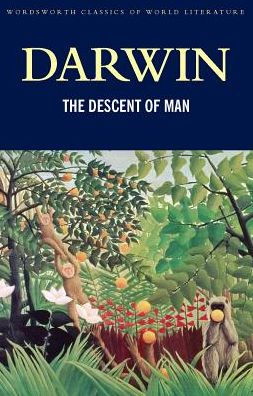
The Descent of Man
464Paperback(UK ed.)
$10.50
10.5
In Stock

Product Details
| ISBN-13: | 9781840226980 |
|---|---|
| Publisher: | Wordsworth Editions, Limited |
| Publication date: | 07/28/2013 |
| Series: | Classics of World Literature |
| Edition description: | UK ed. |
| Pages: | 464 |
| Product dimensions: | 5.00(w) x 7.70(h) x 1.70(d) |
About the Author
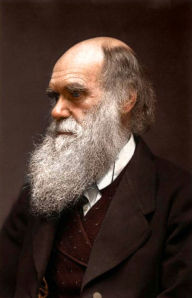
What People are Saying About This
From the B&N Reads Blog