
Sato Reang enjoys an idyllic childhood of soccer, fighting crickets, and mischief in his Indonesian village—until the day he must be circumcised, and his observant father forces him into a life of Islamic piety. For years, Sato outwardly obeys his father, but all the while the boy chafes at the strictures of his religious routine, longing for everyday pleasures and vowing to himself that he will “become a child who was not pious.” His freewheeling linked anecdotes—mixing worldliness and naïveté, cruelty and innocence—are narrated with a toggling between first and third person (“I”/“he” or "Sato Reang") that potently conveys his disassociation. His adolescent, hormone-fueled crotchetiness expresses dissent: I stopped going to mosque. I no longer joined in worship. I never said my prayers before bed. Sato Reang eats with his left hand—so stupid—and barges in where he pleases, without calling out a greeting. If I was feeling lazy, I’d just piss on a banana tree, and I wouldn’t wash myself off after. But amid various mysterious portents and even within the hilarity, Sato’s callow sang froid (with its undercurrents of pain and shame)—and his comic pranks—soon invite tragedy.
A psychologically timeless story—anyone who’s ever had an overbearing parent and resented them will relate—The Dog Meows, the Cat Barks is Eka Kurniawan’s most contemporarily relevant book: he’s thinking about (and rejecting) militancy and moral certitude of any kind.
Sato Reang enjoys an idyllic childhood of soccer, fighting crickets, and mischief in his Indonesian village—until the day he must be circumcised, and his observant father forces him into a life of Islamic piety. For years, Sato outwardly obeys his father, but all the while the boy chafes at the strictures of his religious routine, longing for everyday pleasures and vowing to himself that he will “become a child who was not pious.” His freewheeling linked anecdotes—mixing worldliness and naïveté, cruelty and innocence—are narrated with a toggling between first and third person (“I”/“he” or "Sato Reang") that potently conveys his disassociation. His adolescent, hormone-fueled crotchetiness expresses dissent: I stopped going to mosque. I no longer joined in worship. I never said my prayers before bed. Sato Reang eats with his left hand—so stupid—and barges in where he pleases, without calling out a greeting. If I was feeling lazy, I’d just piss on a banana tree, and I wouldn’t wash myself off after. But amid various mysterious portents and even within the hilarity, Sato’s callow sang froid (with its undercurrents of pain and shame)—and his comic pranks—soon invite tragedy.
A psychologically timeless story—anyone who’s ever had an overbearing parent and resented them will relate—The Dog Meows, the Cat Barks is Eka Kurniawan’s most contemporarily relevant book: he’s thinking about (and rejecting) militancy and moral certitude of any kind.

The Dog Meows, the Cat Barks
128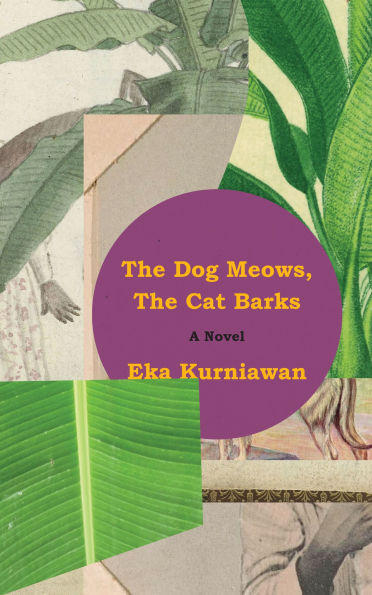
The Dog Meows, the Cat Barks
128
Product Details
| ISBN-13: | 9780811239769 |
|---|---|
| Publisher: | New Directions Publishing Corporation |
| Publication date: | 03/24/2026 |
| Pages: | 128 |
| Product dimensions: | 4.50(w) x 7.25(h) x (d) |