Papal supremacy in ecclesiastical matters had long been asserted and was, by and large, unchallenged. But in the late 11th century, Pope Gregory VII asserted authority in the temporal sphere as well. In a long dispute with Emperor Henry IV over who had the right to appoint bishops and abbots, Gregory decreed that the pope “alone may use the imperial insignia,” that “all princes shall kiss the feet of the pope alone,” and “that it may be permitted to him to depose emperors.” The popes asserted their dominion over the whole of Christendom, based on a spurious document known as the Donation of Constantine. This 8th century forgery asserted that Constantine the Great had gifted all of the West to Pope Sylvester I, in gratitude for his baptism. There is, of course, no evidence of Sylvester ever exercising imperial powers, and the document was determined to be a forgery in the 15th century. But beyond the Donation, Gregory could also point to the fact that emperors had received the imperial anointing and crown from the hands of the pope since Charlemagne.
What was new was the vehemence with which Gregory pursued his claims. After a bitter exchange between pope and emperor over ecclesiastical governance, he attempted to break the impasse by excommunicating and deposing Henry. Conversely, the emperors asserted that God had charged the temporal authorities with the protection and guidance of the Church of God. After all, the German emperors before Henry IV had confirmed papal elections, resolved ecclesiastical disputes, regulated dioceses, and appointed their bishops.
In conjunction with these disputes, supporters of each side formed political factions and thus found themselves at odds with their rivals. The Guelphs and Ghibellines fought several conflicts in Italy in the 12th and 13th centuries, and they were significant in laying the grounds for the independence of the Italian city-states, as well as for Germany.
Papal supremacy in ecclesiastical matters had long been asserted and was, by and large, unchallenged. But in the late 11th century, Pope Gregory VII asserted authority in the temporal sphere as well. In a long dispute with Emperor Henry IV over who had the right to appoint bishops and abbots, Gregory decreed that the pope “alone may use the imperial insignia,” that “all princes shall kiss the feet of the pope alone,” and “that it may be permitted to him to depose emperors.” The popes asserted their dominion over the whole of Christendom, based on a spurious document known as the Donation of Constantine. This 8th century forgery asserted that Constantine the Great had gifted all of the West to Pope Sylvester I, in gratitude for his baptism. There is, of course, no evidence of Sylvester ever exercising imperial powers, and the document was determined to be a forgery in the 15th century. But beyond the Donation, Gregory could also point to the fact that emperors had received the imperial anointing and crown from the hands of the pope since Charlemagne.
What was new was the vehemence with which Gregory pursued his claims. After a bitter exchange between pope and emperor over ecclesiastical governance, he attempted to break the impasse by excommunicating and deposing Henry. Conversely, the emperors asserted that God had charged the temporal authorities with the protection and guidance of the Church of God. After all, the German emperors before Henry IV had confirmed papal elections, resolved ecclesiastical disputes, regulated dioceses, and appointed their bishops.
In conjunction with these disputes, supporters of each side formed political factions and thus found themselves at odds with their rivals. The Guelphs and Ghibellines fought several conflicts in Italy in the 12th and 13th centuries, and they were significant in laying the grounds for the independence of the Italian city-states, as well as for Germany.


The Guelphs and Ghibellines: The History of the Rival Political Factions in Medieval Italy
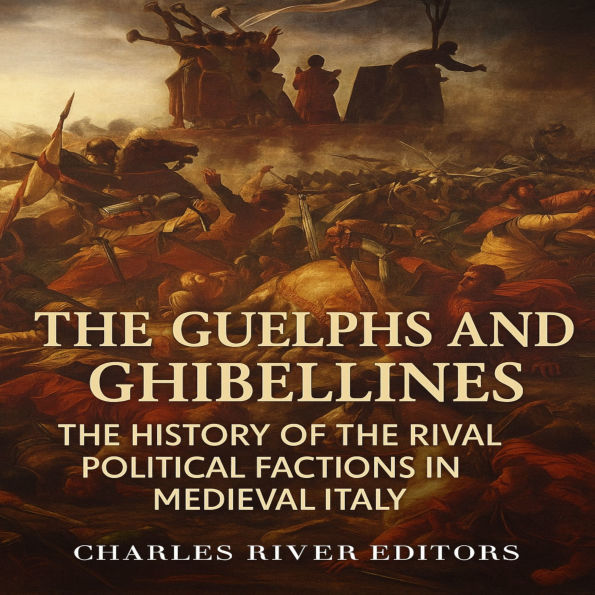
The Guelphs and Ghibellines: The History of the Rival Political Factions in Medieval Italy
FREE
with a B&N Audiobooks Subscription

Product Details
| BN ID: | 2940195375966 |
|---|---|
| Publisher: | Charles River Editors |
| Publication date: | 06/11/2025 |
| Edition description: | Unabridged |
Videos