
“We have been given a powerful and often uplifting vision of what it is to be truly human.” —John Cottingham, The Tablet
In seminal works ranging from Sources of the Self to A Secular Age, Charles Taylor has shown how we create possible ways of being, individually and as a society. The Language Animal examines the foundation of this generative process.
For centuries, philosophers have been divided on the nature of language. Rational empiricists—Hobbes, Locke, Condillac, and their heirs—assert that language is a tool to encode and communicate information. Yet this view neglects language’s crucial role in shaping the thought it expresses. Taylor argues that language does not merely describe; it constitutes meaning. Nor is linguistic capacity innately possessed. We learn language from others, and our individual selves emerge from the conversation.
Taylor expands the thinking of the German Romantics Hamann, Herder, and Humboldt into a theory of linguistic holism. Language is intellectual, but it is also enacted in artistic portrayals, gestures, metaphors, tones of voice, and the shifts of emphasis and attitude that accompany speech. Language recognizes no boundary between mind and body. In illuminating the full capacity of the language animal, Taylor sheds light on the very question of what it is to be human.
1122850949
In seminal works ranging from Sources of the Self to A Secular Age, Charles Taylor has shown how we create possible ways of being, individually and as a society. The Language Animal examines the foundation of this generative process.
For centuries, philosophers have been divided on the nature of language. Rational empiricists—Hobbes, Locke, Condillac, and their heirs—assert that language is a tool to encode and communicate information. Yet this view neglects language’s crucial role in shaping the thought it expresses. Taylor argues that language does not merely describe; it constitutes meaning. Nor is linguistic capacity innately possessed. We learn language from others, and our individual selves emerge from the conversation.
Taylor expands the thinking of the German Romantics Hamann, Herder, and Humboldt into a theory of linguistic holism. Language is intellectual, but it is also enacted in artistic portrayals, gestures, metaphors, tones of voice, and the shifts of emphasis and attitude that accompany speech. Language recognizes no boundary between mind and body. In illuminating the full capacity of the language animal, Taylor sheds light on the very question of what it is to be human.
The Language Animal: The Full Shape of the Human Linguistic Capacity
“We have been given a powerful and often uplifting vision of what it is to be truly human.” —John Cottingham, The Tablet
In seminal works ranging from Sources of the Self to A Secular Age, Charles Taylor has shown how we create possible ways of being, individually and as a society. The Language Animal examines the foundation of this generative process.
For centuries, philosophers have been divided on the nature of language. Rational empiricists—Hobbes, Locke, Condillac, and their heirs—assert that language is a tool to encode and communicate information. Yet this view neglects language’s crucial role in shaping the thought it expresses. Taylor argues that language does not merely describe; it constitutes meaning. Nor is linguistic capacity innately possessed. We learn language from others, and our individual selves emerge from the conversation.
Taylor expands the thinking of the German Romantics Hamann, Herder, and Humboldt into a theory of linguistic holism. Language is intellectual, but it is also enacted in artistic portrayals, gestures, metaphors, tones of voice, and the shifts of emphasis and attitude that accompany speech. Language recognizes no boundary between mind and body. In illuminating the full capacity of the language animal, Taylor sheds light on the very question of what it is to be human.
In seminal works ranging from Sources of the Self to A Secular Age, Charles Taylor has shown how we create possible ways of being, individually and as a society. The Language Animal examines the foundation of this generative process.
For centuries, philosophers have been divided on the nature of language. Rational empiricists—Hobbes, Locke, Condillac, and their heirs—assert that language is a tool to encode and communicate information. Yet this view neglects language’s crucial role in shaping the thought it expresses. Taylor argues that language does not merely describe; it constitutes meaning. Nor is linguistic capacity innately possessed. We learn language from others, and our individual selves emerge from the conversation.
Taylor expands the thinking of the German Romantics Hamann, Herder, and Humboldt into a theory of linguistic holism. Language is intellectual, but it is also enacted in artistic portrayals, gestures, metaphors, tones of voice, and the shifts of emphasis and attitude that accompany speech. Language recognizes no boundary between mind and body. In illuminating the full capacity of the language animal, Taylor sheds light on the very question of what it is to be human.
27.95
Pre Order
5
1
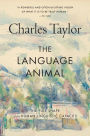

The Language Animal: The Full Shape of the Human Linguistic Capacity
368
The Language Animal: The Full Shape of the Human Linguistic Capacity
368
27.95
Pre Order

Product Details
| ISBN-13: | 9780674303584 |
|---|---|
| Publisher: | Harvard University Press |
| Publication date: | 03/10/2026 |
| Pages: | 368 |
| Product dimensions: | 6.12(w) x 9.25(h) x (d) |
About the Author
From the B&N Reads Blog