
In this first of three books inspired by the life of Josephine Bonaparte, Sandra Gulland has created a novel of immense and magical proportions. We meet Josephine in the exotic and lush Martinico, where an old island woman predicts that one day she will be queen. The journey from the remote village of her birth to the height of European elegance is long, but Josephine's fortune proves to be true. By way of fictionalized diary entries, we traverse her early years as she marries her one true love, bears his children, and is left betrayed, widowed, and penniless. It is Josephine's extraordinary charm, cunning, and will to survive that catapults her to the heart of society, where she meets Napoleon, whose destiny will prove to be irrevocably intertwined with hers.
In this first of three books inspired by the life of Josephine Bonaparte, Sandra Gulland has created a novel of immense and magical proportions. We meet Josephine in the exotic and lush Martinico, where an old island woman predicts that one day she will be queen. The journey from the remote village of her birth to the height of European elegance is long, but Josephine's fortune proves to be true. By way of fictionalized diary entries, we traverse her early years as she marries her one true love, bears his children, and is left betrayed, widowed, and penniless. It is Josephine's extraordinary charm, cunning, and will to survive that catapults her to the heart of society, where she meets Napoleon, whose destiny will prove to be irrevocably intertwined with hers.
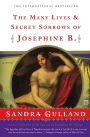


Paperback
-
SHIP THIS ITEMIn stock. Ships in 1-2 days.PICK UP IN STORE
Your local store may have stock of this item.
Available within 2 business hours
Related collections and offers
Overview
In this first of three books inspired by the life of Josephine Bonaparte, Sandra Gulland has created a novel of immense and magical proportions. We meet Josephine in the exotic and lush Martinico, where an old island woman predicts that one day she will be queen. The journey from the remote village of her birth to the height of European elegance is long, but Josephine's fortune proves to be true. By way of fictionalized diary entries, we traverse her early years as she marries her one true love, bears his children, and is left betrayed, widowed, and penniless. It is Josephine's extraordinary charm, cunning, and will to survive that catapults her to the heart of society, where she meets Napoleon, whose destiny will prove to be irrevocably intertwined with hers.

Product Details
| ISBN-13: | 9780684856063 |
|---|---|
| Publisher: | Atria Books |
| Publication date: | 08/03/1999 |
| Pages: | 448 |
| Product dimensions: | 5.20(w) x 7.90(h) x 1.10(d) |
About the Author
Read an Excerpt
Chapter One
In which I am told an extraordinary fortune
June 23, 1777 — Trois-Ilets, Martinico.
I am fourteen today and unmarried still. Without a dowry, what hope is there? Mother says the wind takes hope and dashes it into the sky, just as the big wind took our house, picked it up and dashed it, leaving nothing but debts in its place.
Oh, what a black mood has possessed me. Is not the celebration of one's birthday supposed to bring one joy? After dinner, after eating too many doughnut fritters with guava jelly, I took my leave and climbed up to my special place in the kapok tree. It was cool in the shade of the leaves. I could hear Grandmother Sannois and Mother arguing in the front parlor, the slaves chanting as they pushed the cane stalks through the rollers in the crushing hut, a chicken scratching in the honeysuckle bushes. I felt strange up there — peering out at my world, enveloped in gloom on my happy day.
It's the voodoo, surely, the bitter-tasting quimbois Mimi got me to drink this morning, a drink of secret spells. "Something manbo Euphémie made for you," she whispered. She'd knotted a red and yellow scarf tight around her head.
"Euphémie David — the teller of fortunes?" The obeah woman, the voodoo priestess who lived in the shack up the river.
Mimi pushed the coconut bowl into my hands. "It will bring you a man."
I regarded the liquid cautiously, for it smelled vile.
"Quick!" She glanced over her shoulder. For Mother doesn't hold with voodoo. Mother says the Devil speaks through the mouths of the voodoo spirits. Mother says the Devil is hungry for girls like me. Mother says the Devil sent her too many girls and is hungry to get one back.
So this is confession number one in this, my new diary, sent to me all the way from Paris by my beautiful Aunt Désirée: I drank a magic potion and I'll not tell Mother. I drank a magic potion and I'm filled with woe.
A note Aunt Désirée enclosed with her gift read: "A little book in which to record your wishes and dreams, your secret confessions." I shook the book over the table. Ten livres fell out.
"Confessions?" my sister Catherine asked. She is twelve now, almost thirteen, but even so, always into mischief. At convent school the nuns make a fuss over Catherine. They don't know it is Catherine who lets the chicken into the rectory, that it is Catherine who steals the sugar cakes before they are cooled. Catherine has the soul of a trickster, Mimi says.
"Tell us your wish," my youngest sister, Manette, said, lisping through the gap in her teeth. I was saddened by the light in her eyes, for she is only ten, young enough to believe that wishes are granted.
I shrugged. "My wish is the same every year." I glanced at Father. He had started the day with rum and absinthe and followed it with ti-punches all through the afternoon. "To go to France." Send Rose to France, My beautiful Aunt Désirée would write every year — send her to me, to Paris.
Father looked away. His skin was yellow; it is the malaria again, surely. So then I felt bad, for is it Father's fault he'd inherited only debts? Is it his fault he has been cursed with three daughters and no son, that Mother's dowry turned to dust in his hands, that his dream of sending me to France had never materialized for want of the price of passage?
"France!" Grandmother Sannois pushed her two pug dogs off her lap. "I'd keep that girl well away from Madame Désirée." Grandmother Sannois doesn't approve of Aunt Désirée, or any of the Taschers for that matter (especially Father). "What's wrong with that boy over near Laniantin," she said, downing her laudanum: seven drops in a jigger of brandy. "What's wrong with that Beal boy?"
Algernon Beal! The fat boy we all call Algie.
"Monsieur Beal requires a dowry," Mother said.
"Monsieur de Beal, I believe it is now," Father said, "the manufacturer of shackles and branding irons, the owner of three gilded carriages, twenty-two fighting cocks, an English Thoroughbred stallion and one dim-witted son." Father coughed and emptied his glass. "Monsieur de Beal and I had occasion to converse at the slave auction in Fort-Royal last month. He told me at length and in great detail how large a girl's dowry would have to be, how noble her bloodline, how abundant her bosom and intact her maidenhood even to dream of marrying his pimple-faced boy — "
Manette had her napkin stuffed in her mouth to keep from laughing.
"Well, there's always the convent," Grandmother Sannois said.
The convent. Always the convent. Is this to be my future? I yearn for so much more! But it's too late now, I know, for on this, my fourteenth birthday, Aunt Désirée made no offer, and, for the first time since I can remember, Father made no promise...and I liked it better before, to tell the truth, with glittering false hopes to brighten my day.
June 24.
This morning I gave my ten livres to the slave-master to divide among the field-hands. I am grown now and more aware of the sufferings of the world.
But Mother found out and got cross, accusing me of being like Father. "Generous" Father who would let his family starve to feed a friend. "Crazy" Father with his wild stories and dreams of glory. "Dreams from the rum god," she cursed. "Promises like clouds on a summer day."
Father who is never home. Already he's off to Fort-Royal — "to play games with the Devil," Grandmother Sannois said.
"To play games with the she-devils," Mother said quietly under her breath.
Sunday, June 29.Dear Diary, I have been giving thought to my sins, making repentance.
I am guilty of wishful thinking, of extravagant imaginings.
I am guilty of gazing at myself in the pond.
I am guilty of sleeping with my hands under my bedsheets.
There, it is written. The ink is drying as I write. I must close this book now — I cannot bear to look at these words.
Sunday, July 6
"Mademoiselle Tascher," Father Dropper called to me after church this morning. "Your grandmother asked me to talk to you."
I fingered the pages of my missal. Outside I heard a horse whinny and a man shouting.
"You are coming to an age of decision," he said. His big nose twitched.
"Yes, Father." I could see the outline of his vest under his white frock.
He paused. "I advise you to bend to God's will, to accept a life of service."
I felt my cheeks becoming heated.
Father Dropper handed me a handkerchief. "The life of a nun might satisfy that hungry heart of yours."
Through the high open window I could see the head of the statue of Christ in the cemetery, His eyes looking up at the clouds. The hunger I felt was for fêtes and silk slippers, for the love of a comely beau.
He bent toward me. "I was young once, too," he said. I could smell rum on his breath.
"I would die in a convent!"
Forgive me, Father. I backed away. At the door I turned and ran.
July 24.
This afternoon Mimi and I were playing in the ruins when Mimi saw a spot on my chemise.
I twisted and pulled my skirt around. Blood?
"It's the flowers," Mimi said.
I didn't know what to do.
"Tell your mother," she said.
"I can't do that!" Mother is proper.
So Mimi got me a rag which she instructed me on how to use. She told me she washes hers out in the creek, early, when no one is around to see.
"Where we bathe?" How disgusting.
"Farther down the river."
I move around the house aware of this great cloth between my legs, thinking that surely everyone notices. This is supposed to be the big change in me, but all I feel is ill.
Saturday.
Mimi is teaching me how to tell the future from cards, how to lay them out, how to know the meaning. Today we practised on my sister Catherine. The card in the ninth place was Death.
Catherine protested.
"It's not really death," Mimi said, taking up the cards. She sniffed the air.
Later, I questioned her. "Why did you stop?"
"Didn't you smell cigar smoke?" she whispered. "The spirit of Death is a trickster. Never believe him."
Thursday, July 31.
Dear Diary, something terrible has happened; it hangs over my heart like a curse.
It began with a lie. I told my little sister Manette that Mimi and I were going to the upper field to see if Father's ship was in the harbour yet. "You stay here," I told her.
Mimi and I headed up the trace behind the manioc hut, but at the top of the hill we took the path that led back down to the river, toward Morrie Croc-Souris. We hadn't gone far when Manette caught up with us.
"I told you to stay," I told her.
"You lied. You said you were going up the hill."
Mimi glared at her. "Can you keep a secret?"
"I never tell!"
It was dark by the river; the moss hung thick from the trees. We heard a chicken squawking before we came upon the fortuneteller's shack.
"That's where the werewolf lives," Manette said, taking my hand.
I looked at Mimi. "Is this it?"
In front of the hut was a charcoal brazier. The air was thick with the smell of roasted goat. In the shadows of a verandah roofed over with banana tree leaves, I saw an old Negro woman sitting cross-legged. Euphémie David — the voodoo priestess.
As we approached she stood up. She was wearing a red satin ball gown fringed with gold, much tattered and stained and too big for her. Her hair was white and woolly, standing out around her head like a halo. A rusty machete was propped up against the wall behind her.
Mimi called out something I couldn't understand. The old woman said something in the African tongue.
"What did she say?" I asked.
"Come," the old woman said. A puppy came out of the shack and growled at us.
"I'll stay back here," Manette said.
Mimi pushed me forward.
"Aren't you coming too?" I asked.
The two of us approached. What was there to be afraid of?
Entering the shade of the verandah, I was surprised how small the old woman was, not much bigger than Manette. Her loose black skin hung from her neck. She held a shell bowl in one hand — pigs' knuckles and coconut, it looked like — and was eating it with her fingers. She threw a bone to the puppy to finish. The old woman and Mimi began talking in the African tongue. I looked back over my shoulder. Manette was standing by a calabash tree, watching. A crow called out warning sounds.
Mimi touched my arm. "She says your future is all around you."
"What does that mean?"
The old woman went into the shack. She returned with a basket which she pushed into my hands. In the basket were a gourd rattle, a wooden doll, a stick, two candles, a bone, bits of frayed ribbon and a crucifix.
The old woman said something to Mimi.
"She wants you to pick out three things," Mimi told me.
"Anything?" I took a candle, the doll and the crucifix out of the basket. "She wants you to put them down," Mimi said.
"In the dirt?"
The old woman began chanting. I looked to see if Manette was still by the calabash tree. I shrugged at her. I remember thinking: See, there is nothing to fear.
The old woman began to moan, rolling her head from side to side, the whites of her eyes cloudy. Then she looked at me and screamed — a sound I will never forget, not unlike a pig being stuck.
"What is it!" I demanded. I was not without fear. "Mimi! Why is she crying?"
The old woman was shaking her head and mumbling. Finally she spoke, slowly, but strangely. "You will be unhappily married. You will be widowed."
I put my hand to my throat.
The old woman began to shake. She shook her hands, crying out words I could not understand.
"Mimi, what is she saying!"
The old woman began to dance, singing with the voice of a man. I backed away, stumbling over a gnarled tree root. I fell in the dirt and scrambled to my feet.
You will be Queen, she said.
Copyright © 1995 by Sandra Gulland
Reading Group Guide
A Scribner Paperback Fiction Reading Group Guide: The Many Lives & Secret Sorrows of Josephine B.
The Many Lives & Secret Sorrows of Josephine B. is a sweeping, dramatic tale of romance, heartbreak, and political intrigue set during the tumultuous times of the French Revolution. Combining meticulously researched history and superb storytelling, author Sandra Gulland provides an intimate look into the lives of the men and women behind the revolution and relates Josephine Bonaparte's marvelous, perilous rise from an innocent girl to one of the most sophisticated and powerful women in history.
The story opens in 1777 on the island of Martinique, where the young Josephine hears three predictions about her future: she will have an unhappy marriage, she will be widowed, and she will be Queen. Soon after, Josephine is sent to Paris to marry Alexandre de Beauharnais, and there her fortune unfolds. Through her fictionalized diary entries, readers learn of the birth of her two children and the dissolution of her marriage due to her husband's indiscretions. She tells of her days of imprisonment during the bloody French Revolution and of the fall of the French monarchy. Finally, she writes of her husband's execution and of her fateful meeting with Napoleon Bonaparte with whom she will fulfill her destiny as Empress Josephine.
A richly detailed story, filled with the emotions of a young woman and a country under siege, The Many Lives & Secret Sorrows of Josephine B. takes readers on a fascinating journey into the heart of one woman whose destiny became inextricably entwined in the history of a nation.
Discussion Points
1. Why does Ms. Gulland use the form of a diary to tell Josephine's story? What are the benefits and/or drawbacks of telling a historical story in diary form? What techniques does Ms. Gulland use to make us believe in the authenticity of the diary?
2. How does destiny play a role in the lives of the different characters? What effect does knowing her fate ahead of time have on Josephine? What effect do the predictions have on you, the reader? Josephine writes, "The fact that I was a widow now, that this had been foretold — did that mean that my marriage to Alexandre had been part of a larger plan?...I found the idea of destiny both comforting and terrifying." How is it both comforting and terrifying?
3. In her diary, Josephine often mentions the corset. She writes, "We got me all done up with a bottom and a bosom and tiny, tiny waist. I looked beautiful, but I couldn't breathe and I very nearly fainted....It was torture being inside this construction." How does the corset function as a metaphor for the role of women in this society before and after the revolution? What does it say about society as a whole?
4. Josephine also pays a great deal of attention to intricacies and rituals of dressing, dances, and codes of social behavior. What does this devotion to form and appearances say about the culture before the revolution? In what way does it lead to the revolution? How does this concern for form change after the revolution? How does it remain the same?
5. After the revolution, Josephine writes in her diary, "I was struck with how things have changed. Where before people paraded finery, now they boast economy. Where before our distractions were about games and charades, now people amuse themselves with talk of politics. Where before we talked of beauty, we now talk of Equal Representation." What exactly is different after the revolution? Who is better off after the revolution and why? What has been gained, what has been lost?
6. How would you describe the philosophy behind the revolution? What is the cult of reason? Do you see discrepancies between the philosophy of the revolution and its manifestation in the lives of the people? How do you reconcile these discrepancies?
7. Do you see a schism in the thinking behind the revolution between what is good for the country and what is good for the people? What is the difference between public and private sentiment in the lives of the characters during and after the revolution? Why does this duality exist?
8. What role did women play in Josephine's pre-Revolutionary France, and how did they change during the revolution? What did society value about women during this era? After the revolution, Josephine writes in her diary, "Inside, the theatre was like a private reception, everyone going from loge to loge, so unlike former times when it was considered improper for a woman to even move from her chair." How is life different for women after the revolution and why?
9. Josephine's Aunt Désirée says, "A wise woman does not allow her husband's amusements to disturb her. A wise woman closes her eyes. In allowing her husband's freedom, she dominates him." Why is it so hard for Josephine to accept this type of thinking? Do you agree with this logic? How do Josephine's ideas about marriage change over the course of the story? Why does Josephine marry Bonaparte?
10. It is said of Alexandre before the revolution, "Monsieur de Beauharnais practices dance steps all day long, watching himself in the big looking glass." What kind of man is Alexandre? Is he a hypocrite or an honorable man? Is he arrogant or selfless? Give examples to back up your thinking. How do you reconcile Alexandre's heroic deeds in the revolution with his deceit in marriage? Can you think of any similar situations in today's world? When Alexandre won't let his children leave Paris and tells Josephine that he is not valuing his own safety over that of his children, how do you justify his thinking? Does Alexandre change over the course of the story, if so how and why?
11. Why is Alexandre, who is a Noble, so keen on the revolution? Alexandre is credited with holding the country together, but in doing so he "sacrifices his father's regard and his brother's fraternal embrace." What motivates him to do this? Discuss the distinction Alexandre makes between his family and his country. Do you understand it? Why is Alexandre such a ripe candidate to be a hero of the revolution and not his brother François?
12. Josephine writes in her diary when she goes back to Martinique, "Only I have changed, thinner, dressed in elegant silk and lace, wearing a bonnet that hid the sadness in my eyes....I remember so clearly the first time I saw Alexandre, a handsome young man reading Cicero's Treatise on Laws. It seems another world, another time — another Rose." In what way does Josephine grow and change over the course of the story? In what ways does she stay the same?
13. Bonaparte tells Rose, "You think the woman I love does not exist. You don't believe in Josephine." Discuss how and why a name could have the power to change one's life?
Introduction
A Scribner Paperback Fiction Reading Group Guide: The Many Lives & Secret Sorrows of Josephine B.
The Many Lives & Secret Sorrows of Josephine B. is a sweeping, dramatic tale of romance, heartbreak, and political intrigue set during the tumultuous times of the French Revolution. Combining meticulously researched history and superb storytelling, author Sandra Gulland provides an intimate look into the lives of the men and women behind the revolution and relates Josephine Bonaparte's marvelous, perilous rise from an innocent girl to one of the most sophisticated and powerful women in history.
The story opens in 1777 on the island of Martinique, where the young Josephine hears three predictions about her future: she will have an unhappy marriage, she will be widowed, and she will be Queen. Soon after, Josephine is sent to Paris to marry Alexandre de Beauharnais, and there her fortune unfolds. Through her fictionalized diary entries, readers learn of the birth of her two children and the dissolution of her marriage due to her husband's indiscretions. She tells of her days of imprisonment during the bloody French Revolution and of the fall of the French monarchy. Finally, she writes of her husband's execution and of her fateful meeting with Napoleon Bonaparte with whom she will fulfill her destiny as Empress Josephine.
A richly detailed story, filled with the emotions of a young woman and a country under siege, The Many Lives & Secret Sorrows of Josephine B. takes readers on a fascinating journey into the heart of one woman whose destiny became inextricably entwined in the history of a nation.
Discussion Points
1. Why does Ms. Gulland usethe form of a diary to tell Josephine's story? What are the benefits and/or drawbacks of telling a historical story in diary form? What techniques does Ms. Gulland use to make us believe in the authenticity of the diary?
2. How does destiny play a role in the lives of the different characters? What effect does knowing her fate ahead of time have on Josephine? What effect do the predictions have on you, the reader? Josephine writes, "The fact that I was a widow now, that this had been foretold — did that mean that my marriage to Alexandre had been part of a larger plan?...I found the idea of destiny both comforting and terrifying." How is it both comforting and terrifying?
3. In her diary, Josephine often mentions the corset. She writes, "We got me all done up with a bottom and a bosom and tiny, tiny waist. I looked beautiful, but I couldn't breathe and I very nearly fainted....It was torture being inside this construction." How does the corset function as a metaphor for the role of women in this society before and after the revolution? What does it say about society as a whole?
4. Josephine also pays a great deal of attention to intricacies and rituals of dressing, dances, and codes of social behavior. What does this devotion to form and appearances say about the culture before the revolution? In what way does it lead to the revolution? How does this concern for form change after the revolution? How does it remain the same?
5. After the revolution, Josephine writes in her diary, "I was struck with how things have changed. Where before people paraded finery, now they boast economy. Where before our distractions were about games and charades, now people amuse themselves with talk of politics. Where before we talked of beauty, we now talk of Equal Representation." What exactly is different after the revolution? Who is better off after the revolution and why? What has been gained, what has been lost?
6. How would you describe the philosophy behind the revolution? What is the cult of reason? Do you see discrepancies between the philosophy of the revolution and its manifestation in the lives of the people? How do you reconcile these discrepancies?
7. Do you see a schism in the thinking behind the revolution between what is good for the country and what is good for the people? What is the difference between public and private sentiment in the lives of the characters during and after the revolution? Why does this duality exist?
8. What role did women play in Josephine's pre-Revolutionary France, and how did they change during the revolution? What did society value about women during this era? After the revolution, Josephine writes in her diary, "Inside, the theatre was like a private reception, everyone going from loge to loge, so unlike former times when it was considered improper for a woman to even move from her chair." How is life different for women after the revolution and why?
9. Josephine's Aunt Désirée says, "A wise woman does not allow her husband's amusements to disturb her. A wise woman closes her eyes. In allowing her husband's freedom, she dominates him." Why is it so hard for Josephine to accept this type of thinking? Do you agree with this logic? How do Josephine's ideas about marriage change over the course of the story? Why does Josephine marry Bonaparte?
10. It is said of Alexandre before the revolution, "Monsieur de Beauharnais practices dance steps all day long, watching himself in the big looking glass." What kind of man is Alexandre? Is he a hypocrite or an honorable man? Is he arrogant or selfless? Give examples to back up your thinking. How do you reconcile Alexandre's heroic deeds in the revolution with his deceit in marriage? Can you think of any similar situations in today's world? When Alexandre won't let his children leave Paris and tells Josephine that he is not valuing his own safety over that of his children, how do you justify his thinking? Does Alexandre change over the course of the story, if so how and why?
11. Why is Alexandre, who is a Noble, so keen on the revolution? Alexandre is credited with holding the country together, but in doing so he "sacrifices his father's regard and his brother's fraternal embrace." What motivates him to do this? Discuss the distinction Alexandre makes between his family and his country. Do you understand it? Why is Alexandre such a ripe candidate to be a hero of the revolution and not his brother François?
12. Josephine writes in her diary when she goes back to Martinique, "Only I have changed, thinner, dressed in elegant silk and lace, wearing a bonnet that hid the sadness in my eyes....I remember so clearly the first time I saw Alexandre, a handsome young man reading Cicero's Treatise on Laws. It seems another world, another time — another Rose." In what way does Josephine grow and change over the course of the story? In what ways does she stay the same?
13. Bonaparte tells Rose, "You think the woman I love does not exist. You don't believe in Josephine." Discuss how and why a name could have the power to change one's life?