
- Shopping Bag ( 0 items )
-
All (32) from $1.99
-
New (11) from $8.00
-
Used (21) from $1.99
More About This Textbook
Overview
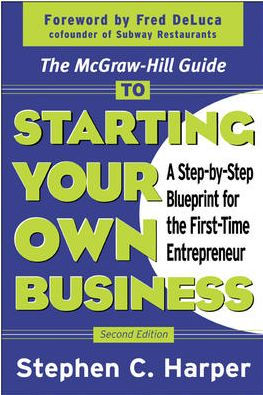
The bestselling first edition of The McGraw-Hill Guide to Starting Your Own Business sold more than 75,000 copies, and took the reader step-by-step through the entire process of starting a new venture. This completely revised second edition once again shows entrepreneurs the keys to determining the best business opportunities, creating a business plan, and formulating a winning marketing strategy. In addition, it now profiles alternative sources of funding from SBA loans to angel investors and provides valuable do's and don'ts from over one hundred entrepreneurs.
Editorial Reviews
Library Journal
In this guide Harper, head of his own management consulting firm, discusses the aspects of becoming an entrepreneur practically and realistically. He covers choosing the type of business; writing the business plan; advertising; financing; and franchising. Included also is the Entrepreneurial Qualities Self-Test designed to measure potential skills. Harper also cites and describes additional sources of information such as the U.S. Industrial Outlook , published annually by USGPO, and Wilson's Business Periodicals Index . Along with Lyle Maul and Dianne Mayfield's Entrepreneur's Road Map ( LJ 9/1/89) and Sharon Kahn and Philip Lieff's 101 Best Businesses To Start ( LJ 7/88), this book will provide a good ``first step'' for would-be entrepreneurs. Recommended to public libraries.-- Lucy Heckman, St. John's Univ. Lib., Jamaica, New YorkProduct Details
Related Subjects
Meet the Author
Stephen C. Harper, Ph.D. is a professor of management at the University of North Carolina at Wilmington and president of management consulting firm Harper and Associates, Inc.
Table of Contents
Part I: Getting Ready to Get Ready.
Creating a New Business.
Identifying New Business Opportunities.
Part II: Preparing Your Business Plan.
The General Overview and Legal Structure.
Selecting the Right Target Market.
Product/Service Strategy and Price Strategy.
Promotion Strategy and Physical Distribution Strategy.
Determining Your Initial Capital Requirement.
Projecting the Financial Status for the First Five Years.
Part III: Before You Lock into a Course of Action.
Applying for a Loan.
Buying an Existing Business.
Acquiring a Franchise.
Commencement: You've Only Just Begun.