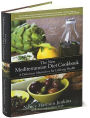
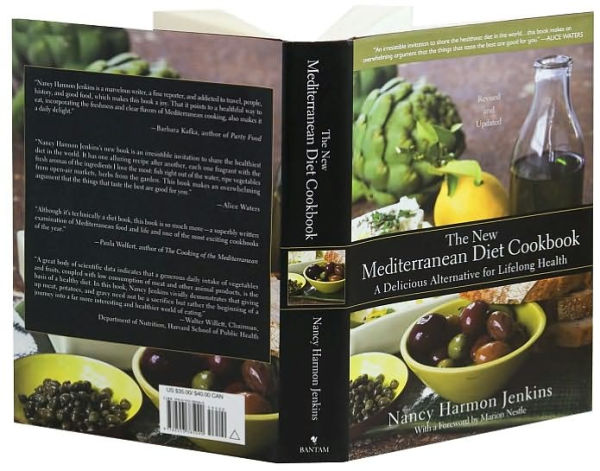
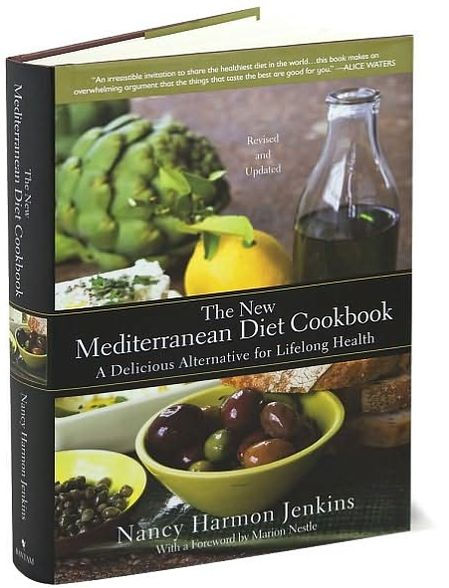
The New Mediterranean Diet Cookbook: A Delicious Alternative for Lifelong Health

( 26 )

Pick Up in Store

Reserve and pick up in 60 minutes at your local store

Hardcover
$22.40
BN.com price
$35.00 List Price (Save 36%)
Marketplace (New and Used)
from
$16.45
$35.00 List Price (Save 53%)
Usually ships within 1-2 business days
All (11)  
Used (5)  
New (6)  
Close
Sort by
Page 1 of 2
Showing 1 – 10 of 11 (2 pages)
$16.45
(Save 53%)
Seller since 2008

Feedback rating:

(140)

Condition:

New — never opened or used in original packaging.

Like New — packaging may have been opened. A "Like New" item is suitable to give as a gift.

Very Good — may have minor signs of wear on packaging but item works perfectly and has no damage.

Good — item is in good condition but packaging may have signs of shelf wear/aging or torn packaging. All specific defects should be noted in the Comments section associated with each item.

Acceptable — item is in working order but may show signs of wear such as scratches or torn packaging. All specific defects should be noted in the Comments section associated with each item.

Used — An item that has been opened and may show signs of wear. All specific defects should be noted in the Comments section associated with each item.

Refurbished — A used item that has been renewed or updated and verified to be in proper working condition. Not necessarily completed by the original manufacturer.

Very Good
Excellent condition (light wear on pages, otherwise in mint/pristine condition). Pages are crisp and clean with a tight spine.

Ships from: Newport, VA

Usually ships in 1-2 business days

  • Canadian
  • International
  • Standard, 48 States
  • Standard (AK, HI)
  • Express, 48 States
  • Express (AK, HI)
$17.96
(Save 49%)
Seller since 2010

Feedback rating:

(1630)

Condition: New
2008 Hard cover New. Glued binding. Paper over boards. With dust jacket. 496 p. Contains: Illustrations.

Ships from: Valley Stream, NY

Usually ships in 1-2 business days

  • Canadian
  • International
  • Standard, 48 States
  • Standard (AK, HI)
  • Express, 48 States
  • Express (AK, HI)
$18.92
(Save 46%)
Seller since 2012

Feedback rating:

(888)

Condition: New
" *****We Ship FAST. Usually within 24 hours. FREE Tracking/Confirmation.*****"

Ships from: Garden Grove, CA

Usually ships in 1-2 business days

  • Standard, 48 States
  • Standard (AK, HI)
  • Express, 48 States
  • Express (AK, HI)
$21.95
(Save 37%)
Seller since 2007

Feedback rating:

(21316)

Condition: New
BRAND NEW

Ships from: Avenel, NJ

Usually ships in 1-2 business days

  • Canadian
  • International
  • Standard, 48 States
  • Standard (AK, HI)
$22.39
(Save 36%)
Seller since 2008

Feedback rating:

(12864)

Condition: Like New
Brand New, Perfect Condition, Please allow 4-14 business days for delivery. 100% Money Back Guarantee, Over 1,000,000 customers served.

Ships from: South Bend, IN

Usually ships in 1-2 business days

  • Canadian
  • International
  • Standard, 48 States
  • Standard (AK, HI)
$23.24
(Save 34%)
Seller since 2010

Feedback rating:

(7651)

Condition: New
BRAND NEW FROM PUBLISHER! 100% Satisfaction Guarantee. Tracking provided on most orders. Buy with Confidence! Millions of books sold!

Ships from: Grand Rapids, MI

Usually ships in 1-2 business days

  • Canadian
  • International
  • Standard, 48 States
  • Standard (AK, HI)
  • Express, 48 States
  • Express (AK, HI)
$27.23
(Save 22%)
Seller since 2010

Feedback rating:

(9)

Condition: Like New
2008 Hard cover Fine in fine dust jacket. Like new copy. Glued binding. Paper over boards. With dust jacket. 496 p. Contains: Illustrations. Audience: General/trade. **Delivery ... Confirmation On All Orders. Read more Show Less

Ships from: Holland, MI

Usually ships in 1-2 business days

  • Canadian
  • International
  • Standard, 48 States
  • Standard (AK, HI)
  • Express, 48 States
  • Express (AK, HI)
$32.48
(Save 7%)
Seller since 2009

Feedback rating:

(276)

Condition: New
Brand New-Fast Shipping

Ships from: Deerfield Beach, FL

Usually ships in 1-2 business days

  • Canadian
  • International
  • Standard, 48 States
  • Standard (AK, HI)
$36.95
Seller since 2012

Feedback rating:

(5)

Condition: Good

Ships from: Lookout Mountain, GA

Usually ships in 1-2 business days

  • Standard, 48 States
  • Express, 48 States
  • Express (AK, HI)
$48.59
Seller since 2007

Feedback rating:

(2323)

Condition: Good
Buy with confidence. Excellent Customer Service & Return policy.

Ships from: Richmond, TX

Usually ships in 1-2 business days

  • Canadian
  • International
  • Standard, 48 States
  • Standard (AK, HI)
Page 1 of 2
Showing 1 – 10 of 11 (2 pages)
Close
Sort by
NOOK Book (eBook)
$18.99
BN.com price

Available on NOOK devices and apps

  • Nook Devices
  • NOOK
  • NOOK Color
  • NOOK Tablet
  • Tablet/Phone
  • NOOK for iPad
  • NOOK for iPhone
  • NOOK for Android
  • NOOK for Android (Tablet)
  • NOOK Kids for iPad
  • PC/Mac
  • NOOK Study
  • NOOK for PC
  • NOOK for Mac

Need a NOOK? Explore Now

Available for Pre-Order
This item will be available on February 29, 2012.

Overview

Spanning the Mediterranean from Spain to France, Italy, and Greece, with side trips to Lebanon, Cyprus, and North Africa, this revised and updated edition of Nancy Harmon Jenkins’s acclaimed cookbook offers ninety-two mouthwatering new dishes plus the latest information about the nutritional benefits of one of the world’s healthiest cuisines. But best of all are the recipes—bursting with flavor, easy to prepare, and sure to please everyone at your table, whether you’re cooking for yourself, your family, or your friends.

Known for classic favorites like tabbouleh and ratatouille, flatbreads, pastas, zesty herbs, and flavorful oils pressed from succulent olives, the Mediterranean diet combines delicious taste with health-supportive ingredients as few other cuisines do. With an emphasis on fruits and vegetables, grains and legumes, fish, lean meats, and heavenly desserts, here are recipes for over 250 outstanding dishes created for today’s American kitchens. You’ll also find new cooking techniques and a simplified approach to cooking—because simplicity is what the Mediterranean way of eating is all about.

Experienced and novice cooks alike will be inspired by these delectable, seasonally inspired recipes ranging from sweet young Roman-style peas for spring to skewered shrimp for summer, robust North African Pumpkin Soup when autumn is in the air, and warming winter dishes like Lebanese Garlicky Roast Chicken and Cypriote Braised Pork with Wine, Cinnamon, and Coriander—plus a variety of fabulous pizzas and dinner pies, hearty salads like Tuscan panzanella, and satisfying small dishes known as tapas. Also included is a special selection of traditional dishes prepared for Islamic, Jewish, and Christian holidays that can be enjoyed year round.

Rich in flavor and healthy nutrients but low in saturated fats and cholesterol, here are recipes that will delight your palate, nourish body and soul—and can be prepared with ease in your home kitchen.

Editorial Reviews

Publishers Weekly

This nutritionally sound, flavor-savvy cookbook, first published in 1994, was arguably ahead of its time-at least for American readers. Of course, a wave of American dieters and nutritionists have since come to advocate Mediterranean eating habits, including a largely plant-based diet with modest amounts of proteins and plenty of good fats. Jenkins's updated and revised version will surely reach a wider audience. Jenkins, an American who has lived in Italy, France, Lebanon, Cyprus and Spain, zeros in on the dietary patterns that link these nations. Yet Jenkins's approach is hardly prescriptive; she prefers to gently encourage good habits rather than lay out a daily regime. The 250 recipes are largely traditional dishes, some of which may be novel to her readership, such as Provençal chickpea soup; Moroccan lamb tagine with apricots; and kourabiedes, Greek butter almond cookies. Jenkins has removed the nutritional data from the previous edition, which allows for a greater emphasis on the food itself. Jenkins's recipes are reliable, and though dishes like pizza made from scratch require extra time and effort, the payoff is in the "slow food," Mediterranean approach: an overall respect and enjoyment for what we eat that translates into greater health. Jenkins is an effective ambassador for this way of thinking about food, and her cookbook is a wonderful resource for anyone considering it. (Dec.)

Copyright © Reed Business Information, a division of Reed Elsevier Inc. All rights reserved.
From The Critics

The cuisines of the Mediterranean, from Spain to the Middle East and back to Morocco, have become so popular that it's hard to remember that the Mediterranean diet was a relatively new concept when the first edition of this book was published in 1994. A food writer and culinary historian, Jenkins is the author of several other cookbooks, including Cucina del Sole. The revised edition of her best-selling title includes updated nutrition information, notes on sustainable agriculture and similar concerns, and more than 90 new recipes. Jenkins has lived in several Mediterranean countries and traveled throughout many more, and her knowledge of these cuisines is both personal and informed. Recipes include classics like Andalucian Gazpacho and lesser-known specialties such as Tunisian Fish with Preserved Lemon and Olives. There are boxes throughout on a variety of topics, specialized appendixes, and a resource guide. An essential purchase.


—Judith Sutton

Product Details

  • ISBN-13: 9780553385090
  • Publisher: Random House Publishing Group
  • Publication date: 12/30/2008
  • Pages: 512
  • Sales rank: 49,243
  • Product dimensions: 7.40 (w) x 9.90 (h) x 1.60 (d)

Meet the Author

Nancy Harmon Jenkins is a food writer with a passionate interest in Mediterranean cultures and cuisines, sustainable agriculture, and farm-to-market connections. Author of half a dozen highly acclaimed cookbooks, she writes for the New York Times, Saveur, and Food & Wine, and divides her time between her farmhouse outside of Cortona, Italy, and the coast of Maine.

Read an Excerpt

Making the Change

Changing eating habits may seem like a radical and difficult chore, but changing to the Mediterranean diet is easy because most of the foods and cooking techniques are already familiar to us. It’s a shift of emphasis that’s the key to cooking and eating in a healthy Mediterranean style.

Except for olive oil, there’s no need for special foods in the larder—in fact, many of the foods featured in the Mediterranean kitchen are probably already in your pantry cupboard. Several different kinds of beans, both dried and canned, long-grain and short-grain rice, cornmeal for polenta and flour for bread, pasta in a variety of shapes, canned tomatoes, and condiments like dried mushrooms and herbs are common ingredients and take no special effort to acquire. If there’s an Italian, Greek, or Middle Eastern neighborhood nearby, you’ll have access to first-rate olives and cheese; otherwise, make a special trip some Saturday to a more distant market and spend time wandering around examining the offerings. If you’re far from ethnic shopping areas like these, mail-order and Internet suppliers are a good, if sometimes rather expensive, resource. (See pages 465–466 for some suggestions.)

We invent all sorts of rationales for holding back on changing diets, especially where families are involved. But there are compelling reasons for making the switch, and most of the obstacles are easily overcome. Just remember that where families are concerned, change sometimes has to come slowly. Whatever you do, don’t make a big deal out of it. Small, quiet, almost unnoticeable changes are more effective than noisy family food fights.

Start off by structuring mealtimes, if you don’t do that already. It’s hard for American families, with so many of us apart at lunch, but dinner at least should be a time for the family to come together and share whatever is on the table. Try to have meals on the table at the same hour each day and let people know they’re expected to be there. It’s the first step in a Mediterranean direction, building a sense of food as a fundamentally communal, shared experience.

Switch from whatever fats you now use to extra-virgin olive oil. If you find it hard to get used to the flavor of extra-virgin oil, start off by combining it 50/50 with canola oil, which has no perceptible flavor or aroma. Gradually reduce the amount of canola as you grow accustomed to the delicious flavor of olive oil. Experiment with oils by buying several different varieties in small quantities—the flavors vary enormously from country to country, region to region, and even producer to producer. Begin by throwing out all those bottles of commercial salad dressing that are crowding your refrigerator shelves. Then follow one of the recipes on pages 261–264 for tasty salad dressings using extra-virgin olive oil. Start using olive oil to sauté meat, chicken, or fish. More flavorful oils are wonderful for frying potatoes, especially with a little garlic or onion added—another way to accustom your family to the distinctive flavor. Soon you may find yourself using truly aromatic oils on steamed vegetables or baked potatoes in place of butter or sour cream. Then you’ll be ready for a real summertime treat—extra-virgin olive oil lavished on fresh seasonal corn.

(For more on olive oil, see pages 30–33.)

Get out of the butter habit. A little butter from time to time is fine, but butter is never on the Mediterranean table, never assumed to be an automatic accompaniment to bread. Even at breakfast, only a little jam garnishes the bread, which is appreciated for its own good flavor. (And contrary to American restaurant custom, bowls of olive oil, even of the finest extra-virgin, are never put on the table, except during the autumn harvest when the flavor of new oil is appreciated.)

Use more whole grains. Even though Mediterranean cooks seldom use whole-wheat pasta or brown rice, they still get plenty of whole grains through dishes like tabbouleh, the hearty Lebanese salad, and bulgur pilafs. And breads throughout the Mediterranean are often made with unrefined wheat and barley flours. Fortunately we have much greater access to really high-quality bread than we had 15 years ago when I compiled the first edition of this book, but if you can’t find the kind of bread you want nearby, try making it yourself. It really isn’t time consuming once you get the hang of it, and that’s quickly acquired. And presenting a homemade loaf of high-quality bread on the table is just eminently satisfying.

Begin or end each meal with a salad. Make it from crisp greens and whatever vegetables are in season—tomatoes, cucumbers, sweet peppers, scallions, shavings of carrot, sherds of fennel, celery, tender chicory, raw fava beans. Don’t use iceberg lettuce, which has almost no nutritional value, but do look for dark green leaf lettuces like oak leaf and romaine. Add some fresh green herbs for variety, but not all at once—basil at one meal, dill at another, cilantro, if you like it, at a third.

Add both more vegetables and different vegetables to the menu. Get away from the American focus on potatoes, peas, and salad greens. Nothing wrong with any of them but life is so much richer! The average American consumes just three servings of fruits and vegetables daily and many Americans don’t even get that. The latest Dietary Guidelines for Americans, published by the Department of Health and Human Services, recommend up to nine servings, which is about 41\2 cups, for otherwise healthy people consuming 2,000 calories a day. So let vegetables take up most of the room on your plate.

Every day try to get in at least one serving each of cruciferous (cabbage family) vegetables—broccoli, broccoli rabe, cabbage, cauliflower, turnip and mustard greens—and bright-colored vegetables and fruits that are rich in antioxidants—again broccoli and broccoli rabe, but also carrots, sweet potatoes, spinach, and yellow squash, as well as apricots and cantaloupe, just to mention a few. Experiment with different vegetables, ones that may not be familiar—artichokes, leeks, fava beans are exotic to many Americans, and vegetables like Jerusalem artichokes (sunchokes), celery root, and many greens are virtually unknown.

Vegetables don’t have to be served separately—vegetable combinations, vegetables cooked in a sauce for pasta, vegetables served cut up in a soup, are all ways to increase the quantity consumed. But no single fruit or vegetable provides all the nutrients you need to be healthy. In the end, it’s variety that is the key.

Cut down on the amount of meat consumed. There’s no reason for normal, healthy adults to eat more than 4 ounces of lean meat a day, and much less is much better. Children, of course, need even less. (If your family is used to 8-ounce portions, start cutting the portions down gradually rather than all at once.) Eat lean red meat (beef, pork, and lamb) just once or twice a week. Other meals can feature chicken, fish, pasta, rice, beans, or vegetables.

One easy way to cut meat consumption is with stews that feature meat as an incidental to lots and lots of vegetables. You’ll find recipes for such preparations throughout this book. Or make a hearty soup the main course, with plenty of bread, perhaps a little cheese, and salad to accompany it. Soup is a delicious and cheap way to get lots of vegetables on the table.

Move meat away from the center of the plate by adding complex carbohydrates like rice, beans, and pasta to fill the gap that meat once occupied. When you do serve a main course of meat or fish, get into the Mediterranean habit of offering a filling first course of pasta or soup before the meat arrives.

And if you’re worried about budgetary constraints, think of this: by adding olive oil and subtracting meat, you’ll probably come out even over the course of a week.

Think about portion size, especially when dining in restaurants. Americans on the whole now spend almost half their food dollars outside the home in fast-food, take-out, and family-style restaurants. It’s no secret that portion sizes have increased dramatically in such food outlets—indeed, some national chains actually brag about the humongous size of burgers, fries, and soft drinks, and what a bargain they are. Some bargain! Anyone who saw the movie Supersize Me knows all too well the consequences of this. But when Drs. Lisa Young and Marion Nestle at New York University studied the phenomenon, they discovered that between the 1975 and 1997 editions of the Joy of Cooking, that venerable cookbook has decreased the number of servings it says a given recipe will yield. No wonder we’re a fat nation, cradle to (often early) grave.

Now think of a deck of cards: that’s about the portion size of meat or fish in a restaurant in just about any country in the Mediterranean, and the vegetables, the soups, the pasta and rice dishes are equivalent. As for dessert, most often, if it’s anything at all, it’s a single small portion of seasonal fruit. If there’s an actual sweet involved, it will be the size of a little espresso cup, no more.

So think about portion size, whether at home, where it’s much easier to control, or when eating out, where it’s often quite difficult. In the right kind of restaurant, you can order from the appetizer list where portions are notably smaller. Or share a main course with a friend dining with you. Or eat half the presentation and ask to bag the rest to carry home.

Substitute wine in moderation for other alcoholic beverages. If you enjoy wine with your meals, you’re already well on the way to a Mediterranean lifestyle. Except among strict Moslems, wine is part of every Mediterranean meal but breakfast. The operative words here are part of the meal. In the Mediterranean, wine is a companion to food and almost never taken on its own. Even a glass of wine or an aperitif as a cocktail before dinner is always accompanied by something to eat—if not a full-fledged meze, then a few olives or a handful of almonds. Wine in moderation, a couple of glasses a day served with meals, seems in fact to be protective against coronary heart disease.

If you don’t care for wine, don’t turn to soft drinks or fruit juices, even natural ones, as they are all potent sources of sugar and/or calories. Drink water instead—a bottle or pitcher of water is a standard feature on Mediterranean tables. It doesn’t have to be expensive bottled water, either. Most of us in North America are fortunate to have access to good, clean water straight from the tap. Just don’t substitute milk, which comes into the Mediterranean diet after infancy only in the form of wonderful cheeses and yogurts or a little hot milk added to morning coffee. For normal healthy adults, enough calcium should be supplied by cheese, yogurt, and vegetables.

Don’t fuss with dessert. To me, dessert seems like useless and unprofitable time spent in the kitchen, and it’s certainly not necessary on the table. (Far better to spend that time making soup.) Above all, don’t buy packaged desserts, whether cakes, cookies, or ice cream—well, maybe ice cream as an occasional treat. Most packaged desserts are so loaded with saturated fat and sugar, not to mention stabilizers and other undesirable additives, that they are truly nutritional time bombs. All they really do is accustom the palate to sugary fats at the end of a meal. If you must have a sweet, the simplest of cookies is preferable to a rich cake; better yet is fresh or lightly poached fruit, which should be sweet enough in itself to satisfy any sugar addicts in the family. And with fruit you get valuable vitamins and fiber along with the sweet, something that cannot be said for other desserts.

Many restaurants will have a simple platter of fresh fruit or fruit with cheese on the dessert menu. Choose it instead of the sinfully chocolate drop-dead nightmare the pastry chef is so proud of. As more of us start asking for fruit, more fruit will be served.

Think about the quality of the food you buy and seek out the best. Because Mediterranean food is so simple, it’s worth spending time looking for the best ingredients. How do you go about doing this? Fortunately, it gets easier with each passing season. Start with the place where you customarily shop. Many supermarkets, responding to customer demand, have established sections devoted to organically raised produce and naturally raised meats.

If supermarkets have little to offer, look for farmers’ markets and health food stores that carry local, healthy ingredients. (Call the food editor of a local newspaper or your state university’s college of agriculture for information. Cooperative Extension agents can also be good information sources.)

Farmers’ markets are terrific sources. When you start to frequent them, you’ll also start to build up contacts with local farmers. They’ll not only tell you how the food is grown or produced; they may tell you how to cook it, too, and they’ll start to let you know what things are coming along. The best-run health food stores and co-ops are also good outlets for local production—fruits and vegetables, whole grains and beans, free-range chickens and their eggs, all of which will be fresher and more flavorful than most supermarket offerings. Many farmers’ markets and health food stores take WIC coupons and food stamps; if you’re on a tightly restricted budget, keep that in mind.

In restaurants, ask questions about where food comes from and let them know that you care. The best restaurants also care and work hard to advance quality.

In the end, it’s the simplicity of it all that makes the Mediterranean diet such an appealing alternative. Exotic foods, elaborate and time-consuming preparations, and special culinary techniques are not what it’s all about. Good food, carefully purchased, thoughtfully if simply prepared, and lovingly served and shared: that’s the secret.

Children and the Mediterranean Diet

Enjoyment is the key to supporting great nutrition, especially for young children, because if they don’t enjoy their food, they simply won’t eat it. But if you present food that is freshly prepared and tasty, even broccoli, children will almost always come around, especially if they see that everyone else at the table is enjoying the same thing.

All children seem to go through periods when they will eat only one thing—only white food, perhaps, or only peanut butter and jelly sandwiches (not a bad thing, as long as they’re made with whole-grain bread). The best course of action, we are assured by everyone from Dr. Spock on, is not to stress out, not to wring hands, not to indicate the least shred of anxiety—and above all, not to rush to offer an alternative. But almost all children love pasta and pizza, so start your Mediterranean diet campaign with one of those, prepared to be appetizing and full of flavor, presented as a family meal to be enjoyed all together—and you may find the battle is over before it’s even begun.

Customer Reviews
Average Rating 3
( 26 )

Rating Distribution

  • ( 7 )
  • ( 4 )
  • ( 4 )
  • ( 9 )
  • ( 2 )
If you've bought this product, tell the world how you liked it.
Write a Review
See All Sort by: Showing 1 – 20 of 26 Customer Reviews
  • Posted March 30, 2009

    One very important thing missing for this cook...

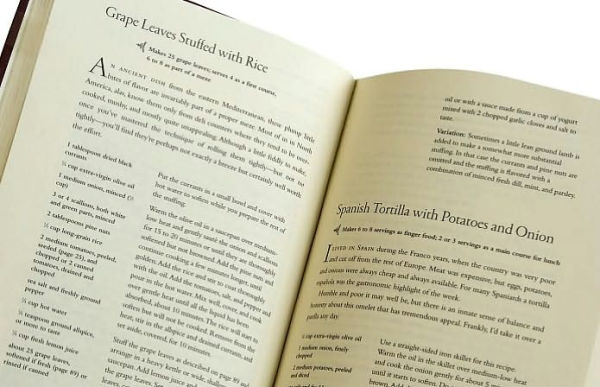
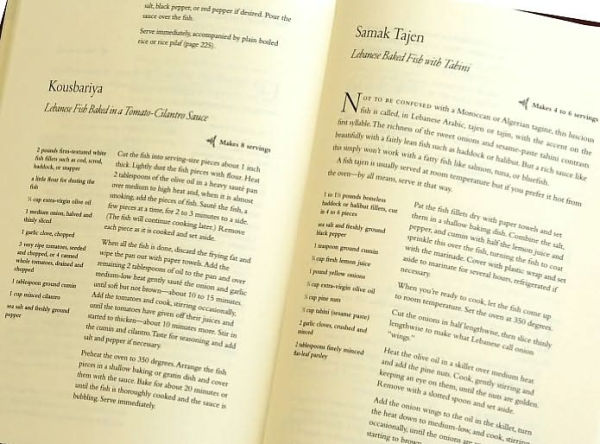
    Cookbooks without pictures are a very unfortunate thing. I used to work in a bookstore and 9 out of 10 people I sold cookbooks to wouldn't buy one without illustrations. I ordered this one online, without even thinking of this aspect and was terribly disappointed when I received it. Just a note for those of you who, like myself, are visual cooks.

    14 out of 14 people found this review helpful.

    Was this review helpful? Yes  No   Report this review
  • Anonymous

    Posted May 15, 2009

    Great purchase

    Although I'm not usually a fan of cookbooks without illustrations, this book makes up for it with excellent detailed directions plus a great history behind many of the recipes. Some take more time than I'd like but the wait is well worth it. The book puts a healthier, Mediterranean twist on American favorites such as pizzas, pastas and breads. In my opinion, a good purchase for anyone who loves to cook; seasoned chef or not.

    4 out of 4 people found this review helpful.

    Was this review helpful? Yes  No   Report this review
  • Posted August 17, 2009

    more from this reviewer

    Excellent!

    I gave this cookbook to a friend as a gift and she loves it. She has cooked over 30 recipes from the book and she hasn't even had it for 2 months.

    3 out of 3 people found this review helpful.

    Was this review helpful? Yes  No   Report this review
  • Posted November 24, 2009

    Quite Pleasing

    It's been a long time since we have hosted a large-group dinner party, but it was now our turn to host. I was asked to pick a theme, I chose "An Italian Evening," knowing that it would NOT be spaghetti and meatballs, with a Caesar salad! I prepared the Gratin Seafood (using Salmon) with a risotto side dish. My friends were impressed with the meal's simplicity, its uniqueness AND its divine taste. I have truly enjoyed browsing through the book and learning new things. BON APPITETO!!

    2 out of 2 people found this review helpful.

    Was this review helpful? Yes  No   Report this review
  • Posted January 9, 2011

    Excellent cookbook

    I have thoroughly enjoyed this cookbook. The recipes are well written, and I have yet to try one that wasn't delicious. I have had no trouble finding ingredients, and many are right at the farmer's market. The recipes go beyond Italy & Greece, and encompass North African countries' cuisines as well.

    This is slow food at it's best, although it has quickly-prepared dishes as well. If you enjoy clipping recipes from your grocery store women's magazines, and are a frequent user of canned soups and convenience foods, this will be a real game changer.

    1 out of 1 people found this review helpful.

    Was this review helpful? Yes  No   Report this review
  • Anonymous

    Posted May 15, 2010

    Gave as a gift

    My sister's doctor recommended that she start eating a Mediterranean diet. He told her that the Mediterranean diet is a healthy way to eat. The fats used in the Mediterranean diet are "good" fats. My sister was very pleased to receive this book. The cookbook is a combination cookbook and education about eating in the Mediterranean area. As my sister had no prior information on Mediterranean cooking, she has enjoyed the education portion of the cookbook. I wish it had included more illustrations. The book puts a healthier, Mediterranean twist on American favorites. In my opinion, a good purchase for anyone who loves to cook.

    1 out of 1 people found this review helpful.

    Was this review helpful? Yes  No   Report this review
  • Posted March 22, 2010

    Don't buy...

    Not consumer friendly. Recipes contain ingredients that are hard to find, or nearly impossible to find. This book doesn't contain recipes that you would want to repeat more than once. Not a book of recipes that is for the whole family.

    1 out of 1 people found this review helpful.

    Was this review helpful? Yes  No   Report this review
  • Posted November 21, 2009

    Good solid book for the Med diet

    I actually read it cover to cover, it is a combination cookbook and education about eating in the Mediterranean area. We have made several of the recipes, her description of them is easy to understand and use.

    1 out of 1 people found this review helpful.

    Was this review helpful? Yes  No   Report this review
  • Anonymous

    Posted October 10, 2009

    not worth the money if you are looking for recipes

    i expected a cookbook with a lot of recipes, but this book has fewer recipes and a lot of talking

    1 out of 3 people found this review helpful.

    Was this review helpful? Yes  No   Report this review
  • Anonymous

    Posted July 26, 2010

    Excellent Cookbook

    Overall, a very unique and healthy cookbook.

    Was this review helpful? Yes  No   Report this review
  • Posted April 8, 2010

    Not a Good Choice

    This book didn't deliver what I expected. I found it contained information that was unnecessary and not enough of the information I wanted. He definitely needs more practical everyday recipes. Certainly not worth the money.

    Was this review helpful? Yes  No   Report this review
  • Anonymous

    Posted September 4, 2009

    No text was provided for this review.

  • Anonymous

    Posted December 11, 2011

    No text was provided for this review.

  • Anonymous

    Posted March 23, 2010

    No text was provided for this review.

  • Anonymous

    Posted November 7, 2010

    No text was provided for this review.

  • Anonymous

    Posted June 18, 2009

    No text was provided for this review.

  • Anonymous

    Posted August 19, 2010

    No text was provided for this review.

  • Anonymous

    Posted January 21, 2010

    No text was provided for this review.

  • Anonymous

    Posted June 5, 2009

    No text was provided for this review.

  • Anonymous

    Posted November 10, 2009

    No text was provided for this review.

See All Sort by: Showing 1 – 20 of 26 Customer Reviews

If you find inappropriate content, please report it to Barnes & Noble
Why is this product inappropriate?
Comments (optional)
500 character limit