
The World Is Getting Better: Good News for Us. Bad News for the Political Left
In many cases, for several decades, our nation and world have been making significant progress on an enormous number of environmental indicators (not to mention social, economic, and quality of life indicators).
Almost no one knows this!
Why?
As shown by such writers as Hans Rosling, Julian Simon, Bjorn Lomborg, Gregg Easterbrook, Steven Pinker, Michael Shellenberger, Marian Tupy, Gale Pooley, and Johan Norberg, a vast number of social, economic, energy, quality of life, and environmental indicators have been moving in a significantly positive direction for several decades worldwide, despite the near consensus that our nation and world are going to the proverbial hell in a handbasket.
Much of this can be explained by the fact that media reporters know negative doomsday reports are more profitable because nearly all humans are far more interested in bad news rather than good news. Researchers and writers also tend to be biased toward bad news, as bad news is more profitable for them as well. Political revolutionaries also prefer reporting gloom, as perceptions of decline are seen to instill revolutionary desires in populations.
The media, scientists, book authors, and environmental advocacy groups make more money, gain more media attention, obtain more funding, and gain more new members when there are reports of environmental doom. Therefore, there is a strong incentive for each of these groups to alarm us about impending environmental catastrophes.
This book is a contrarian, data-rich argument aimed at dismantling the apocalyptic narratives common among the political Left, especially environmentalists. The book's core thesis-that the world has made dramatic progress despite persistent pessimism-deserves attention. I've marshaled a staggering amount of evidence showing improvements in life expectancy, poverty, health, education, violence, democracy, air quality, and more. There's no mistaking my stance. I'm not hedging or equivocating.
1147796996
Almost no one knows this!
Why?
As shown by such writers as Hans Rosling, Julian Simon, Bjorn Lomborg, Gregg Easterbrook, Steven Pinker, Michael Shellenberger, Marian Tupy, Gale Pooley, and Johan Norberg, a vast number of social, economic, energy, quality of life, and environmental indicators have been moving in a significantly positive direction for several decades worldwide, despite the near consensus that our nation and world are going to the proverbial hell in a handbasket.
Much of this can be explained by the fact that media reporters know negative doomsday reports are more profitable because nearly all humans are far more interested in bad news rather than good news. Researchers and writers also tend to be biased toward bad news, as bad news is more profitable for them as well. Political revolutionaries also prefer reporting gloom, as perceptions of decline are seen to instill revolutionary desires in populations.
The media, scientists, book authors, and environmental advocacy groups make more money, gain more media attention, obtain more funding, and gain more new members when there are reports of environmental doom. Therefore, there is a strong incentive for each of these groups to alarm us about impending environmental catastrophes.
This book is a contrarian, data-rich argument aimed at dismantling the apocalyptic narratives common among the political Left, especially environmentalists. The book's core thesis-that the world has made dramatic progress despite persistent pessimism-deserves attention. I've marshaled a staggering amount of evidence showing improvements in life expectancy, poverty, health, education, violence, democracy, air quality, and more. There's no mistaking my stance. I'm not hedging or equivocating.
The World Is Getting Better: Good News for Us. Bad News for the Political Left
In many cases, for several decades, our nation and world have been making significant progress on an enormous number of environmental indicators (not to mention social, economic, and quality of life indicators).
Almost no one knows this!
Why?
As shown by such writers as Hans Rosling, Julian Simon, Bjorn Lomborg, Gregg Easterbrook, Steven Pinker, Michael Shellenberger, Marian Tupy, Gale Pooley, and Johan Norberg, a vast number of social, economic, energy, quality of life, and environmental indicators have been moving in a significantly positive direction for several decades worldwide, despite the near consensus that our nation and world are going to the proverbial hell in a handbasket.
Much of this can be explained by the fact that media reporters know negative doomsday reports are more profitable because nearly all humans are far more interested in bad news rather than good news. Researchers and writers also tend to be biased toward bad news, as bad news is more profitable for them as well. Political revolutionaries also prefer reporting gloom, as perceptions of decline are seen to instill revolutionary desires in populations.
The media, scientists, book authors, and environmental advocacy groups make more money, gain more media attention, obtain more funding, and gain more new members when there are reports of environmental doom. Therefore, there is a strong incentive for each of these groups to alarm us about impending environmental catastrophes.
This book is a contrarian, data-rich argument aimed at dismantling the apocalyptic narratives common among the political Left, especially environmentalists. The book's core thesis-that the world has made dramatic progress despite persistent pessimism-deserves attention. I've marshaled a staggering amount of evidence showing improvements in life expectancy, poverty, health, education, violence, democracy, air quality, and more. There's no mistaking my stance. I'm not hedging or equivocating.
Almost no one knows this!
Why?
As shown by such writers as Hans Rosling, Julian Simon, Bjorn Lomborg, Gregg Easterbrook, Steven Pinker, Michael Shellenberger, Marian Tupy, Gale Pooley, and Johan Norberg, a vast number of social, economic, energy, quality of life, and environmental indicators have been moving in a significantly positive direction for several decades worldwide, despite the near consensus that our nation and world are going to the proverbial hell in a handbasket.
Much of this can be explained by the fact that media reporters know negative doomsday reports are more profitable because nearly all humans are far more interested in bad news rather than good news. Researchers and writers also tend to be biased toward bad news, as bad news is more profitable for them as well. Political revolutionaries also prefer reporting gloom, as perceptions of decline are seen to instill revolutionary desires in populations.
The media, scientists, book authors, and environmental advocacy groups make more money, gain more media attention, obtain more funding, and gain more new members when there are reports of environmental doom. Therefore, there is a strong incentive for each of these groups to alarm us about impending environmental catastrophes.
This book is a contrarian, data-rich argument aimed at dismantling the apocalyptic narratives common among the political Left, especially environmentalists. The book's core thesis-that the world has made dramatic progress despite persistent pessimism-deserves attention. I've marshaled a staggering amount of evidence showing improvements in life expectancy, poverty, health, education, violence, democracy, air quality, and more. There's no mistaking my stance. I'm not hedging or equivocating.
13.52
In Stock
5
1

The World Is Getting Better: Good News for Us. Bad News for the Political Left
132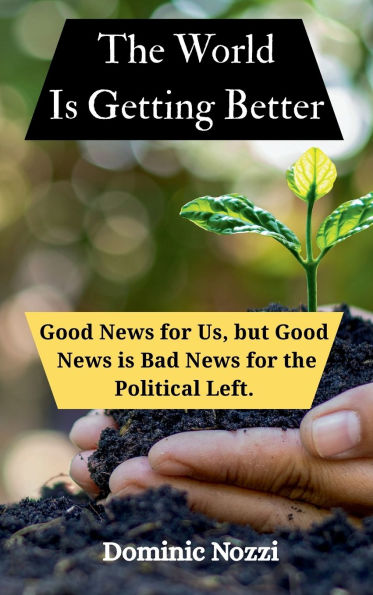
The World Is Getting Better: Good News for Us. Bad News for the Political Left
132Hardcover
$13.52
13.52
In Stock

Product Details
| ISBN-13: | 9798319624529 |
|---|---|
| Publisher: | Barnes & Noble Press |
| Publication date: | 07/08/2025 |
| Pages: | 132 |
| Product dimensions: | 6.00(w) x 9.00(h) x 0.44(d) |
About the Author
From the B&N Reads Blog