The Thing Around Your Neck

( 18 )

Pick Up in Store

Reserve and pick up in 60 minutes at your local store

Paperback
$12.99
BN.com price
$15.00 List Price (Save 13%)
Marketplace (New and Used)
from
$7.89
$15.00 List Price (Save 47%)
All (34)  
Used (13)  
New (21)  
Close
Sort by
Page 1 of 4
Showing 1 – 10 of 34 (4 pages)
$7.89
(Save 47%)
Seller since 2012

Feedback rating:

(292)

Condition:

New — never opened or used in original packaging.

Like New — packaging may have been opened. A "Like New" item is suitable to give as a gift.

Very Good — may have minor signs of wear on packaging but item works perfectly and has no damage.

Good — item is in good condition but packaging may have signs of shelf wear/aging or torn packaging. All specific defects should be noted in the Comments section associated with each item.

Acceptable — item is in working order but may show signs of wear such as scratches or torn packaging. All specific defects should be noted in the Comments section associated with each item.

Used — An item that has been opened and may show signs of wear. All specific defects should be noted in the Comments section associated with each item.

Refurbished — A used item that has been renewed or updated and verified to be in proper working condition. Not necessarily completed by the original manufacturer.

Acceptable
Ships within 24 hrs of your order. Open Mon - Fri. May have some notes/highlighting, slightly worn covers, general wear/tear.

Ships from: Downingtown, PA

Usually ships in 1-2 business days

  • Standard, 48 States
  • Standard (AK, HI)
  • Express, 48 States
  • Express (AK, HI)
$7.91
(Save 47%)
Seller since 2006

Feedback rating:

(50891)

Condition: Good
Shows some signs of wear, and may have some markings on the inside. 100% Money Back Guarantee. Shipped to over one million happy customers. Your purchase benefits world literacy!

Ships from: Mishawaka, IN

Usually ships in 1-2 business days

  • Canadian
  • International
  • Standard, 48 States
  • Standard (AK, HI)
  • Express, 48 States
  • Express (AK, HI)
$7.95
(Save 47%)
Seller since 2010

Feedback rating:

(1917)

Condition: New
2010 Trade paperback New. Trade paperback (US). Glued binding. 217 p.

Ships from: Valley Stream, NY

Usually ships in 1-2 business days

  • Canadian
  • Standard, 48 States
  • Standard (AK, HI)
  • Express, 48 States
  • Express (AK, HI)
$8.07
(Save 46%)
Seller since 2009

Feedback rating:

(4796)

Condition: New
Shipped from US in 4 to 14 business days. Established seller since 2000

Ships from: Aurora, IL

Usually ships in 1-2 business days

  • Standard, 48 States
  • Standard (AK, HI)
$9.02
(Save 40%)
Seller since 2008

Feedback rating:

(14111)

Condition: New
Brand New, Perfect Condition, Please allow 4-14 business days for delivery. 100% Money Back Guarantee, Over 1,000,000 customers served.

Ships from: South Bend, IN

Usually ships in 1-2 business days

  • Canadian
  • International
  • Standard, 48 States
  • Standard (AK, HI)
$9.03
(Save 40%)
Seller since 2009

Feedback rating:

(4796)

Condition: New
Shipped from US in 4 to 14 business days. Established seller since 2000

Ships from: Aurora, IL

Usually ships in 1-2 business days

  • Standard, 48 States
  • Standard (AK, HI)
$9.10
(Save 39%)
Seller since 2009

Feedback rating:

(4796)

Condition: New
Shipped from US in 4 to 14 business days. Established seller since 2000

Ships from: Aurora, IL

Usually ships in 1-2 business days

  • Standard, 48 States
  • Standard (AK, HI)
$9.10
(Save 39%)
Seller since 2010

Feedback rating:

(889)

Condition: New
Shipped from US. Express shipping in 3 to 6 business days. Standard shipping in 4 to 14 business days. Established seller since 2000

Ships from: Aurora, IL

Usually ships in 1-2 business days

  • Standard, 48 States
  • Standard (AK, HI)
  • Express, 48 States
  • Express (AK, HI)
$9.18
(Save 39%)
Seller since 2007

Feedback rating:

(21685)

Condition: New
BRAND NEW

Ships from: Avenel, NJ

Usually ships in 1-2 business days

  • Canadian
  • International
  • Standard, 48 States
  • Standard (AK, HI)
$9.29
(Save 38%)
Seller since 2012

Feedback rating:

(88)

Condition: New
Shipped from US in 4 to 14 business days standard or 3 to 6 business days express. FREE TRACKING WITH EVERY ORDER! Established seller since 2000

Ships from: Aurora, IL

Usually ships in 1-2 business days

  • Standard, 48 States
  • Standard (AK, HI)
  • Express, 48 States
  • Express (AK, HI)
Page 1 of 4
Showing 1 – 10 of 34 (4 pages)
Close
Sort by
NOOK Book (eBook)
$11.99
BN.com price

Available on NOOK devices and apps

  • Nook Devices
  • NOOK
  • NOOK Color
  • NOOK Tablet
  • Tablet/Phone
  • NOOK for iPad
  • NOOK for iPhone
  • NOOK for Android
  • NOOK for Android (Tablet)
  • NOOK Kids for iPad
  • PC/Mac
  • NOOK Study
  • NOOK for PC
  • NOOK for Mac

Want a NOOK? Explore Now

Overview

Chimamanda Ngozi Adichie burst onto the literary scene with her remarkable debut novel, Purple Hibiscus, which critics hailed as “one of the best novels to come out of Africa in years” (Baltimore Sun), with “prose as lush as the Nigerian landscape that it powerfully evokes” (The Boston Globe); The Washington Post called her “the twenty-first-century daughter of Chinua Achebe.” Her award-winning Half of a Yellow Sun became an instant classic upon its publication three years later, once again putting her tremendous gifts—graceful storytelling, knowing compassion, and fierce insight into her characters’ hearts—on display. Now, in her most intimate and seamlessly crafted work to date, Adichie turns her penetrating eye on not only Nigeria but America, in twelve dazzling stories that explore the ties that bind men and women, parents and children, Africa and the United States.

In “A Private Experience,” a medical student hides from a violent riot with a poor Muslim woman whose dignity and faith force her to confront the realities and fears she’s been pushing away. In “Tomorrow is Too Far,” a woman unlocks the devastating secret that surrounds her brother’s death. The young mother at the center of “Imitation” finds her comfortable life in Philadelphia threatened when she learns that her husband has moved his mistress into their Lagos home. And the title story depicts the choking loneliness of a Nigerian girl who moves to an America that turns out to be nothing like the country she expected; though falling in love brings her desires nearly within reach, a death in her homeland forces her to reexamine them.

Searing and profound, suffused with beauty, sorrow, and longing, these stories map, with Adichie’s signature emotional wisdom, the collision of two cultures and the deeply human struggle to reconcile them. The Thing Around Your Neck is a resounding confirmation of the prodigious literary powers of one of our most essential writers.

Editorial Reviews

Jess Row
Adichie is keenly aware of the particular burdens that come with literary success for an immigrant writer, a so-called hyphenated American. Though in this book she strikes a tricky balance—exposing, while also at times playing on, her audience's prejudices—one comes away from The Thing Around Your Neck heartened by her self-awareness and unpredictability. She knows what it means to sit at the table, and also what it takes to walk away.
—The New York Times Book Review
Michael Lindgren
Chimamanda Ngozi Adichie…deploys her calm, descriptive prose to portray women in Nigeria and America who are forced to match their wits against threats ranging from marauding guerrillas to microwave ovens…these stories are haunting.
—The Washington Post
Michiko Kakutani
stories are not about civil war or government corruption or deadly illnesses. Yes, war and corruption and illness rage in the background of some of these tales, as the Biafran war did in her remarkable 2006 novel, Half of a Yellow Sun. But it is their fallout on individual men and women and children that concerns Ms. Adichie. She is interested in how public events affect private lives, and even more interested in how clashes between tradition and modernity, familial expectations and imported dreams affect relationships between husbands and wives, parents and children.
—The New York Times
Publishers Weekly

Adichie (Half of a Yellow Sun) stays on familiar turf in her deflated first story collection. The tension between Nigerians and Nigerian-Americans, and the question of what it means to be middle-class in each country, feeds most of these dozen stories. Best known are "Cell One," and "The Headstrong Historian," which have both appeared in the New Yorker and are the collection's finest works. "Cell One," in particular, about the appropriation of American ghetto culture by Nigerian university students, is both emotionally and intellectually fulfilling. Most of the other stories in this collection, while brimming with pathos and rich in character, are limited. The expansive canvas of the novel suits Adichie's work best; here, she fixates mostly on romantic relationships. Each story's observations illuminate once; read in succession, they take on a repetitive slice-of-life quality, where assimilation and gender roles become ready stand-ins for what could be more probing work. (June)

Copyright © Reed Business Information, a division of Reed Elsevier Inc. All rights reserved.
Library Journal

This is a fine new collection of 12 short stories by the young Nigerian author of Purple Hibiscus and Half of a Yellow Sun. The stories are set both in the United States and in Nigeria, where things continue to fall apart. A privileged college student gets involved in gang violence; innocent women flee from a bloody riot; some characters are visited by ghosts, while others are haunted by the memory of war. Yet as one character puts it, an easier life in the United States is cushioned by so much convenience that it feels sterile. Relations between the races are awkward at best. The title story probes the emotional gulf between a young immigrant woman and her well-off white American boyfriend. The closing story, "The Headstrong Historian," is a miniature portrait of the colonial legacy in Nigeria. Adichie, a brilliant writer whose characters stay with you for a long time, deserves to be more widely known. [See Prepub Alert, LJ2/1/09.]
—Leslie Patterson

Kirkus Reviews
A dozen stories about the lives of Nigerians at home and in America from the winner of the Orange Broadband Prize. In the five tales set in the United States, Adichie (Half of a Yellow Sun, 2006, etc.) profiles characters both drawn to America and cautious of assimilation. "Imitation" centers on Nkem, who lives with her two Americanized children in a large house in the Philadelphia suburbs filled with reproductions of tribal masks (the originals are in British museums). Her husband visits from Nigeria for only a few months each year, and when she hears he has moved his girlfriend into their Lagos house, Nkem begins to consider the authenticity of her American life, wondering if it's too late to go home. In "The Arrangers of Marriage," a young woman arrives in New York with her brand-new husband, who seemed fine on paper but proves not to be quite what he claimed. Ofodile is not yet a doctor, just an intern; their "house" is a sparsely furnished apartment in Flatbush; and Dave, as he prefers to be called, has fairly stringent ideas of what it takes to be American, like no sugar in tea and no spicy smells polluting their hallway. The very fine "Jumping Monkey Hill" and the title story both show Nigerian women confronting white expectations. In the first, Ujunwa has won a stay at a writer's retreat outside Cape Town. The organizer, a British Africanist, has his own ideas as to what constitutes authentic African writing-lesbians are out, revolution is in-and does not like her tale of feminist struggle in Lagos. "The Thing Around Your Neck" refers to loneliness, which nearly chokes a young immigrant woman working as a waitress in Connecticut, but even as she feels its grip loosening, sheremains wary of her new American boyfriend, "because white people who like Africa too much and those who like Africa too little were the same-condescending."Insightful and illuminating. First printing of 40,000. Author tour to Boston, Dallas, Houston, Los Angeles, New York, San Francisco, Seattle, Washington, D.C.
The Barnes & Noble Review
The words "Things Fall Apart" are so frequently associated with Nigerian author Chinua Achebe's 1958 novel that it is easy forget they are not original to it but taken from Yeats's 1920 poem "The Second Coming." "The center cannot hold," the Irish poet wrote, contemplating the disintegration of modern life: "Mere anarchy is loosed upon the world." If Achebe's novel narrated the destruction of traditional Igbo culture by Christian missionaries and British colonialists in the late 19th century, Chimamanda Ngozie Adichie writes from a place where only a few can remember what the center was, if such a thing is construed to be an ancestral culture uncorrupted by outside influences. The 32-year-old Nigerian writer acknowledges Achebe as one of her greatest influences -- her debut novel, Purple Hibiscus, opened with the line "Things started to fall apart at home," and this book of short stories is entitled The Thing Around Your Neck. Adichie's characters are, for the most part, irreversibly those of the late 20th century. Many of them are global citizens who make their homes between Africa and America but aren't sure if they truly belong to either.

Five of the 12 entries in this nuanced collection -- the author's first, following a coming-of-age story set in Nigeria and the highly lauded Half of a Yellow Sun, about the Biafran war for independence (the novel won the Orange Prize in 2007) -- take place in America; several others are set in Africa but involve American characters. The change in scenery allows Adichie to explore new kinds of experiences, in places where the challenges of daily life are often more subtle than in Nigeria. In "Imitation," Nkem is a "Bush Girl" who grew up eating "improvised food," such as plant leaves that always tasted like urine to her, "because she would see the neighborhood boys urinating on the stems of those plants." She marries a successful Lagos businessman who installs her in a house that "smelled fresh, like green tea," in a Philadelphia suburb, where she becomes part of what she sarcastically terms the "Rich Nigerian Men Who Sent Their Wives to America to Have Their Babies League." Nkem bakes cookies for her children's school classes and goes to Pilates twice a week with a neighbor, but she misses the "sun that glares down even when it rains." When she learns that her husband is keeping a girlfriend in his house in Lagos, she makes a decision that involves sacrificing material comforts for pride.

The narrator of the title story is also a woman who must choose between a certain level of ease, provided for her by a man in America, and what she thinks of as her personal integrity. Akunna goes to live with her uncle in a "small white town in Maine" after winning a visa lottery. But when he tries to molest her she flees to another small town in Connecticut, "the last stop of the Greyhound bus," where she gets a job waiting tables and finds an American boyfriend who is fascinated with African culture. He buys her presents that baffle her, like "a shiny rock whose surface took on the color of whatever touched it." Akunna tells him that in her previous life, "presents were always useful. The rock, for instance, would work if you could grind things with it." Her boyfriend laughs at this, and in this laughter the reader sees one source of the couple's undoing -- he has never had to endure serious deprivations or occupy himself with wholly practical concerns.

Life in America is not merely disorienting for Adichie's characters -- it can be as unjust as life in Nigeria. In "The Shivering," a Princeton graduate student named Ukamaka is befriended by a fellow Nigerian who lives in her building, a man who she assumes has problems similar to her own -- missing the harmattan season back home and enduring a bad breakup. In fact, Chinedu's problems involve a male lover who spurned him by marrying a woman, an impending deportation notice, and an inability to send money to his family since he lost his construction job. His apartment is furnished with nothing other than a couch and table; he has been telling Ukamaka he is "fasting" because he doesn't want to admit that he can't afford food. "The Arrangers of Marriage" describes a woman whose family commits her to a doctor in America, thinking they have done her a great favor. Ofodile, however, is demeaning and dictatorial, telling Chinaza that she must take an English name, learn to drink her tea without milk and sugar, and prepare meals from the Good Housekeeping All-American Cookbook because he doesn't want them to be known as "the people who fill the building with smells of foreign food." In contrast to Nkem, Chinaza learns to endure these indignities and worse from Ofodile because she cannot imagine how to make an independent life for herself in an unfamiliar country.

The stories set in Africa are the most vibrant here, as if in them Adichie is writing about a world that she loves, rather than one she wants to analyze. Her perspective is far from uncritical -- "A Private Experience" deals pointedly with the senselessness of a Muslim religious riot; "Tomorrow Is Too Far" shows how a rigidly patriarchal society leads a young girl to "mar the perfection" of her prized older brother -- but these tales also include glimpses of redemption that are harder to come by in America. In "Jumping Monkey Hill" the main character attends a writer's retreat at a lavish resort outside Capetown, where she learns to stand up to the condescending (and predatory) British professor who organizes it, a man who thinks that only stories about "killings" and "prurient violence" can be representative of the "real Africa." "The Headstrong Historian," one of the longest and most complex stories in the volume, features a scholar who takes control of her life by writing a new history of her people that supplants the colonial textbook she carried in her schoolbag. That book contained a chapter entitled "The Pacification of the Primitive Tribes of Southern Nigeria," "by an administrator from Worcestershire who had lived among them for seven years." Her book is called Pacifying with Bullets.

Throughout, the author proves herself deft with the short story's demanding form -- too much so to be hemmed in. While many of her tales are compact and straightforward, others play fluidly with the genre's constraints. "The Headstrong Historian" is a standout, employing shifts in time and point of view to show how language itself (English versus Igbo, colonial versus indigenous histories) has been used to oppress. But in all cases these tales yield insight into power -- whether it's the hold one man may have over another, or the more intricately knotted struggles for dominance between groups. They are studies of displacement and belonging that show both how things fall apart and how one might make a tentative start at building individual lives anew. --Andrea Walker

Andrea Walker is on the editorial staff of The New Yorker. Her reviews have appeared in Bookforum, The Hartford Courant, and the Times Literary Supplement.

Product Details

  • ISBN-13: 9780307455918
  • Publisher: Knopf Doubleday Publishing Group
  • Publication date: 6/1/2010
  • Pages: 240
  • Sales rank: 119,426
  • Product dimensions: 5.10 (w) x 7.90 (h) x 0.50 (d)

Meet the Author

Chimamanda Ngozi Adichie grew up in Nigeria. Her work has been translated into thirty languages and has appeared in various publications, including The O. Henry Prize Stories, 2003; The New Yorker; Granta; the Financial Times; and Zoetrope. Her most recent novel, Half of a Yellow Sun, won the Orange Broadband Prize and was a finalist for the National Book Critics Circle Award; it was a New York Times Notable Book and a People and Black Issues Book Review Best Book of the Year. Her first novel, Purple Hibiscus, won the Commonwealth Writers’ Prize and the Hurston/Wright Legacy Award. A recipient of a 2008 MacArthur Foundation Fellowship, she divides her time between the United States and Nigeria.

Read an Excerpt

CELL ONE

The first time our house was robbed, it was our neighbor Osita who climbed in through the dining room window and stole our TV, our VCR, and the Purple Rain and Thriller videotapes my father had brought back from America. The second time our house was robbed, it was my brother Nnamabia who faked a break-in and stole my mother’s jewelry. It happened on a Sunday. My parents had traveled to our hometown, Mbaise, to visit our grandparents, so Nnamabia and I went to church alone. He drove my mother’s green Peugeot 504. We sat together in church as we usually did, but we did not nudge each other and stifle giggles about somebody’s ugly hat or threadbare caftan, because Nnamabia left without a word after about ten minutes. He came back just before the priest said, “The Mass is ended. Go in peace.” I was a little piqued. I imagined he had gone off to smoke and to see some girl, since he had the car to himself for once, but he could at least have told me where he was going. We drove home in silence and, when he parked in our long driveway, I stopped to pluck some ixora flowers while Nnamabia unlocked the front door. I went inside to find him standing still in the middle of the parlor.

“We’ve been robbed!” he said in English.

It took me a moment to understand, to take in the scattered room. Even then, I felt that there was a theatrical quality to the way the drawers were flung open, as if it had been done by somebody who wanted to make an impression on the discoverers. Or perhaps it was simply that I knew my brother so well. Later, when my parents came home and neighbors began to troop in to say ndo, and to snap their fingers and heave their shoulders up and down, I sat alone in my room upstairs and realized what the queasiness in my gut was: Nnamabia had done it, I knew. My father knew, too. He pointed out that the window louvers had been slipped out from the inside, rather than outside (Nnamabia was really much smarter than that; perhaps he had been in a hurry to get back to church before Mass ended), and that the robber knew exactly where my mother’s jewelry was—the left corner of her metal trunk. Nnamabia stared at my father with dramatic, wounded eyes and said, “I know I have caused you both terrible pain in the past, but I would never violate your trust like this.” He spoke English, using unnecessary words like “terrible pain” and “violate,” as he always did when he was defending himself. Then he walked out through the back door and did not come home that night. Or the next night. Or the night after. He came home two weeks later, gaunt, smelling of beer, crying, saying he was sorry and he had pawned the jewelry to the Hausa traders in Enugu and all the money was gone.

“How much did they give you for my gold?” my mother asked him. And when he told her, she placed both hands on her head and cried, “Oh! Oh! Chi m egbuo m! My God has killed me!” It was as if she felt that the least he could have done was get a good price. I wanted to slap her. My father asked Nnamabia to write a report: how he had sold the jewelry, what he had spent the money on, with whom he had spent it. I didn’t think Nnamabia would tell the truth, and I don’t think my father thought he would, either, but he liked reports, my professor father, he liked things written down and nicely documented. Besides, Nnamabia was seventeen, with a carefully tended beard. He was in that space between secondary school and university and was too old for caning. What else could my father have done? After Nnamabia wrote the report, my father filed it in the steel drawer in his study where he kept our school papers.

“That he could hurt his mother like this” was the last thing my father said, in a mutter.

But Nnamabia really hadn’t set out to hurt her. He did it because my mother’s jewelry was the only thing of any value in the house: a lifetime’s collection of solid gold pieces. He did it, too, because other sons of professors were doing it. This was the season of thefts on our serene Nsukka campus. Boys who had grown up watching Sesame Street, reading Enid Blyton, eating cornflakes for breakfast, attending the university staff primary school in smartly polished brown sandals, were now cutting through the mosquito netting of their neighbors’ windows, sliding out glass louvers, and climbing in to steal TVs and VCRs. We knew the thieves. Nsukka campus was such a small place—the houses sitting side by side on tree-lined streets, separated only by low hedges—that we could not but know who was stealing. Still, when their professor parents saw one another at the staff club or at church or at a faculty meeting, they continued to moan about riffraff from town coming onto their sacred campus to steal.

The thieving boys were the popular ones. They drove their parents’ cars in the evening, their seats pushed back and their arms stretched out to reach the steering wheel. Osita, the neighbor who had stolen our TV only weeks before the Nnamabia incident, was lithe and handsome in a brooding sort of way and walked with the grace of a cat. His shirts were always sharply ironed; I used to look across the hedge and see him and close my eyes and imagine that he was walking toward me, coming to claim me as his. He never noticed me. When he stole from us, my parents did not go over to Professor Ebube’s house to ask him to ask his son to bring back our things. They said publicly that it was riffraff from town. But they knew it was Osita. Osita was two years older than Nnamabia; most of the thieving boys were a little older than Nnamabia, and perhaps that was why Nnamabia did not steal from another person’s house. Perhaps he did not feel old enough, qualified enough, for anything bigger than my mother’s jewelry.

Nnamabia looked just like my mother, with that honey-fair complexion, large eyes, and a generous mouth that curved perfectly. When my mother took us to the market, traders would call out, “Hey! Madam, why did you waste your fair skin on a boy and leave the girl so dark? What is a boy doing with all this beauty?” And my mother would chuckle, as though she took a mischievous and joyful responsibility for Nnamabia’s good looks. When, at eleven, Nnamabia broke the window of his classroom with a stone, my mother gave him the money to replace it and did not tell my father. When he lost some library books in class two, she told his form-mistress that our houseboy had stolen them. When, in class three, he left early every day to attend catechism and it turned out he never once went and so could not receive Holy Communion, she told the other parents that he had malaria on the examination day. When he took the key of my father’s car and pressed it into a piece of soap that my father found before Nnamabia could take it to a locksmith, she made vague sounds about how he was just experimenting and it didn’t mean a thing. When he stole the exam questions from the study and sold them to my father’s students, she shouted at him but then told my father that Nnamabia was sixteen, after all, and really should be given more pocket money.

I don’t know whether Nnamabia felt remorse for stealing her jewelry. I could not always tell from my brother’s gracious, smiling face what it was he really felt. And we did not talk about it. Even though my mother’s sisters sent her their gold earrings, even though she bought an earring-and-pendant set from Mrs. Mozie, the glamorous woman who imported gold from Italy, and began to drive to Mrs. Mozie’s house once a month to pay for it in installments, we never talked, after that day, about Nnamabia’s stealing her jewelry. It was as if pretending that Nnamabia had not done the things he had done would give him the opportunity to start afresh. The robbery might never have been mentioned again if Nnamabia had not been arrested three years later, in his third year in the university, and locked up at the police station.

It was the season of cults on our serene Nsukka campus. It was the time when signboards all over the university read, in bold letters, SAY NO TO CULTS. The Black Axe, the Buccaneers, and the Pirates were the best known. They may once have been benign fraternities, but they had evolved and were now called “cults”; eighteen-year-olds who had mastered the swagger of American rap videos were undergoing secret and strange initiations that sometimes left one or two of them dead on Odim Hill. Guns and tortured loyalties and axes had become common. Cult wars had become common: a boy would leer at a girl who turned out to be the girlfriend of the Capone of the Black Axe, and that boy, as he walked to a kiosk to buy a cigarette later, would be stabbed in the thigh, and he would turn out to be a member of the Buccaneers, and so his fellow Buccaneers would go to a beer parlor and shoot the nearest Black Axe boy in the shoulder, and then the next day a Buccaneer member would be shot dead in the refectory, his body falling against aluminum bowls of soup, and that evening a Black Axe boy would be hacked to death in his room in a lecturer’s Boys’ Quarters, his CD player splattered with blood. It was senseless. It was so abnormal that it quickly became normal. Girls stayed inside their hostel rooms after lectures and lecturers quivered and when a fly buzzed too loudly; people were afraid. So the police were called in. They sped across campus in their rickety blue Peugeot 505, rusty guns poking out of the car windows, and glowered at the students. Nnamabia came home from his lectures laughing. He thought the police would have to do better; everyone knew the cult boys had more modern guns.

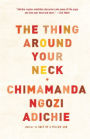
Table of Contents

Cell One Imitation A Private Experience Ghosts On Monday of Last Week Jumping Monkey Hill The Thing Around Your Neck The American Embassy The Shivering The Arrangers of Marriage Tomorrow Is Too Far The Headstrong Historian

Reading Group Guide

1. Cell One:
• “Boys who had grown up watching Sesame Street, reading Enid Blyton, eating cornflakes for breakfast, attending the university staff primary school. . . . were now cutting through the mosquito netting of their neighbors’ windows, sliding out glass louvers, and climbing in to steal TVs and VCRs” (p. 5). Why is this happening?
• Nnamabia’s early transgressions are forgiven without punishment. Are his parents responsible in some way for his eventual criminal activity? Is he truly innocent, as his mother insists?
• How does the old man change Nnamabia? Why does he affect him this way?
• Why did Adichie choose this story to lead the collection?

2. Imitation:
• What is the metaphor of the masks? And the significance of an original versus a copy?
• On page 26, Adichie writes about America’s “abundance of unreasonable hope.” What does this mean, in this story and in the collection as a whole?
• Why is it expected that men will be unfaithful, but women will not? What prompts Nkem to finally speak up?

3. A Private Experience:
• What kinds of assumptions does Chika make about the Muslim woman?
• Chika “wonders what purpose this lie serves, this need to draw on a fictional past similar to the woman’s” (p. 50). Why do you think she tells this lie?
• What does the title mean?
• Why does Chika ask to keep the scarf?

4. Ghosts:
• How much do you know about the Nigerian Civil War, the war James and Ikenna are discussing? How much does the reader need to know?
• “Ikenna, I have come to realize, is a man who carries with him the weight of what could have been” (p. 66). What prompts James’s realization? What weight does James carry?
• What is the significance of Ebere’s visits?

5. On Monday of Last Week:
• What is Adichie trying to say about American parenting?
• How does what happened on Monday change Kamara’s attitude? Why does Tracy have this effect on her?

6. Jumping Monkey Hill:
• How does Edward’s image of Africa differ from Ujunwa’s reality? What does this story tell us about white people’s attitudes towards Africans?
• On page 103, Ujunwa says she is not writing about her father “because she had never believed in fiction as therapy. The Tanzanian told her that all fiction was therapy, some sort of therapy, no matter what anybody said.” Discuss the nature of fiction, especially in terms of the story Ujunwa ultimately writes.
• How does Edward’s suggestion to Ujunwa, “I’d rather like you to lie down for me” (p. 106), affect Ujunwa? How does it inform her response to his critique of her story?

7. The Thing Around Your Neck:
• Tonally, this story is quite different from the others. Discuss the differences. Why is it the title story for the collection?
• When “your” uncle says that “America was give-and-take” (p. 116), what did you think he meant?
• What is “the thing around your neck”? What finally loosens it?
• Do you think “you” will return to him?

8. The American Embassy:
• “It was not courage, it was simply an exaggerated selfishness” (p. 136). Is the woman’s assessment of journalists accurate? Or is she merely thinking of her husband?
• Why doesn’t she tell the interviewer about Ugonna’s death?

9. The Shivering:
• What role does religion play in this story? What about faith?
• How does Chinedu’s homosexuality affect the story? Compare the American and Nigerian attitudes towards homosexuality.

10. The Arrangers of Marriage:
• On page 172, Ofodile tells Chinaza, “If you want to get anywhere [in America] you have to be as mainstream as possible.” Do you agree with him? Ultimately, does Chinaza?
• Do you think Chinaza will do as Nia suggested, and leave her husband once she gets her papers? Why?

11. Tomorrow Is Too Far:
• In this story, as in several others, a brother receives preferential treatment over his sister. How do Nigerians’ attitude towards women differ from Americans?
• What drives the main character to cause Nonso’s death? Is it murder? Why doesn’t Dozie stop her, or tell on her?
• Discuss the last paragraph of the story. Why do things turn out the way they do?

12. The Headstrong Historian:
• Why do you think Adichie chose to end the collection with historical fiction? How does it affect your understanding of some of the other stories’ characters’ motivations?
• Nwamgba believes firmly in things like destiny. Which of Adichie’s contemporary characters share that belief?
• How does Nwamgba’s plan for her son to learn English backfire? How does it pay off?
• Why does Grace change her name? What destiny is she fulfilling?

13. General Questions:
• Do Adichie’s stories have morals? How do they build upon each other? What is the moral of the collection as a whole?
• Many of the stories involve the influence of the West, particularly America, on Nigerian life. What point is Adichie trying to make? Which characters are happier, those who live in the U.S., or in Nigeria?
• How do differences in class, education, religion, and ethnicity come into play, both in America and in Nigeria?
• Discuss the importance of food in these stories. What does it signify?

(For a complete list of available reading group guides, and to sign up for the Reading Group Center enewsletter, visit www.readinggroupcenter.com)

Customer Reviews

Average Rating 3.5
( 18 )

Rating Distribution

5 Star

(7)

4 Star

(3)

3 Star

(4)

2 Star

(4)

1 Star

(0)

Your Rating:

Your Name: Create a Pen Name or Leave Anonymously

Barnes & Noble.com Review Rules

Our reader reviews allow you to share your comments on titles you liked, or didn't, with others. By submitting an online review, you are representing to Barnes & Noble.com that all information contained in your review is original and accurate in all respects, and that the submission of such content by you and the posting of such content by Barnes & Noble.com does not and will not violate the rights of any third party. Please follow the rules below to help ensure that your review can be posted.

Reviews by Our Customers Under the Age of 13

We highly value and respect everyone's opinion concerning the titles we offer. However, we cannot allow persons under the age of 13 to have accounts at BN.com or to post customer reviews. Please see our Terms of Use for more details.

What to exclude from your review:

Please do not write about reviews, commentary, or information posted on the product page. If you see any errors in the information on the product page, please send us an email.

Reviews should not contain any of the following:

  • - HTML tags, profanity, obscenities, vulgarities, or comments that defame anyone
  • - Time-sensitive information such as tour dates, signings, lectures, etc.
  • - Single-word reviews. Other people will read your review to discover why you liked or didn't like the title. Be descriptive.
  • - Comments focusing on the author or that may ruin the ending for others
  • - Phone numbers, addresses, URLs
  • - Pricing and availability information or alternative ordering information
  • - Advertisements or commercial solicitation

Reminder:

  • - By submitting a review, you grant to Barnes & Noble.com and its sublicensees the royalty-free, perpetual, irrevocable right and license to use the review in accordance with the Barnes & Noble.com Terms of Use.
  • - Barnes & Noble.com reserves the right not to post any review -- particularly those that do not follow the terms and conditions of these Rules. Barnes & Noble.com also reserves the right to remove any review at any time without notice.
  • - See Terms of Use for other conditions and disclaimers.
Search for Products You'd Like to Recommend

Recommend other products that relate to your review. Just search for them below and share!

Create a Pen Name

Your Pen Name is your unique identiy on BN.com. It will appear on the reviews you write and other website activities. Your Pen Name cannot be edited, changed or deleted once submitted.

Your Pen Name can be any combination of alphanumeric characters (plus - and _), and must be at least two characters long.

Continue Anonymously

We're sorry, but penname is already taken.

Please select one of the following:
Your Pen Name can be any combination of alphanumeric characters (plus - and _), and must be at least two characters long.

Continue Anonymously

penname is available!

By visiting the BN.com website or marking a purchase on BN.com, a User is deemed to have accepted the Terms of Use.

Continue Anonymously

Welcome, penname

You have successfully created your Pen Name. Start enjoying the benefits of the BN.com Community today.

Sort by: Showing 1 – 19 of 18 Customer Reviews
  • Anonymous

    Posted August 8, 2009

    Another A+ from Adichie

    Adichie continues to grow as a writer. "The Thing Around Your Neck" is an excellent collection of stories regarding the Nigerian and Nigerian American experience.

    1 out of 1 people found this review helpful.

    Was this review helpful? Yes  No   Report this review
  • Anonymous

    Posted March 31, 2012

    I love Chimamanda Adichie

    Her writing is live! The stories she weaves, the characters she produces are surreal. I appreciate her third world style of writing, not just about the story but about the smells, the fruits, the animals, the surroundings...by the time she gets to the message...the heart of the story, you're ready to weep.

    Was this review helpful? Yes  No   Report this review
  • Anonymous

    Posted May 12, 2010

    Not so much

    The writing is very good. But the characters are bitter and some of them unforgivable. Being from that part of the world myself I took offense to certain characters. I suppose the author had a platform and she took it.

    Was this review helpful? Yes  No   Report this review
  • Posted August 18, 2009

    She is an excellent writer!

    These stories make you feel that you are there and a part of the story yourself. She always makes me think!

    Was this review helpful? Yes  No   Report this review
  • Anonymous

    Posted October 17, 2009

    No text was provided for this review.

  • Anonymous

    Posted June 27, 2009

    No text was provided for this review.

  • Anonymous

    Posted November 27, 2010

    No text was provided for this review.

  • Anonymous

    Posted June 29, 2009

    No text was provided for this review.

  • Anonymous

    Posted October 14, 2011

    No text was provided for this review.

  • Anonymous

    Posted April 25, 2010

    No text was provided for this review.

  • Anonymous

    Posted September 1, 2009

    No text was provided for this review.

  • Anonymous

    Posted August 7, 2010

    No text was provided for this review.

  • Anonymous

    Posted December 3, 2010

    No text was provided for this review.

  • Anonymous

    Posted August 7, 2009

    No text was provided for this review.

  • Anonymous

    Posted June 23, 2011

    No text was provided for this review.

  • Anonymous

    Posted May 5, 2010

    No text was provided for this review.

  • Anonymous

    Posted April 3, 2011

    No text was provided for this review.

  • Anonymous

    Posted December 29, 2009

    No text was provided for this review.

  • Anonymous

    Posted July 23, 2011

    No text was provided for this review.

Sort by: Showing 1 – 19 of 18 Customer Reviews

If you find inappropriate content, please report it to Barnes & Noble
Why is this product inappropriate?
Comments (optional)
500 character limit