Things Fall Apart

( 345 )

Pick Up in Store

Reserve and pick up in 60 minutes at your local store

Paperback (Reprint)
$10.98
BN.com price
$11.95 List Price (Save 8%)
Marketplace (New and Used)
from
$0.99
$11.95 List Price (Save 92%)
Usually ships within 1-2 business days
All (250)  
Used (205)  
New (45)  
Close
Sort by
Page 1 of 25
Showing 1 – 10 of 250 (25 pages)
$0.99
(Save 92%)
Seller since 2009

Feedback rating:

(780)

Condition:

New — never opened or used in original packaging.

Like New — packaging may have been opened. A "Like New" item is suitable to give as a gift.

Very Good — may have minor signs of wear on packaging but item works perfectly and has no damage.

Good — item is in good condition but packaging may have signs of shelf wear/aging or torn packaging. All specific defects should be noted in the Comments section associated with each item.

Acceptable — item is in working order but may show signs of wear such as scratches or torn packaging. All specific defects should be noted in the Comments section associated with each item.

Used — An item that has been opened and may show signs of wear. All specific defects should be noted in the Comments section associated with each item.

Refurbished — A used item that has been renewed or updated and verified to be in proper working condition. Not necessarily completed by the original manufacturer.

Good
Acceptable Book is in good reading condition. Cover has wear at edges and corners, and may have creases. Spine has wear at edges and may have creases.

Ships from: Washington, DC

Usually ships in 1-2 business days

  • Canadian
  • Standard, 48 States
  • Standard (AK, HI)
  • Express, 48 States
  • Express (AK, HI)
$1.03
(Save 91%)
Seller since 2007

Feedback rating:

(896)

Condition: Good
Paperback Good Great item! Fast Shipping with tracking.

Ships from: fayetteville, AR

Usually ships in 1-2 business days

  • Canadian
  • International
  • Standard, 48 States
  • Standard (AK, HI)
  • Express, 48 States
  • Express (AK, HI)
$1.99
(Save 83%)
Seller since 2005

Feedback rating:

(224)

Condition: Very Good
1994 Trade paperback Very good. No dust jacket as issued. (El) Trade paperback (US). Glued binding. 224 p. Audience: Young adult.

Ships from: West Falls, NY

Usually ships in 1-2 business days

  • Canadian
  • International
  • Standard, 48 States
  • Standard (AK, HI)
  • Express, 48 States
  • Express (AK, HI)
$1.99
(Save 83%)
Seller since 2009

Feedback rating:

(22275)

Condition: Very Good
Giving great service since 2004: Buy from the Best! 4,000,000 items shipped to delighted customers. We have 1,000,000 unique items ready to ship! Find your Great Buy today!

Ships from: Lakewood, WA

Usually ships in 1-2 business days

  • Canadian
  • International
  • Standard, 48 States
  • Standard (AK, HI)
  • Express, 48 States
  • Express (AK, HI)
$1.99
(Save 83%)
Seller since 2009

Feedback rating:

(4412)

Condition: Acceptable
Has heavy underlining and writing. Some wear to the cover and pages. Different cover art, same ISBN. Ships the next business day, with tracking and delivery confirmation sent to ... your email. Read more Show Less

Ships from: Beaverton, OR

Usually ships in 1-2 business days

  • Standard, 48 States
  • Standard (AK, HI)
  • Express, 48 States
  • Express (AK, HI)
$1.99
(Save 83%)
Seller since 2010

Feedback rating:

(644)

Condition: Good
HIGHLIGHTINGGood shape, medium wear. Cover creased and curled.

Ships from: North Las Vegas, NV

Usually ships in 1-2 business days

  • Canadian
  • International
  • Standard, 48 States
  • Standard (AK, HI)
  • Express, 48 States
  • Express (AK, HI)
$1.99
(Save 83%)
Seller since 2009

Feedback rating:

(22275)

Condition: Good
Giving great service since 2004: Buy from the Best! 4,000,000 items shipped to delighted customers. We have 1,000,000 unique items ready to ship! Find your Great Buy today!

Ships from: Lakewood, WA

Usually ships in 1-2 business days

  • Canadian
  • International
  • Standard, 48 States
  • Standard (AK, HI)
  • Express, 48 States
  • Express (AK, HI)
$1.99
(Save 83%)
Seller since 2009

Feedback rating:

(7705)

Condition: Good
Book shows minor use. Cover and Binding have minimal wear and the pages have only minimal creases. A tradition of southern quality and service. All books guaranteed at the ... Atlanta Book Company. Our mailers are 100% recyclable. Read more Show Less

Ships from: Atlanta, GA

Usually ships in 1-2 business days

  • Canadian
  • International
  • Standard, 48 States
  • Standard (AK, HI)
  • Express, 48 States
  • Express (AK, HI)
$1.99
(Save 83%)
Seller since 2009

Feedback rating:

(2182)

Condition: Good
SOME HIGHLIGHTING AND PRICE STICKER

Ships from: Columbia, MO

Usually ships in 1-2 business days

  • Standard, 48 States
  • Standard (AK, HI)
  • Express, 48 States
  • Express (AK, HI)
$1.99
(Save 83%)
Seller since 2009

Feedback rating:

(3470)

Condition: Acceptable
Sail the Seas of Value

Ships from: Windsor, CT

Usually ships in 1-2 business days

  • Canadian
  • International
  • Standard, 48 States
  • Standard (AK, HI)
  • Express, 48 States
  • Express (AK, HI)
Page 1 of 25
Showing 1 – 10 of 250 (25 pages)
Close
Sort by
NOOK Book (eBook)
$9.99
BN.com price

Available on NOOK devices and apps

  • Nook Devices
  • NOOK
  • NOOK Color
  • NOOK Tablet
  • Tablet/Phone
  • NOOK for iPad
  • NOOK for iPhone
  • NOOK for Android
  • NOOK for Android (Tablet)
  • NOOK Kids for iPad
  • PC/Mac
  • NOOK Study
  • NOOK for PC
  • NOOK for Mac

Need a NOOK? Explore Now

All Available Formats + Editions

Marketplace From
BN.com
 

Overview

Things Fall Apart tells two intertwining stories, both centering on Okonkwo, a “strong man” of an Ibo village in Nigeria. The first, a powerful fable of the immemorial conflict between the individual and society, traces Okonkwo’s fall from grace with the tribal world. The second, as modern as the first is ancient, concerns the clash of cultures and the destruction of Okonkwo's world with the arrival of aggressive European missionaries. These perfectly harmonized twin dramas are informed by an awareness capable of encompassing at once the life of nature, human history, and the mysterious compulsions of the soul.

A classic of modern African writing, this is the tale of what happens to tribal customs and old ways when white man comes.

Editorial Reviews

Readers Catalog
Achebe's most famous novel brilliantly portrays the impact of colonialism on a traditional Nigerian village at the turn of the century. Its hero, Obi Okonkwo, epitomizes both the nobility and the rigidity of the traditional culture.
From The Critics
Things Fall Apart is one of the most widely read African novels ever published. It is written by one of Nigeria’s leading novelists, Chinua Achebe. Set in the Ibo village of Umuofia, Things Fall Apart recounts a stunning moment in African history&#8212its colonization by Britain. The novel, first published in 1958, has by today sold over 8 million copies, been translated into at least forty-five languages, and earned Achebe the somewhat misleading and patronizing title of "the man who invented African literature." It carefully re-creates tribal life before the arrival of Europeans in Africa, and then details the jarring changes brought on by the advent of colonialism and Christianity.

The book is a parable that examines the colonial experience from an African perspective, through Okonkwo, who was "a strong individual and an Igbo hero struggling to maintain the cultural integrity of his people against the overwhelming power of colonial rule." Okonkwo is banished from the community for accidentally killing a clansman and is forced to live seven years in exile. He returns to his home village, only to witness its disintegration as it abandons tradition for European ways. The book describes the simultaneous disintegration of Okonkwo and his village, as his pleas to his people not to exchange their culture for that of the English fall on deaf ears.

The brilliance of Things Fall Apart is that it addresses the imposition of colonization and the crisis in African culture caused by the collapse of colonial rule. Achebe prophetically argued that colonial domination and the culture it left in Africa had such a stranglehold on African peoples that its consequences would haunt African society long after colonizers had left the continent.

Product Details

  • ISBN-13: 9780385474542
  • Publisher: Knopf Doubleday Publishing Group
  • Publication date: 9/28/1994
  • Edition description: Reprint
  • Edition number: 1
  • Pages: 224
  • Sales rank: 1,330
  • Lexile: 890L (what's this?)
  • Series: African Writers Series
  • Product dimensions: 5.13 (w) x 7.92 (h) x 0.61 (d)

Meet the Author

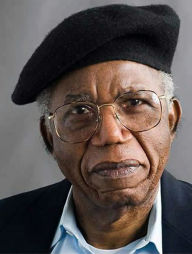
Chinua Achebe was born in Nigeria in 1930. He was raised in the large village of Ogidi, one of the first centers of Anglican missionary work in Eastern Nigeria, and is a graduate of University College, Ibadan.Cited in the London Sunday Times as one of the "1,000 Makers of the Twentieth Century" for defining "a modern African literature that was truly African" and thereby making "a major contribution to world literature," Chinua Achebe has published novels short stories, essays, and children's books. His volume of poetry, Christmas in Biafra, written during the Biafran War, was the joint winner of the first Commonwealth Poetry Prize. Of his novels, Arrow of God won the New Statesman—Jock Campbell Award, and Anthills of the Savannah was a finalist for the 1987 Booker Prize. Things Fall Apart, Chinua Achebe's masterpiece, has been published in fifty different languages and has sold millions of copies in the United States since its original publication in 1958-1959.Mr. Achebe lives with his wife in Annandale-on-Hudson, New York, where they teach at Bard College. They have four children and three grandchildren.

Read an Excerpt

Chapter OneOkonkwo was well known throughout the nine villages and even beyond. His fame rested on solid personal achievements. As a young man of eighteen he had brought honor to his village by throwing Amalinze the Cat. Amalinze was the great wrestler who for seven years was unbeaten, from Umuofia to Mbaino. He was called the Cat because his back would never touch the earth. It was this man that Okonkwo threw in a fight which the old men agreed was one of the fiercest since the founder of their town engaged a spirit of the wild for seven days and seven nights.The drums beat and the flutes sang and the spectators held their breath. Amalinze was a wily craftsman, but Okonkwo was as slippery as a fish in water. Every nerve and every muscle stood out on their arms, on their backs and their thighs, and one almost heard them stretching to breaking point. In the end, Okonkwo threw the Cat.That was many years ago, twenty years or more, and during this time Okonkwo's fame had grown like a bush-fire in the harmattan. He was tall and huge, and his bushy eyebrows and wide nose gave him a very severe look. He breathed heavily, and it was said that, when he slept, his wives and children in their houses could hear him breathe. When he walked, his heels hardly touched the ground and he seemed to walk on springs, as if he was going to pounce on somebody. And he did pounce on people quite often. He had a slight stammer and whenever he was angry and could not get his words out quickly enough, he would use his fists. He had no patience with unsuccessful men. He had had no patience with his father.Unoka, for that was his father's name, had died ten years ago. In his day he was lazy and improvident and was quite incapable of thinking about tomorrow. If any money came his way, and it seldom did, he immediately bought gourds of palm-wine, called round his neighbors and made merry. He always said that whenever he saw a dead man's mouth he saw the folly of not eating what one had in one's lifetime. Unoka was, of course, a debtor, and he owed every neighbor some money, from a few cowries to quite substantial amounts.He was tall but very thin and had a slight stoop. He wore a haggard and mournful look except when he was drinking or playing on his flute. He was very good on his flute, and his happiest moments were the two or three moons after the harvest when the village musicians brought down their instruments, hung above the fireplace. Unoka would play with them, his face beaming with blessedness and peace. Sometimes another village would ask Unoka's band and their dancing egwugwu to come and stay with them and teach them their tunes. They would go to such hosts for as long as three or four markets, making music and feasting. Unoka loved the good fare and the good fellowship, and he loved this season of the year, when the rains had stopped and the sun rose every morning with dazzling beauty. And it was not too hot either, because the cold and dry harmattan wind was blowing down from the north. Some years the harmattan was very severe and a dense haze hung on the atmosphere. Old men and children would then sit round log fires, warming their bodies. Unoka loved it all, and he loved the first kites that returned with the dry season, and the children who sang songs of welcome to them. He would remember his own childhood, how he had often wandered around looking for a kite sailing leisurely against the blue sky. As soon as he found one he would sing with his whole being, welcoming it back from its long, long journey, and asking it if it had brought home any lengths of cloth.That was years ago, when he was young. Unoka, the grown-up, was a failure. He was poor and his wife and children had barely enough to eat. People laughed at him because he was a loafer, and they swore never to lend him any more money because he never paid back. But Unoka was such a man that he always succeeded in borrowing more, and piling up his debts.One day a neighbor called Okoye came in to see him. He was reclining on a mud bed in his hut playing on the flute. He immediately rose and shook hands with Okoye, who then unrolled the goatskin which he carried under his arm, and sat down. Unoka went into an inner room and soon returned with a small wooden disc containing a kola nut, some alligator pepper and a lump of white chalk."I have kola," he announced when he sat down, and passed the disc over to his guest."Thank you. He who brings kola brings life. But I think you ought to break it," replied Okoye, passing back the disc."No, it is for you, I think," and they argued like this for a few moments before Unoka accepted the honor of breaking the kola. Okoye, meanwhile, took the lump of chalk, drew some lines on the floor, and then painted his big toe.As he broke the kola, Unoka prayed to their ancestors for life and health, and for protection against their enemies. When they had eaten they talked about many things: about the heavy rains which were drowning the yams, about the next ancestral feast and about the impending war with the village of Mbaino. Unoka was never happy when it came to wars. He was in fact a coward and could not bear the sight of blood. And so he changed the subject and talked about music, and his face beamed. He could hear in his mind's ear the blood-stirring and intricate rhythms of the ekwe and the udu and the ogene, and he could hear his own flute weaving in and out of them, decorating them with a colorful and plaintive tune. The total effect was gay and brisk, but if one picked out the flute as it went up and down and then broke up into short snatches, one saw that there was sorrow and grief there.Okoye was also a musician. He played on the ogene. But he was not a failure like Unoka. He had a large barn full of yams and he had three wives. And now he was going to take the Idemili title, the third highest in the land. It was a very expensive ceremony and he was gathering all his resources together. That was in fact the reason why he had come to see Unoka. He cleared his throat and began:"Thank you for the kola. You may have heard of the title I intend to take shortly."Having spoken plainly so far, Okoye said the next half a dozen sentences in proverbs. Among the Ibo the art of conversation is regarded very highly, and proverbs are the palm-oil with which words are eaten. Okoye was a great talker and he spoke for a long time, skirting round the subject and then hitting it finally. In short, he was asking Unoka to return the two hundred cowries he had borrowed from him more than two years before. As soon as Unoka understood what his friend was driving at, he burst out laughing. He laughed loud and long and his voice rang out clear as the ogene, and tears stood in his eyes. His visitor was amazed, and sat speechless. At the end, Unoka was able to give an answer between fresh outbursts of mirth."Look at that wall," he said, pointing at the far wall of his hut, which was rubbed with red earth so that it shone. "Look at those lines of chalk;" and Okoye saw groups of short perpendicular lines drawn in chalk. There were five groups, and the smallest group had ten lines. Unoka had a sense of the dramatic and so he allowed a pause, in which he took a pinch of snuff and sneezed noisily, and then he continued: "Each group there represents a debt to someone, and each stroke is one hundred cowries. You see, I owe that man a thousand cowries. But he has not come to wake me up in the morning for it. I shall pay, you, but not today. Our elders say that the sun will shine on those who stand before it shines on those who kneel under them. I shall pay my big debts first." And he took another pinch of snuff, as if that was paying the big debts first. Okoye rolled his goatskin and departed.When Unoka died he had taken no title at all and he was heavily in debt. Any wonder then that his son Okonkwo was ashamed of him? Fortunately, among these people a man was judged according to his worth and not according to the worth of his father. Okonkwo was clearly cut out for great things. He was still young but he had won fame as the greatest wrestler in the nine villages. He was a wealthy farmer and had two barns full of yams, and had just married his third wife. To crown it all he had taken two titles and had shown incredible prowess in two inter-tribal wars. And so although Okonkwo was still young, he was already one of the greatest men of his time. Age was respected among his people, but achievement was revered. As the elders said, if a child washed his hands he could eat with kings. Okonkwo had clearly washed his hands and so he ate with kings and elders. And that was how he came to look after the doomed lad who was sacrificed to the village of Umuofia by their neighbors to avoid war and bloodshed. The ill-fated lad was called Ikemefuna.Chapter TwoOkonkwo had just blown out the palm-oil lamp and stretched himself on his bamboo bed when he heard the ogene of the town crier piercing the still night air. Gome, gome, gome, gome, boomed the hollow metal. Then the crier gave his message, and at the end of it beat his instrument again. And this was the message. Every man of Umuofia was asked to gather at the market place tomorrow morning. Okonkwo wondered what was amiss, for he knew certainly that something was amiss. He had discerned a clear overtone of tragedy in the crier's voice, and even now he could still hear it as it grew dimmer and dimmer in the distance.The night was very quiet. It was always quiet except on moonlight nights. Darkness held a vague terror for these people, even the bravest among them. Children were warned not to whistle at night for fear of evil spirits. Dangerous animals became even more sinister and uncanny in the dark. A snake was never called by its name at night, because it would hear. It was called a string. And so on this particular night as the crier's voice was gradually swallowed up in the distance, silence returned to the world, a vibrant silence made more intense by the universal trill of a million million forest insects.On a moonlight night it would be different. The happy voices of children playing in open fields would then be heard. And perhaps those not so young would be playing in pairs in less open places, and old men and women would remember their youth. As the Ibo say: "When the moon is shining the cripple becomes hungry for a walk."But this particular night was dark and silent. And in all the nine villages of Umuofia a town crier with his ogene asked every man to be present tomorrow morning. Okonkwo on his bamboo bed tried to figure out the nature of the emergency—war with a neighboring clan? That seemed the most likely reason, and he was not afraid of war. He was a man of action, a man of war. Unlike his father he could stand the look of blood. In Umuofia's latest war he was the first to bring home a human head. That was his fifth head; and he was not an old man yet. On great occasions such as the funeral of a village celebrity he drank his palm-wine from his first human head.In the morning the market place was full. There must have been about ten thousand men there, all talking in low voices. At last Ogbuefi Ezeugo stood up in the midst of them and bellowed four times, "Umuofia kwenu", and on each occasion he faced a different direction and seemed to push the air with a clenched fist. And ten thousand men answered "Yaal" each time. Then there was perfect silence. Ogbuefi Ezeugo was a powerful orator and was always chosen to speak on such occasions. He moved his hand over his white head and stroked his white beard. He then adjusted his cloth, which was passed under his right arm-pit and tied above his left shoulder."Umuofia kwenu", he bellowed a fifth time, and the crowd yelled in answer. And then suddenly like one possessed he shot out his left hand and pointed in the direction of Mbaino, and said through gleaming white teeth firmly clenched: "Those sons of wild animals have dared to murder a daughter of Umuofia." He threw his head down and gnashed his teeth, and allowed a murmur of suppressed anger to sweep the crowd. When he began again, the anger on his face was gone and in its place a sort of smile hovered, more terrible and more sinister than the anger. And in a clear unemotional voice he told Umuofia how their daughter had gone to market at Mbaino and had been killed. That woman, said Ezeugo, was the wife of Ogbuefi Udo, and he pointed to a man who sat near him with a bowed head. The crowd then shouted with anger and thirst for blood.Many others spoke, and at the end it was decided to follow the normal course of action. An ultimatum was immediately dispatched to Mbaino asking them to choose between war on the one hand, and on the other the offer of a young man and a virgin as compensation.Umuofia was feared by all its neighbors. It was powerful in war and in magic, and its priests and medicine men were feared in all the surrounding country. Its most potent war-medicine was as old as the clan itself. Nobody knew how old. But on one point there was general agreement—the active principle in that medicine had been an old woman with one leg. In fact, the medicine itself was called agadi-nwayi, or old woman. It had its shrine in the centre of Umuofia, in a cleared spot. And if anybody was so foolhardy as to pass by the shrine after dusk he was sure to see the old woman hopping about.

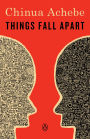
Table of Contents

Preface
Chinua Achebe: A Biographical Note
Chinua Achebe and the Invention of African Literature
Igbo Culture and History
Principal Characters in the Novel
Glossary of Words and Phrases Used in the Text
Suggestions for Further Reading
Things Fall Apart 1

Introduction

It is the express purpose of this guide to aid your group in reading, discussing, and more fully enjoying this illuminating work. It provides you with new perspectives on the work and hopefully provides you with new avenues for your conversations.

Foreward

1. The Ibo religious structure consists of chi—the personal god—and many other gods and goddesses. What advantages and disadvantages does such a religion provide when compared with your own?

2. The text includes many original African terms and there is a glossary provided. Do you find that this lends atmospheric authenticity, thus bringing you closer to the work? Do you find it helpful?

3. There is an issue here of fate versus personal control over destiny. For example, Okonkwo's father is sometimes held responsible for his own actions, while at other times he is referred to as ill-fated and a victim of evil-fortune. Which do you think Okonkwo believes is true? What do you think Achebe believes is true? What do you believe?

4. The threads of the story are related in a circular fashion, as opposed to a conventional linear time pattern. What effect does this impose on the tale of Ikemefuma? What effect does it have on the story of Ezinma?

5. The villagers believe—or pretend to believe—that the "Supreme Court" of the nine egwugwu are ancestral spirits. In fact, they are men of the village in disguise. What does this say about the nature of justice in general, and in this village in particular?

6. Our own news media pre-programs us to view the kind of culture clash represented here as being purely racial in basis. Does Achebe's work impress as being primarily concerned with black versus white tensions? If not, what else is going on here?

7. Certain aspects of the clan's religious practice, such as the mutilation of a dead child to prevent its spirit from returning, might impress us as being barbaric. Casting an honest eyeon our own religious practices, which ones might appear barbaric or bizarre to an outsider?

8. In an essay entitled "The Novelist as Teacher," Achebe states: "Here then is an adequate revolution for me to espouse—to help my society regain belief in itself and put away the complexes of the years of denigration and self-abasement" (Hopes and Impediments, p. 44). In what ways do you feel that this novel places Achebe closer to the fulfillment of this noble aspiration?

9. Nature plays an integral role in the mythic and real life of the Ibo villagers, much more so than in our own society. Discuss ways in which their perception of animals—such as the cat, the locust, the python—differ from your own, and how these different beliefs shape our behavior.

10. The sacrifice of Ikemefuma could be seen as being a parallel to the crucifixion of Jesus. The event also raises a series of questions. Ikemefuma and the villagers that are left behind are told that he is "going home" (p. 58). Does this euphemism for dying contain truth for them? Do they believe they are doing him a favor? Why do they wait three years, him and Okonkwo's family to think of him as a member of the family? Finally, Okonkwo, "the father," allows the sacrifice to occur as God presumably allowed Christ's sacrifice, with no resistance. How can one accept this behavior and maintain love for the father or God?

11. Of Ezinma, Okonkwo thinks: "She should have been a boy" (p. 64). Why is it necessary to the story that Okonkwo's most favored child be a girl?

12. Of one of the goddesses, it is said: "It was not the same Chielo who sat with her in the market...Chielo was not a woman that night" (p. 106). What do you make of this culture where people can be both themselves and also assume other personas? Can you think of any parallels in your own world?

13. There are many proverbs related during the course of the narrative. Recalling specific ones, what function do you perceive these proverbs as fulfilling in the life of the Ibo? What do you surmise Achebe's purpose to be in the inclusion of them here?

14. While the traditional figure of Okonkwo can in no doubt be seen as the central figure in the tale, Achebe chooses to relate his story in the third person rather than the first person narrative style. What benefits does he reap by adopting this approach?

15. Okonkwo rejects his father's way and is, in turn, rejected by Nwoye. Do you feel this pattern evolves inevitably through the nature of the father/son relationship? Or is there something more being here than mere generational conflict?

16. The lives of Ikemefuma and Okonkwo can be deemed parallel to the extent that they both have fathers whose behavior is judged unacceptable. What do you think the contributing factors are to the divergent paths their fate takes them on as a result of their respective fathers' shadows?

17. The title of the novel is derived from the William Butler Yeats poem entitled The Second Coming, concerned with the second coming of Christ. The completed line reads: "Things fall apart; the centre cannot hold." What layers of meaning are discernible when this completed line is applied to the story?

18. The District Commissioner is going to title his work The Pacification of the Primitive Tribes of the Niger (p. 209). What do you interpret from this to be his perception of Okonkwo and the people of Umuofia? And what do you imagine this augurs in the ensuing volumes in Achebe's trilogy of Nigerian life?

Reading Group Guide

1. The Ibo religious structure consists of chi--the personal god--and many other gods and goddesses. What advantages and disadvantages does such a religion provide when compared with your own?

2. The text includes many original African terms and there is a glossary provided. Do you find that this lends atmospheric authenticity, thus bringing you closer to the work? Do you find it helpful?

3. There is an issue here of fate versus personal control over destiny. For example, Okonkwo's father is sometimes held responsible for his own actions, while at other times he is referred to as ill-fated and a victim of evil-fortune. Which do you think Okonkwo believes is true? What do you think Achebe believes is true? What do you believe?

4. The threads of the story are related in a circular fashion, as opposed to a conventional linear time pattern. What effect does this impose on the tale of Ikemefuma? What effect does it have on the story of Ezinma?

5. The villagers believe--or pretend to believe--that the "Supreme Court" of the nine egwugwu are ancestral spirits. In fact, they are men of the village in disguise. What does this say about the nature of justice in general, and in this village in particular?

6. Our own news media pre-programs us to view the kind of culture clash represented here as being purely racial in basis. Does Achebe's work impress as being primarily concerned with black versus white tensions? If not, what else is going on here?

7. Certain aspects of the clan's religious practice, such as the mutilation of a dead child to prevent its spirit from returning, might impress us as being barbaric. Casting an honest eye on our own religiouspractices, which ones might appear barbaric or bizarre to an outsider?

8. In an essay entitled "The Novelist as Teacher, " Achebe states: "Here then is an adequate revolution for me to espouse--to help my society regain belief in itself and put away the complexes of the years of denigration and self-abasement" (Hopes and Impediments, p. 44). In what ways do you feel that this novel places Achebe closer to the fulfillment of this noble aspiration?

9. Nature plays an integral role in the mythic and real life of the Ibo villagers, much more so than in our own society. Discuss ways in which their perception of animals--such as the cat, the locust, the python--differ from your own, and how these different beliefs shape our behavior.

10. The sacrifice of Ikemefuma could be seen as being a parallel to the crucifixion of Jesus. The event also raises a series of questions. Ikemefuma and the villagers that are left behind are told that he is "going home" (p. 58). Does this euphemism for dying contain truth for them? Do they believe they are doing him a favor? Why do they wait three years, him and Okonkwo's family to think of him as a member of the family? Finally, Okonkwo, "the father, " allows the sacrifice to occur as God presumably allowed Christ's sacrifice, with no resistance. How can one accept this behavior and maintain love for the father or God?

11. Of Ezinma, Okonkwo thinks: "She should have been a boy" (p. 64). Why is it necessary to the story that Okonkwo's most favored child be a girl?

12. Of one of the goddesses, it is said: "It was not the same Chielo who sat with her in the market... Chielo was not a woman that night" (p. 106). What do you make of this culture where people can be both themselves and also assume other personas? Can you think of any parallels in your own world?

13. There are many proverbs related during the course of the narrative. Recalling specific ones, what function do you perceive these proverbs as fulfilling in the life of the Ibo? What do you surmise Achebe's purpose to be in the inclusion of them here?

14. While the traditional figure of Okonkwo can in no doubt be seen as the central figure in the tale, Achebe chooses to relate his story in the third person rather than the first person narrative style. What benefits does he reap by adopting this approach?

15. Okonkwo rejects his father's way and is, in turn, rejected by Nwoye. Do you feel this pattern evolves inevitably through the nature of the father/son relationship? Or is there something more being here than mere generational conflict?

16. The lives of Ikemefuma and Okonkwo can be deemed parallel to the extent that they both have fathers whose behavior is judged unacceptable. What do you think the contributing factors are to the divergent paths their fate takes them on as a result of their respective fathers' shadows?

17. The title of the novel is derived from the William Butler Yeats poem entitled The Second Coming, concerned with the second coming of Christ. The completed line reads: "Things fall apart; the centre cannot hold." What layers of meaning are discernible when this completed line is applied to the story?

18. The District Commissioner is going to title his work The Pacification of the Primitive Tribes of the Niger (p. 209). What do you interpret from this to be his perception of Okonkwo and the people of Umuofia? And what do you imagine this augurs in the ensuing volumes in Achebe's trilogy of Nigerian life?

Customer Reviews
Average Rating 3.5
( 345 )

Rating Distribution

If you've bought this product, tell the world how you liked it.
Write a Review
See All Sort by: Showing 1 – 20 of 345 Customer Reviews
  • Posted May 20, 2009

    more from this reviewer

    I Also Recommend:

    A Classic Tale.

    Things Fall Apart is incredible. Not only is it a story of the encroaching British civilization and how the villagers adapt or do not adapt to the changing ways, Things Fall Apart is about the inner workings of a family. Father and son are very different and very similair at the same time. The father is old school while the son embraces the new way. What is intriguing is the society that is portrayed; a society that is male dominant. However the priestess is not to be disobeyed. Things Fall Apart would make a good reading for students.

    6 out of 7 people found this review helpful.

    Was this review helpful? Yes  No   Report this review
  • Anonymous

    Posted December 12, 2007

    Story or Documentary?

    This book had no plot. Most of the first part had absolutely no relevance to what little storyline there was. The thin plot that finally developed ended up being rushed at the end. The entire thing with the spirits was confusing for me - were they real, or is Okonkwo just crazy? Personally, I hated Okonkwo simply because his story was so boring. I couldn't really care less what happened to him - I was never able to connect with him. I think this story would have done better as a documentary or encyclopedia entry, because that is basically what it is, and it is a plague to high school students everywhere.

    4 out of 7 people found this review helpful.

    Was this review helpful? Yes  No   Report this review
  • Anonymous

    Posted January 3, 2005

    An awful apologetic for a savage culture

    This is a story that still believes that the idea of the 'noble savage' is correct. Okonkwo is a sexist angry man who is so hung up on his savage 'traditions.' The missionaries who come are not much better, with their misguided religion. All in all, a very depressing read that tries to make the reader feel sorry for Okonkwo. Instead, you end up hating him. And they give this to high school students.

    4 out of 5 people found this review helpful.

    Was this review helpful? Yes  No   Report this review
  • Anonymous

    Posted June 24, 2010

    Really Very Good

    This was a very good book about changes and about the clashes of cultures. It was well written, had a very good plot, and I think that Okonkwo's character led to his responses to all the things that happened in his life, things he could not change if he wanted to, almost like he was cornered and lashing out to preserve whatever values he had towards his culture and family. Also, I had to re-read a couple pages to get who was who, but foreign names is really a shallow factor in deciding whether or not a book is worth reading. If you start a book with that kind of mentality, no wonder you can't get the point, you don't really even want to understand it even a little. That's the entire point of the references in the back, to help you understand what is going on. If you are willing to reread some parts, learn quite a bit about previous cultures, and be open to deeper meanings, this classic book is recommended for you.

    2 out of 4 people found this review helpful.

    Was this review helpful? Yes  No   Report this review
  • Posted April 14, 2010

    more from this reviewer

    Required Reading

    I ordered this book as required reading for a class I am teaching. The basic story line is easy to understand, but the themes are excellent for discussing in a Senior High School Level class.

    2 out of 3 people found this review helpful.

    Was this review helpful? Yes  No   Report this review
  • Posted February 5, 2012

    school reading

    A very uneventful book. My IB advanced Language Arts class was forced to read it during the summer. I am an avid reader and can read a book in a day if I like it. Needless to say it took me a whole three months to finish it and even then I skipped around and read Sparknotes for some of it. I felt like I had to read the same sentence three or four times because my eyes kept getting out of focus and my mind would drift.

    1 out of 1 people found this review helpful.

    Was this review helpful? Yes  No   Report this review
  • Anonymous

    Posted September 14, 2010

    Things Fall Apart themes, summary, and review...

    Things Fall Apart was a great novel to read. This book is about major changes not only happening to one man and his life, but also the village that he lives in. The main character, Okonkwo, is a very determined man that tries to basically do the opposite of his father, which includes being masculine in everything he does and trying to make his son do the same. His father was a scared, lazy man in the village who did virtually nothing productive for himself, his family, or the village. In Things Fall Apart, there is African culture on the verge of change after some newcomers arrive in the village. This book raises the question of whether to accept the new changes or stick to the same old tradition in African culture. Likes/Dislikes - I liked the ironic situations in the book that mixed things up and suprised me a bit. - I disliked that the story did not have a real plot to read about. I feel like it was more of a documentary of African culture. I do recommend this novel to read. This is not only a great way to learn about some of African culture, it is overall a great book to read with ironic situations occuring throughout the book.

    1 out of 3 people found this review helpful.

    Was this review helpful? Yes  No   Report this review
  • Anonymous

    Posted April 20, 2010

    Daughter's book report

    I have not personally read this book. But my 13 year(s) old daughter has and she liked it a lot. She got this book in a timely fashion (but then all of our orders from here are timely) and read it within the week.

    1 out of 4 people found this review helpful.

    Was this review helpful? Yes  No   Report this review
  • Posted February 3, 2010

    SLA English Class Review - Earth Stream

    David Buckholtz 1/27/10
    English 3 Homework Book Review

    The modern tragedy of Okonkwo who is a Igbo farmer who has been born out of a confusing family by his athletic talents and hard work. His entire life is motivated by a fear of failure, failing like his poor father. The reason why he put so much pressure on his famlily. Okonkwo stated that "Will you give Ezinma some fire to bring to me?" ... often called her Ezigbo, which means "the good one." (5.30-34). Tragic events build each other causing the arrival of white men and the irreversible change of Okonkwo's world. This story is about the life of Okonkwo, an up and coming leader of an Igbo village in Africa. He is willing to do anything to maintain his social status, no matter the suffering that it causes himself and those around him. Everything that Okonkwo holds dear becomes threatened after an accidental shooting. Okonkwo must flee with his family from his beloved village for seven years, losing the life that he worked so hard to gain. He gets through his seven years of exile only to go back home and discover that everything has changed. White missionaries have come to convert Africa to their ways.

    1 out of 1 people found this review helpful.

    Was this review helpful? Yes  No   Report this review
  • Anonymous

    Posted September 15, 2009

    THings Fall Apart Review

    Things Fall Apart is a great novel written by Chinua Achebe. This book is about a Nigerian warrior, clansman, farmer, and family provider extraordinaire named Okonkwo from the Umufia clan. It is known to be the lowest clan among nine villages. He is the son of the desist Unoka, who has left him many debts to deal with. Okonkwo is married to several wives Ekwefi and Ojiugo, and has a son named Nwoye, and daughter Ezinma to name a few. Okonkwo's tribe wins a boy from another tribe named Ikemefuna, after claiming him as a son for years Okonkwo is told to kill the boy. This has a big affect on Okonkwo.
    Okonkwo is one the main characters in the book. He known is very bold, violent, strong. The reason for this is because Okonkwo wanted to be the complete opposite from his father. His father was a cowardly type man, and was known as gentle. He wanted to be better than his father. Ogbuefi Ezeudu is the villages' oldest man. He is described as very wise. This is because he is old, old people known more and has experienced more. He was known to be a good warrior of his time. He warns Okonkwo about Ikemefuna, and tells him to kill Ikemefuna. Another character that is brave is confident, and brave is Ezinma. The reason that she is this way is because she the way she stands up to her father. She tends to approach her father in a masculine manner.
    "Does the white man understand our custom about land?" "How can he when he does not even speak our tongue? But he says that our customs are bad; and our own brothers who have taken up his religion also say that our customs are bad. How do you think we can fight when our own brothers have turned against us?'
    This is a conversation between Obierika and Okonkwo, This is discussing the arrival of the white taking over their village. This quote is important because it talks about the purpose of the village falling apart. Also this is the main idea of the novel. It is like the conflict of the novel. This quote gives you an idea of what the storyline maybe like.
    I believe that this is a good book because it shows you the way that people in Africa were living. This shows how they have to deal with outsiders. It shows how back in that time how Europeans invaded African villages and try to convert people all over Africa. This book was written very well. I thought it was bad that the take an enemy's child a there's and raise them. I thought it was weird how people of the village wee actually converting, and this was shown as being weak. Overall this is a great book, it really captures how they lived in the Nigerian villages.

    1 out of 1 people found this review helpful.

    Was this review helpful? Yes  No   Report this review
  • Anonymous

    Posted August 26, 2008

    not for everyone

    This book was very interesting. It gave me the chance to look at another persons life and how another culture works. The main character was very confused to me because he wanted to be the total opposite of his father. He loved his daughter but didn't want to show it. I guess in his tribe the women are to care for the girls and and men are to help the boys to become men. They have to be tough and provide for the family. This book was mostly about Okonkwo and his manly ego being protected.

    1 out of 1 people found this review helpful.

    Was this review helpful? Yes  No   Report this review
  • Anonymous

    Posted July 3, 2008

    Amazing!

    This book if not just taken at face value is amazing. You must read deeply into it and see the imagery, irony, and symbolism in it.

    1 out of 2 people found this review helpful.

    Was this review helpful? Yes  No   Report this review
  • Anonymous

    Posted February 19, 2008

    Terrible

    This book expresses TERRIBLE reading ideas and i would not reccomend this book to anyone. It was a terrible book.

    1 out of 4 people found this review helpful.

    Was this review helpful? Yes  No   Report this review
  • Anonymous

    Posted July 11, 2007

    A reviewer

    If the book is about white man's takeover of Western Africa, then why does the book have to have anything about Okonkwo's anger and fear of laziness? It would make more sense if he was a nobler man, one who embodied all that was good about his clan, and not characterestics like physical rage and stubbornness. It made him appear weak to us. It was as if Achebe was trying to show that neither the white man nor Okonkwo and his people were the, as a kid would put it, 'good guys,' which doesn't make sense considering what Achebe seems to be trying to portray. This makes it very hard to choose a side. Also, the plot develops very late in the book, around the middle, and when it does develop, it is weak to begin with. In addition, near the end, it is resolved almost too quickly, leaving the reader, yep, you guessed it, even MORE confused. To compare this to Harry Potter and the Sorcerer's Stone, it would be as if Harry isn't told that he's a wizard until halfway through the book, up to which point Dudley and his parents continue to make Harry's life miserable - and making the book much more boring. If you want a good book that illustrates what Achebe apparently tried to show, read Cry, the Beloved Country, by Alan Paton. It is both more interesting and much more well developed. Take it from a high school student.

    1 out of 3 people found this review helpful.

    Was this review helpful? Yes  No   Report this review
  • Anonymous

    Posted December 13, 2003

    Things Fall Apart by Chinua Achebe

    I thought that this book was cleverly written. The omniscient point of view gave the reader a chance to understand what was going on outside of the main character and sometimes gave an inside look at the minds of the characters that were not the main focus. The development of the book gave subtle hints of the not so shocking (to me at least) ending. I greatly enjoyed reading the book and I hope that others have an opportunity to pick it up as well.

    1 out of 1 people found this review helpful.

    Was this review helpful? Yes  No   Report this review
  • Anonymous

    Posted January 17, 2012

    A different perspective

    An amazing read for anyone looking for a glimpse into a different world, just keep an open mind while reading.

    Was this review helpful? Yes  No   Report this review
  • Posted January 15, 2012

    Great story, well told

    This is a great story, and is told masterfully by a very skilled storyteller. He does a great job of taking us into the corrupt world of Nigeria, helping to shed a light on why things are the way they are. Love this book.

    Was this review helpful? Yes  No   Report this review
  • Anonymous

    Posted December 30, 2011

    Excellent book

    I've bought this book years ago and have dodged reading it until last week. Loved it from beginning to end. Things Fall Apart is a simple and beautiful read from beginning to end. Even though you know how it will end as soon as europeans and christianity are intoduced into the storyline, the knowledge does not diminish the tale. Okonkwo's ethical struggles represent the dilemma that still face a large portion of Africa today. Just bought No Longer at Ease.

    Was this review helpful? Yes  No   Report this review
  • Anonymous

    Posted December 28, 2011

    Great novel

    Amazing story that makes you rethink your stances on religious issues

    Was this review helpful? Yes  No   Report this review
  • Anonymous

    Posted December 24, 2011

    Book

    Can someone please tell me about the book in understandable language?

    Was this review helpful? Yes  No   Report this review
See All Sort by: Showing 1 – 20 of 345 Customer Reviews

If you find inappropriate content, please report it to Barnes & Noble
Why is this product inappropriate?
Comments (optional)
500 character limit