A Thousand Splendid Suns

( 1230 )

Pick Up in Store

Reserve and pick up in 60 minutes at your local store

Paperback (Reprint)
$13.98
BN.com price
$16.00 List Price (Save 13%)
Marketplace (New and Used)
from
$1.99
$16.00 List Price (Save 88%)
Usually ships within 1-2 business days
All (63)  
Used (38)  
New (25)  
Close
Sort by
Page 1 of 7
Showing 1 – 10 of 63 (7 pages)
$1.99
(Save 88%)
Seller since 2006

Feedback rating:

(49867)

Condition:

New — never opened or used in original packaging.

Like New — packaging may have been opened. A "Like New" item is suitable to give as a gift.

Very Good — may have minor signs of wear on packaging but item works perfectly and has no damage.

Good — item is in good condition but packaging may have signs of shelf wear/aging or torn packaging. All specific defects should be noted in the Comments section associated with each item.

Acceptable — item is in working order but may show signs of wear such as scratches or torn packaging. All specific defects should be noted in the Comments section associated with each item.

Used — An item that has been opened and may show signs of wear. All specific defects should be noted in the Comments section associated with each item.

Refurbished — A used item that has been renewed or updated and verified to be in proper working condition. Not necessarily completed by the original manufacturer.

Acceptable
Shows definite wear, and perhaps considerable marking on inside. 100% Money Back Guarantee. Shipped to over one million happy customers. Your purchase benefits world literacy!

Ships from: Mishawaka, IN

Usually ships in 1-2 business days

  • Canadian
  • International
  • Standard, 48 States
  • Standard (AK, HI)
  • Express, 48 States
  • Express (AK, HI)
$3.50
(Save 78%)
Seller since 2012

Feedback rating:

(120)

Condition: Good
Minimal highlighting! Reprint. Ships fast. Expedited shipping 2-4 business days; Standard shipping 7-14 business days.

Ships from: Arlington, TX

Usually ships in 1-2 business days

  • Standard, 48 States
  • Standard (AK, HI)
  • Express, 48 States
  • Express (AK, HI)
$3.96
(Save 75%)
Seller since 2009

Feedback rating:

(22269)

Condition: Good
Giving great service since 2004: Buy from the Best! 4,000,000 items shipped to delighted customers. We have 1,000,000 unique items ready to ship! Find your Great Buy today!

Ships from: Lakewood, WA

Usually ships in 1-2 business days

  • Canadian
  • International
  • Standard, 48 States
  • Standard (AK, HI)
  • Express, 48 States
  • Express (AK, HI)
$3.99
(Save 75%)
Seller since 2009

Feedback rating:

(228)

Condition: Good
2008 Paperback Good Used book with normal wear and tear and may contain writing. Stock photo may be different from actual book cover.

Ships from: Englewood, CO

Usually ships in 1-2 business days

  • Canadian
  • International
  • Standard, 48 States
  • Standard (AK, HI)
  • Express, 48 States
  • Express (AK, HI)
$5.64
(Save 65%)
Seller since 2009

Feedback rating:

(22269)

Condition: Good
Giving great service since 2004: Buy from the Best! 4,000,000 items shipped to delighted customers. We have 1,000,000 unique items ready to ship! Find your Great Buy today!

Ships from: Lakewood, WA

Usually ships in 1-2 business days

  • Canadian
  • International
  • Standard, 48 States
  • Standard (AK, HI)
  • Express, 48 States
  • Express (AK, HI)
$5.64
(Save 65%)
Seller since 2009

Feedback rating:

(22269)

Condition: Good
Giving great service since 2004: Buy from the Best! 4,000,000 items shipped to delighted customers. We have 1,000,000 unique items ready to ship! Find your Great Buy today!

Ships from: Lakewood, WA

Usually ships in 1-2 business days

  • Canadian
  • International
  • Standard, 48 States
  • Standard (AK, HI)
  • Express, 48 States
  • Express (AK, HI)
$5.64
(Save 65%)
Seller since 2009

Feedback rating:

(22269)

Condition: Good
Giving great service since 2004: Buy from the Best! 4,000,000 items shipped to delighted customers. We have 1,000,000 unique items ready to ship! Find your Great Buy today!

Ships from: Lakewood, WA

Usually ships in 1-2 business days

  • Canadian
  • International
  • Standard, 48 States
  • Standard (AK, HI)
  • Express, 48 States
  • Express (AK, HI)
$5.64
(Save 65%)
Seller since 2009

Feedback rating:

(22269)

Condition: Good
Giving great service since 2004: Buy from the Best! 4,000,000 items shipped to delighted customers. We have 1,000,000 unique items ready to ship! Find your Great Buy today!

Ships from: Lakewood, WA

Usually ships in 1-2 business days

  • Canadian
  • International
  • Standard, 48 States
  • Standard (AK, HI)
  • Express, 48 States
  • Express (AK, HI)
$5.91
(Save 63%)
Seller since 2008

Feedback rating:

(946)

Condition: Good
Reading bends to front and back covers,. General paperback wear, bends in spine, possible bends from reading on the cover, and may have a bookstore stamp inside cover. Quick ... response! Read more Show Less

Ships from: Salt Lake City, UT

Usually ships in 1-2 business days

  • Canadian
  • International
  • Standard, 48 States
  • Standard (AK, HI)
  • Express, 48 States
  • Express (AK, HI)
$6.00
(Save 62%)
Seller since 2011

Feedback rating:

(241)

Condition: Good
Used - Good Reprint May contain highlighting/underlining/notes/etc. May have used stickers on cover. Ships same or next day. Expedited shipping takes 2-3 business days; standard ... shipping takes 4-14 business days. Read more Show Less

Ships from: Fayetteville, AR

Usually ships in 1-2 business days

  • Standard, 48 States
  • Standard (AK, HI)
  • Express, 48 States
  • Express (AK, HI)
Page 1 of 7
Showing 1 – 10 of 63 (7 pages)
Close
Sort by
NOOK Book (eBook)
$12.99
BN.com price

Available on NOOK devices and apps

  • Nook Devices
  • NOOK
  • NOOK Color
  • NOOK Tablet
  • Tablet/Phone
  • NOOK for iPad
  • NOOK for iPhone
  • NOOK for Android
  • NOOK for Android (Tablet)
  • NOOK Kids for iPad
  • PC/Mac
  • NOOK Study
  • NOOK for PC
  • NOOK for Mac

Need a NOOK? Explore Now

All Available Formats + Editions

Marketplace From
BN.com
See more formats + editions

Overview

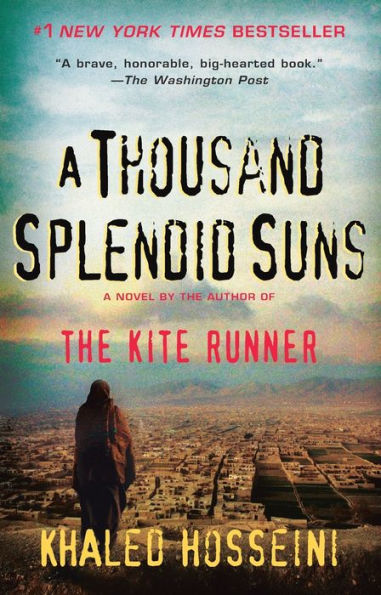
This deluxe illustrated edition of A Thousand Splendid Suns is filled with striking and memorable photographs that bring Khaled Hosseini's compelling story to life. Since its publication in 2007, A Thousand Splendid Suns has shipped more than three million copies. The bestselling adult novel of 2007, it spent fifteen weeks at #1 on the New York Times bestseller list and remained on the list for an impressive forty-nine weeks. Propelled by the same superb instinct for storytelling that made The Kite Runner a beloved classic, A Thousand Splendid Suns is at once an incredible chronicle of thirty years of Afghan history and a deeply moving story of family, friendship, faith, and the salvation to be found in love.

Now, in this lavishly designed edition of the novel, the narrative is enhanced by expressive photos that capture the people and culture of the region in vivid detail and reflect the book's powerful themes, so apt for our times: the passionate search for family, home, acceptance, a healthy society, and a promising future-regardless of the obstacles. Together with The Kite Runner: Illustrated Edition, the illustrated A Thousand Splendid Suns creates a beautiful matched set.

  • Khaled Hosseini
    Khaled Hosseini

Editorial Reviews

From Barnes & Noble
Khaled Hosseini's follow-up to The Kite Runner does not disappoint. Set like its predecessor in war-torn Afghanistan, A Thousand Splendid Suns uses that tumultuous backdrop to render the heroic plight of two women of different generations married to the same savagely abusive male. Born out of wedlock, Mariam was forced to marry 40-year-old Rasheed when she was only 15. Then, 18 years later, her still childless husband angrily takes an even younger wife. Hosseini renders the story of Mariam and her "sister/daughter," Laila, with persuasive detail and consummate humanity. Their abject situation leaves them no emotional space for idle philosophizing; their resistance is from the very core of their being. Truly must-read fiction.
Booklist
Unimaginably tragic, Hosseini's magnificent second novel is a sad and beautiful testament to both Afghani suffering and strength. Readers who lost themselves in The Kite Runner will not want to miss this unforgettable follow up.
From The Critics
Often, second novels pale in comparison to the first, but this long-awaited story pulls the reader completely into a world of cruelty, despair, pain and poverty and offers hope, redemption and love to offset the anguish. It brings to life a part of the world that the average American knows little about, and makes real for us the very human implications of our foreign policies, long after Afghanistan faded from the headlines.

Product Details

  • ISBN-13: 9781594483851
  • Publisher: Penguin Group (USA)
  • Publication date: 11/25/2008
  • Edition description: Reprint
  • Pages: 432
  • Sales rank: 13,339
  • Lexile: 0830L (what's this?)
  • Product dimensions: 5.10 (w) x 7.90 (h) x 1.20 (d)

Meet the Author

Khaled Hosseini
Khaled Hosseini
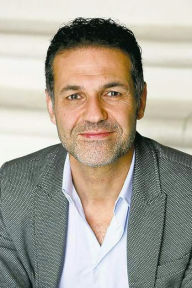
Afghan-born physician Khaled Hosseini rises at 4:00 every morning to pursue his second career -- as buzz-worthy, bestselling author. His first effort, The Kite Runner, is "a vivid and engaging story that reminds us how long his people have been struggling to triumph over the forces of violence," reflects The New York Times.

Biography

On Christmas Day in 1979, the Soviet Union invaded Afghanistan, securing Kabul within two days and remaining for a nine-year war with anti-government insurgents. During the time of the initial invasion, Afghani born Khaled Hosseini was living in Paris, France, where his father worked at a diplomatic post at the Afghan Embassy. When Hosseini and his family returned to their home country in 1980, they found the landscape violently changed and found themselves in need of political asylum in the United States.

As he grew older, Hosseini feared the Afghanistan that existed prior to the Soviet war and the subsequent rise of the Taliban would be forgotten forever. Even as he reached great levels of success as a practicing internist in California two decades after last having been to Afghanistan, he never forgot his roots. So, rising at 4AM every morning before beginning his medical shift, Hosseini began writing a story that not only captured the unsullied Afghanistan of his youth but also tracked its ensuing downfall. "I wanted to write about Afghanistan before the Soviet war because that is largely a forgotten period in modern Afghan history," he told Newsline.com. "For many people in the west, Afghanistan is synonymous with the Soviet war and the Taliban. I wanted to remind people that Afghans had managed to live in peaceful anonymity for decades, that the history of the Afghans in the 20th century has been largely pacific and harmonious."

The novel that resulted from Hosseini's early morning writing sessions was The Kite Runner, a heart-rending tale about two Afghan boys, best friends pulled apart by personal betrayal and the immense upheaval of war. Drawing raves from a long list of publications, this 2003 debut went on to become an international hit. Four years later, Hosseini delivered A Thousand Splendid Suns, an emotionally resonant crowd-pleaser focused on the plight of oppressed Afghan women before and during the rise of the Taliban.

In 2003, Hosseini revisited the place of his birth for the first time in nearly 27 years. "I returned to Afghanistan because I had a deep longing to see for myself how people lived, what they thought of their government, how optimistic they were about the future of their homeland," he said. "I was overwhelmed with the kindness of people and found that they had managed to retain their dignity, their pride, and their hospitality under unspeakably bleak conditions." In Hosseini's gripping novels, their voices rise strong and clear above the clash of violence.

Good To Know

During his years in the U.S., Hosseini has soaked in more than his share of American culture. He professes to be a fan of such U.S. institutions as the music of Bruce Springsteen and football. Still, he admits that he simply cannot appreciate baseball, saying, "I think that to fully appreciate baseball, it helps to have been born in the U.S."

When it comes to chickens, Hosseini is a chicken. "I'm terrified of chickens," the writer confesses. "Absolutely petrified. This intense and irrational fear is, I believe, caused by the memory of a black hen we owned in Kabul when I was a child. She used to peck her own chicks to death as soon as the eggs hatched."

When Hosseini isn't writing or tending to one of his patients, he enjoys games of no-limits Texas hold 'em poker with his brother and friends.

    1. Hometown:
      Sunnyvale, California
    1. Date of Birth:
      March 4, 1965
    2. Place of Birth:
      Kabul, Afghanistan
    1. Education:
      B.S. in biology, Santa Clara University, 1988; M.D., UC San Diego School of Medicine, 1993
    2. Website:

Interviews & Essays

A conversation with
Khaled Hosseini,
author of
A THOUSAND SPLENDID SUNS


1. The Kite Runner helped alter the world’s perception of Afghanistan, by giving millions of readers their first real sense of what the Afghan people and their daily lives are actually like. Your new novel includes the main events in Afghanistan’s history over the past three decades, from the communist revolution to the Soviet invasion to the U.S.-led war against the Taliban. Do you feel a special responsibility to inform the world about your native country, especially given the current situation there and the prominent platform you’ve gained?


For me as a writer, the story has always taken precedence over everything else. I have never sat down to write with broad, sweeping ideas in mind, and certainly never with a specific agenda. It is quite a burden for a writer to feel a responsibility to represent his or her own culture and to educate others about it.  For me it always starts from a very personal, intimate place, about human connections, and then expands from there. What intrigued me about this new book were the hopes and dreams and disillusions of these two women, their inner lives, the specific circumstances that bring them together, their resolve to survive, and the fact that their relationship evolves into something meaningful and powerful, even as the world around them unravels and slips into chaos. But as I wrote, I witnessed the story expanding, becoming more ambitious page after page. I realized that telling the story of these two women without telling, inpart, the story of Afghanistan from the 1970s to the post-9/11 era simply was not possible. The intimate and personal was intertwined inextricably with the broad and historical. And so the turmoil in Afghanistan and the country’s tortured recent past slowly became more than mere backdrop. Gradually, Afghanistan itself—and more specifically, Kabul—became a character in this novel, to a much larger extent, I think, than in The Kite Runner. But it was simply for the sake of storytelling, not out of a sense of social responsibility to inform readers about my native country. That said, I will be gratified if they walk away from A Thousand Splendid Suns with a satisfying story and with a little more insight and a more personal sense of what has happened in Afghanistan in the last thirty years.


2. What kind of response do you hope readers have to A Thousand Splendid Suns?


Purely as a writer, I hope that readers discover in this novel the same things that I look for when I read fiction: a story that transports, characters who engage, and a sense of illumination, of having been transformed somehow by the experiences of the characters. I hope that readers respond to the emotions of this story, that despite vast cultural differences, they identify with Mariam and Laila and their dreams and ordinary hopes and day-to-day struggle to survive.  As an Afghan, I would like readers to walk away with a sense of empathy for Afghans, and more specifically for Afghan women, on whom the effects of war and extremism have been devastating.  I hope this novel brings depth, nuance, and emotional subtext to the familiar image of the burqa-clad woman walking down a dusty street.


3. Where does the title of your new book come from?


It comes from a poem about Kabul by Saib-e-Tabrizi, a seventeenth-century Persian poet, who wrote it after a visit to the city left him deeply impressed. I was searching for English translations of poems about Kabul, for use in a scene where a character bemoans leaving his beloved city, when I found this particular verse. I realized that I had found not only the right line for the scene, but also an evocative title in the phrase “a thousand splendid suns,” which appears in the next-to-last stanza. The poem was translated from Farsi by Dr. Josephine Davis.


4. You recently received the Humanitarian Award from the United Nations Refugee Agency and were named a U.S. goodwill envoy to that agency. What kind of work have you done with the agency? What will your responsibilities be in your position as a goodwill envoy?


It’s been a tremendous honor for me to be asked to work with UNHCR as a goodwill envoy. As a native of a country with one of the world’s largest refugee populations, I hold the issue of refugees close to my heart. I will be asked to make public appearances on behalf of the refugee cause and to serve as a public advocate for refugees around the world. It will be my privilege to try to capture public attention and to use my access to the media to give voice to victims of humanitarian crises and raise public awareness about matters relating to refugees.


In January of this year, I had the opportunity of going to Chad with UNHCR to visit the refugee camps where some 250,000 people from Darfur have sought haven.  I had the chance to speak to refugees, local authorities and humanitarian staff and to educate myself about the staggering tragedy unfolding in the region.  It was a sobering and heartbreaking experience and one that I will never forget.  Presently I am working with UNHCR on the Aid Darfur campaign.  It is my intention that my future work with the agency take me to Afghan refugee camps in Pakistan.


5. You present a portrait of Afghanistan under the Taliban that may be surprising to many readers. For example, the Taliban’s ban on music and movies is well known, but many readers are not familiar with the “Titanic fever” that swept through Kabul upon the release of that film, which was shown in secret on black-market VCRs and TVs. How tight a grip did the Taliban truly have on the country? And how does pop culture survive under these traditions?


The Taliban’s acts of cultural vandalism—the most infamous being the destruction of the giant Bamiyan Buddhas—had a devastating effect on Afghan culture and the artistic scene. The Taliban burned countless films, VCRs, music tapes, books, and paintings. They jailed filmmakers, musicians, painters, and sculptors.  These restrictions forced some artists to abandon their craft, and many to continue practicing in covert fashion. Some built cellars where they painted or played musical instruments. Others gathered in the guise of a sewing circle to write fiction, as depicted in Christina Lamb’s The Sewing Circles of Herat. And still others found ingenious ways to trick the Taliban—one famous example being a painter who, at the order of the Taliban, painted over the human faces on his oil paintings, except he did with it watercolor, which he washed off after the Taliban were ousted. These were among the desperate ways in which artists tried to escape the Taliban’s firm grip on virtually every form of artistic expression.


6. You earned your medical degree before you began writing fiction. How does being a doctor compare with being a writer?


I enjoyed practicing medicine and was always honored that patients put their trust in me to take care of them and their loved ones. But writing had always been my passion, since childhood, much as with Amir in The Kite Runner. I feel fortunate and privileged that writing is, at least for the time being, my livelihood. It is a dream realized.


I have not found many similarities between my two crafts, except that in both it helps to have at least some insight into human nature. Writers and doctors alike need to understand the motivation behind the things people say and do, and their fears, their hopes and aspirations. In both professions, one needs to appreciate how socioeconomic background, family, culture, language, religion, and other factors shape a person, whether it is a patient in an exam room or a character in a story.


7. In what ways was writing A Thousand Splendid Suns different from writing The Kite Runner?


Well, when I was writing The Kite Runner, no one was waiting for it!  The difficulty of writing a second novel is directly proportional to how successful the first novel was, it seems.  For me, at the outset, there was a period of self-doubt and hesitation, as well as a recurring tendency to question and reassess my own literary capabilities and limitations. This was especially so when I was aware of the people out there who were eagerly awaiting the book: booksellers, my publisher, and of course, the reading public. This is both wonderful—after all, you want your work to be anticipated—and daunting—your work is anticipated!


Though I did experience some of these apprehensions—as my wife will surely attest—I gradually learned to view them as natural and not unique to me. And as I began to write, as the story picked up pace and I found myself immersed in the world of Mariam and Laila, these apprehensions vanished on their own. The developing story captured me and enabled me to tune out the background noise and get on with the business of inhabiting the world I was creating.


I also think that A Thousand Splendid Suns is, in some ways, a more ambitious book than my first novel. The story is multigenerational, unfolding over almost forty-five years, often skipping ahead years. There is a larger cast of characters, and a dual perspective, and the wars and political turmoil in Afghanistan are chronicled with more detail than in The Kite Runner. This means that I was performing a perpetual balancing act in writing about the intimate—the inner lives of the characters—and depicting the external world that exerts pressure on the characters and forces their fate.


8. Do you see common themes in the two books?


In both novels, characters are caught in a crossfire and overwhelmed by external forces. Their inner lives are influenced by an often brutal and unforgiving outside world, and the decisions they make about their own lives are influenced by things over which they have no control: revolutions, wars, extremism, and oppression. This, I think, is even more the case with A Thousand Splendid Suns. In The Kite Runner, Amir spends many years away from Afghanistan as an immigrant in the United States. The horrors and hardships that he is spared, Mariam and Laila live through; in that sense, their lives are shaped more acutely by the events in Afghanistan than Amir’s life is.


Both novels are multigenerational, and so the relationship between parent and child, with all of its manifest complexities and contradictions, is a prominent theme. I did not intend this, but I am keenly interested, it appears, in the way parents and children love, disappoint, and in the end honor each other. In one way, the two novels are corollaries: The Kite Runner was a father-son story, and A Thousand Splendid Suns can be seen as a mother-daughter story.


Ultimately, I think, both novels are love stories. Characters seek and are saved by love and human connection. In The Kite Runner, it was mainly the love between men. In A Thousand Splendid Suns, love manifests itself in even more various shapes, be it romantic love between a man and a woman, parental love, or love for family, home, country, God. I think in both novels, it is ultimately love that draws characters out of their isolation, that gives them the strength to transcend their own limitations, to expose their vulnerabilities, and to perform devastating acts of self-sacrifice.


9. One of the men in your novel dreams of coming to America, as your family did. He sees America as a kind of golden, generous land. Is that something many Afghans dream still of?


The way Afghans view America and Americans is complex, I think. On the one hand, America is seen as a bastion of hope for Afghanistan. The notion of the American troops packing up and leaving strikes fear into the hearts of many Afghans, I believe, as they dread the chaos, anarchy, and extremism that would likely follow. On the other hand, there is also some sense of disappointment and disillusionment. There is lingering bitterness, I think, about the way Afghans feel they were abandoned by the West—and America in particular—when the Soviets left, a period that was marked by the factional fighting that destroyed so much of Kabul. In addition, there is a growing sentiment, rightfully or not, that promises made by America are not being kept. The average Afghan, I think, had hopes of drastic changes in quality of life, in security conditions, and economic options, when the Americans came to Afghanistan after 9/11. Many Afghans feel that these hopes have not been realized. They feel that the war in Iraq, undertaken so soon after the campaign in Afghanistan, channeled attention, troops, and resources away from Afghanistan. Still, I think most Afghans remain hopeful about their country’s partnership with the U.S. and many echo the sentiment of Babi in A Thousand Splendid Suns, viewing the United States as a desirable place to live, and as a land of opportunity and hope.


10. The women in your story suffer deeply and personally from being oppressed because of their gender, in their homes and in the broader society. Is this oppression particularly onerous in the Muslim world? What can and should be done about it?


This is a complex question with no easy answer. It is undeniable that the treatment of women in some Muslim countries—including my own—has been dismal. The evidence is simply overwhelming. In Afghanistan under the Taliban, women were denied education, the right to work, the right to move freely, access to adequate healthcare, etc.  Yet I want to distance myself from the notion, popular in some circles, that the West can and should exert pressure on these countries to grant women equal rights. Though I think this is a well-intended and even noble idea, I see it as too simplistic and impractical. This approach either directly or indirectly dismisses the complexities and nuances of the target society as dictated by its culture, traditions, customs, political system, social structure, and overriding faith.


I believe change needs to come from within, that is, from a Muslim society’s own fabric. In Afghanistan, I think it is essential for its future that those more moderate elements who support women’s rights be empowered. Barring that, the prospects for success are grim. I am always revolted when Islamic leaders, from Afghanistan or elsewhere, deny the very existence of female oppression, avoid the issue by pointing to examples of what they view as Western mistreatment of women, or even worse, justify the oppression of women on the basis of notions derived from Sharia law. I hope that twenty-first-century Islamic leaders can unshackle themselves from antiquated ideas about gender roles and open themselves to a more moderate and progressive approach. I realize that this may sound naive, especially in a country such as Afghanistan, where staunch Islamists still hold sway and look to silence moderate voices. Nevertheless, I think it is the only way that true change can come about, from within Islamic societies themselves.


11. Are you optimistic about the current situation in Afghanistan? 


I am an optimistic person by nature, so yes, I do remain cautiously optimistic about Afghanistan’s future. But it must be said that it has been a difficult year for Afghanistan. Aside from the challenges of poverty, poor medical care, lack of education and infrastructure, and the flourishing opium industry, we now have a formidable resurgence by the Taliban and their Al-Qaeda cohorts in the southern and eastern parts of the country. They have given NATO and American troops all that they can handle. The ongoing fighting and the lack of security are chief concerns among Afghans, and have an erosive effect on the image of the Afghan government. There is the risk of disillusion with the Afghan government and with the country’s nascent, fragile democracy, and this makes people susceptible to the influence of the extremists.


12. What is likely to happen in Afghanistan if the current government fails?


I want to state first that I have no expertise in these matters and that any opinion I offer is that of an ordinary thinking citizen who follows the news.  That said, I think failure in Afghanistan would be catastrophic not only for Afghanistan but for the West as well. It would fracture the country, and seriously damage the credibility of the west. It would embolden the Taliban, and just as important, those who support the Taliban, namely Al-Qaeda and other extremist Islamic militants. Most ominous of all, it would turn Afghanistan into a safe haven once more for anti-Western jihadis who can gather there and plan their military operations against the United States and its allies.


13. What should the United States and its allies be doing in Afghanistan now?


I will re-iterate my lack of true qualification to answer this.  But it seems to me that U.S. and NATO withdrawal from Afghanistan would have disastrous results. At this point, it seems to me the west has no viable choice but to stay committed to the mission in Afghanistan. Simultaneously, the west has to try to empower the central government and help it gain credibility among Afghans, while doing what can be done to eradicate the opium trade and strengthen the country’s economy in an effort to demonstrate to ordinary Afghans the West’s goodwill and its long-term commitment to their country.  Military effort alone will not bring success in Afghanistan.  This is as much a battle for the trust of the people as it is one against the Taliban.


14. The Kite Runner was centered on the friendship between two men, and the story was told from a male point of view. In your new book, you’ve focused on the relationship between two women, and the tale is told from their alternating perspectives. Why did you decide to write from a female point of view this time? What was it about these particular women and their relationship that gripped you?


I had been entertaining the idea of writing a story of Afghan women for some time after I’d finished writing The Kite Runner.  That first novel was a male-dominated story.  All the major characters, except perhaps for Amir’s wife Soraya, were men.  There was a whole facet of Afghan society which I hadn’t touched on in The Kite Runner, an entire landscape that I felt was fertile with story ideas.  After all, so much had happened to Afghan women in the last thirty years, particularly after the Soviets withdrew and factional fighting broke out.  With the outbreak of civil war, women in Afghanistan were subjected to gender based human rights abuses, such as rape and forced marriage.  They were used as spoils of war.  They were abducted and sold into prostitution.  When the Taliban came, they imposed inhumane restrictions on women, limiting their freedom of movement, expression, barring them from work and education, harassing them, humiliating them, beating them.


In the spring of 2003, I went to Kabul, and I recall seeing these burqa-clad women sitting at street corners, with four, five, six children, begging for change.  I remember watching them walking in pairs up the street, trailed by their children in ragged clothes, and wondering how life had brought them to that point.  What were their dreams, hopes, longings?  Had they been in love?  Who were their husbands?  What had they lost, whom had they lost, in the wars that plagued Afghanistan for two decades?


I spoke to many of those women in Kabul.  Their life stories were truly heartbreaking.  For instance, one woman, a mother of six, told me that her husband, a traffic policeman, made $40 a month and hadn’t been paid in six months.  She had borrowed from friends and relatives to survive, but since she could not pay them back, they had stopped lending her money.  And so, every day she dispatched her children to different parts of Kabul to beg at street corners.  I spoke to another woman who told me that a widowed neighbor of hers, faced with the prospect of starvation, had laced bread crumbs with rat poison and fed it to her kids, then had eaten it herself.  I met a little girl whose father had been paralyzed from the waist down by shrapnel.  She and her mother begged on the streets of Kabul from sunrise to sundown.


When I began writing A Thousand Splendid Suns, I found myself thinking about those resilient women over and over.  Though no one woman that I met in Kabul inspired either Laila or Mariam, their voices, faces, and their incredible stories of survival were always with me, and a good part of my inspiration for this novel came from their collective spirit.


15. This novel has a few strong female characters. How did you create them? Are they based on women you know among your own family and friends, on your reading, on your imagination?


They are not drawn from family members or from people I know. In this respect, this second novel is far less autobiographical than The Kite Runner. Largely they are drawn from my imagination and, even more so, from the women I saw and met in Kabul back in 2003.


16. The Kite Runner was adopted by many reading groups, and by cities and communities as part of their public reading programs. Why do you think that happened? What do you think people take away from your stories?


The Kite Runner is multi-layered, in that it provides readers with cultural, religious, political, historical, and literary points to discuss. But I suspect that also part of the reason it is popular with book groups is that it is a very human story. Because the themes of friendship, betrayal, guilt, redemption, and the uneasy love between fathers and sons are universal and not specifically Afghan, the book has reached across cultural, racial, religious, and gender gaps to resonate with readers of various backgrounds. I think people respond to the emotions in this book.


There is also, of course, international interest in Afghanistan, given the events of 9/11 and the war on terror. For many readers, this book is really the first window into that culture. So there is also a curiosity about that country, which this book addresses to some extent.


17. A movie based on The Kite Runner is now being shot in China. When is it scheduled to be completed? What can you tell us about the movie and the experience of watching your first novel be transformed for the screen?


The shooting wrapped in December 2006. From what I understand, it will be released in the fall of this year, possibly in November.


Being on the set was a surreal experience. Writing a novel is an intensely personal and solitary undertaking.  Filmmaking is first and foremost a collaborative process. So it was strange to see dozens of people running around, trying to transforming this very internal creation of mine into a visual experience for everybody else. It was a unique experience to witness the visual interpretation of my thoughts.


In addition, I learned to divorce myself from the notion that everything that I had put on the page would end up on the screen. Inevitably there is going to be a divide between book and film. But to me, the idea is not how closely the adaptation will measure up to my internal images, but rather how the filmmaker will combine the written prose with the power of animated picture to make a visual narrative that can stand on its merits as a work of art, an entity that is separate from its literary precursor, that can be admired for its own virtues and artistry, while remaining faithful to the core emotional experiences that made the book appealing in the first place.


18. How has life changed for you since the publication of The Kite Runner?


I travel a great deal more than I did before. I have seen places that I might not have otherwise—something that kept recurring to me when I was on the movie set in Kashgar, in remote western China. I have a slew of new friends in the literary and publishing community and have had the honor of meeting and speaking with writers whose work I had admired for a long time. Also, I have been on an extended sabbatical from medicine, and have spent the last two years focusing on my writing, something that had long been a dream of mine. My days are shaped now around the creation of stories. As I mentioned before, I am working with UNHCR to raise awareness about refugee issues. So the publication of The Kite Runner has had a profound effect on my life and has changed it dramatically. But as far as my wife, my children, my extended family, and all of my old friends are concerned, nothing at all has changed.


19. You have visited Afghanistan since you came to the United States with your family in 1980. What was it like to go back? Would you like to return again? Is it possible for you to return now?


There is a line in the book where Amir says to his guide, "I feel like a tourist in my own country."  To a large extent I did as well, when I returned to Kabul.  After all, I had been gone for more than a quarter of a century.  I was not there for the war against the Soviets, for the mujahedeen infighting, or the Taliban.  I did not lose any limbs to landmines and did not have to live in a refugee camp.  There was certainly an element of survivor's guilt in my return.  I felt, on the one hand, that I belonged there, where everyone spoke my language and shared my culture.  On the other hand, I felt like an outsider, a very fortunate outsider, but an outsider nevertheless.


I found that much of the city was either neglected or basically destroyed.  There was a shocking number of widows, orphans, people who had lost limbs to landmines and bombs.  There was also an abundance of guns and I detected a gun culture in Kabul, something which I did not recall at all of course from the 1970’s.


But the most striking thing to me was that despite the atrocities, the unspeakable brutalities, and the hardships Afghans had endured, they had not lost their humility, their grace, their hospitality, or their sense of hope.  I came away very much humbled by their resilience.  I certainly do hope to return there again but have no concrete plans at the moment. 

Customer Reviews
Average Rating 4.5
( 1230 )

Rating Distribution

If you've bought this product, tell the world how you liked it.
Write a Review
See All Sort by: Showing 1 – 20 of 1234 Customer Reviews
  • Posted September 5, 2009

    I Also Recommend:

    A Thousand Splendid Suns

    This book is equally as good, and as haunting, as Kite Runner. This time the story is about two Afghani women. Life in Afghanistan is wretched enough, but to be a Muslim woman in Afghanistan can be lethal, especially after the Taliban come to power. This book is beautifully written and at times difficult to read, but it's also difficult to put down. Mariam and Laila are wonderfully-drawn characters that will stay with me forever. They made me know just how lucky I am to be an American woman, and how unfortunate life can be for Muslim women in Muslim countries. This book will break your heart, but it will also put it back together again. Highly recommended.

    16 out of 16 people found this review helpful.

    Was this review helpful? Yes  No   Report this review
  • Anonymous

    Posted November 13, 2008

    I Also Recommend:

    YES, SPLENDID

    Judging from the number of reviews, I must be the last person on the planet to read this book. If you listened to the audiobook as I did, just a friendly warning: don't listen to it in public--because I defy you not to bawl like a baby at parts of this book, especially the last third.
    "Suns" seemed to me like an allegorical tale. Hosseini has written a very observant, photographic picture of life in Afghanistan as seen through the eyes of Maryam, Laila and to some extent Rasheed and Tariq. This is definitely a book told through the women. It is about how each of their lives either expands and painfully, brutally and violently contracts at the whim of the men in their lives, just as Afghanistan is contracting and suffocating at the hands of the Russians, warlords and then the Taliban.
    Hosseini does not spare the reader the pain and despair of Maryam's life, beginning with her betrayal by her father, through her daily life with the "cheerful cruelty" and violence of Rasheed, and Laila's unwelcome entry into it. He describes with incredible realism how Laila's life literally explodes around her. This is a well written book I think most would find interesting.
    I haven't read The Kite Runner, but after reading A Thousand Splendid Suns, I cannot wait.

    5 out of 7 people found this review helpful.

    Was this review helpful? Yes  No   Report this review
  • Posted May 2, 2010

    Gripping

    Can we ever read enough books that broaden our perspective on the world and help us see other cultures than our own? This book spans 30 years and gives us a glimpse of the history of Afghanistan through the eyes of two Afghani women. These two women, the older Mariam and the younger Laila, both are wives of Rasheed, a cruel, cold man who sees beating his wife as a man's rightful due. Over time, Mariam and Laila form a bond, and this small little ray of hop and kindness is in stark contrast to the misery of their bleak worlds. Once again, after his masterpiece, "The Kite Runner," Khaled Hosseini is treating us to another involving, gripping novel, and taking us to a place and a life that is likely to make us very much appreciate our own accidents of birth into a much easier world.

    3 out of 3 people found this review helpful.

    Was this review helpful? Yes  No   Report this review
  • Posted June 11, 2009

    more from this reviewer

    radiance of a thousand splendid suns in a woman's heart....

    Yes , I just finished Khaled Hosseini's second masterpiece and I am at cross roads of trying to pen down what the pages made me think and feel. Interestingly, I still haven't completed the Kite Runner but this one, I couldn't put down for a second. The first thing that strikes you about the book is the fact that it is the story of the lives of 2 women amidst a battered Afghanistan, spanning several decades, but more importantly, it is a story written by a man, completely from a woman's perspective. This is even more striking when you realize that this is the same author who made his readers' eyes sting with the accounts of "Baba Jaan" in the Kite Runner.

    I am in no way qualified to critique this masterpiece but I don't want to lose the essence that it left me in me today. As one reads the book, one is made brutally aware of the atrocities that are lashed out on women in different levels of society in different ways. One feels a sense of revulsion towards fundamentalism in all its forms. One is apalled at how close to truth, some of these pages probably are. Yes, the storyline speaks to one geographical area and one socio-political community, and yet as I went through the pages, the paragraphs that left my face moist with tears were not the ones that shouted atrocities, rather the ones that would resonate with any woman today, in any part of the world, in any community, in any faith.

    Whether it was the unshed tears of an incomplete love story, or the sorrow of a woman to lose her child even before the little one made an appearence in this world; whether it was the joy of the same woman to find opportunities where she could be a mother in ways that completed her very existence without ever giving birth; whether it was that friend who would kill for you; that friend who would die so you could live your dreams; at the end of the day this was a story of the best and worst facets of human relationships. No one is without frailties, least of all a woman, and yet what makes you look in awe at the 2 principal characters in the book is their very imperfection; their inability to probably fight their circumstances and yet their ability to be the best they can be.

    The book makes you look at reality head on, makes you lock eyes with the most brutal beast that can get you down, some call it fate, some call it circumstances, I call it my reflection in my mirror. You truly are your own worst enemy if you let that reflection determine your image rather than the other way around.

    Laila and Mariam - the 2 principal characters in the book, didn't live, they merely existed, but somehow in all that they went through, their spirit shone with a radiance that can only be a gift of the Divine. Yes, they are characters from a work of fiction, but as I started to look around me, I realized I have the privilege of knowing a lot of women who may not suffer the physical adversities that Laila and Mariam did, but mentally they could have been reduced to a shell of a human being. Yet these women not only survived but have done so with pride, dignity, with their heads held high. We

    3 out of 4 people found this review helpful.

    Was this review helpful? Yes  No   Report this review
  • Anonymous

    Posted February 16, 2009

    Marvelous Gift!

    I purchased the Large Print edition for my 84 year-old mother-in-law who recently came to live in my home. She was delighted with the gift and enjoyed this volume immensely. When she finished, she was insistent that I find her a copy of its predecessor, The Kite Runner. I completely recommend The Kite Runner and A Thousand Splendid Suns to all readers, whether the standard print or the large print editions.

    3 out of 3 people found this review helpful.

    Was this review helpful? Yes  No   Report this review
  • Posted November 6, 2009

    I Also Recommend:

    Quiet Desperation

    This is a beautifully written story weaving a stark picture of quiet desperation in a culture that devalues and dehumanizes women. This one eats at your very soul!

    Two others I found completely compelling, heartwarming and ultimately life changing are EXPLOSION IN PARIS, by L. Pirrung and THE HELP, by K. Stockett....SO WORTH YOUR TIME!!

    2 out of 3 people found this review helpful.

    Was this review helpful? Yes  No   Report this review
  • Anonymous

    Posted April 28, 2009

    Excellent Work

    This is one of the best books I have read. The last 100 pages had me in tears. Really made me think about priveleged I am to live in a country like the USA. Very good book,excellent author. Must get!!!!

    2 out of 3 people found this review helpful.

    Was this review helpful? Yes  No   Report this review
  • Posted April 15, 2009

    awesome

    After reading a thousand splendid suns, i had a clear cut view of the some of the problems regarding sexism in Afghanistan. Throughout the book we follow two Afghani women who face the adversity that their unique societies present to them. This really painted a realistic picture as to the extremely different lives americans live compared to afghanis. I really had a strong feeling for this novel just because you feel the pain and sorrow that these women do. I would strongly recommend this book as well as The kite runner.

    2 out of 2 people found this review helpful.

    Was this review helpful? Yes  No   Report this review
  • Posted February 9, 2009

    Heart-wrenching and Touching

    Khaled Hosseini is a very gifted writer. This book blew me away. Hosseini takes you deep into the depressing lives of three central characters and makes you truely get to know them. Books have made me cry and laugh out loud but this was the first novel to make my stomach clench at some of things that happen to these women. I can't wait see more from Hosseini.

    2 out of 2 people found this review helpful.

    Was this review helpful? Yes  No   Report this review
  • Anonymous

    Posted June 22, 2010

    A Thousand Splendid Suns

    "Just as good, if not better, than Hosseini's best-selling first book, The Kite Runner." -Newsweek
    This quote exactly states the opinion of many people whose attention was captured by Hosseini's first novel "The Kite Runner" and who were not disappointed for one second while reading his second novel "A Thousand Splendid Suns". In his second novel the central characters are two women living in Afghanistan. The story takes place between 1960's and 2003. The author creates excitement and shows his creativity by dividing the plot into four sections.
    In the first part Mariam is the main character and in the second and third part it is Laila and in the fourth part it is the perspective of Mariam and Laila. This creates authenticity and sympathy for the fate of the two women and their heartbreaking story.
    As opposed to the first novel, in this novel Khaled Hosseini emphasizes the perspective of women in Afghanistan and the relationship between these women.
    The story describes how the life of women changed throughout the history of Afghanistan and the influence of the Taliban. It describes how women get abused and discriminated against by their husbands and men in general. Furthermore the reader can easily follow the adjustment to the Taliban rules that were imposed on women.
    Another interesting point is that the two main characters grew up in extremely different circumstances as told in the beginning of the story. One of them is the illegitimated child of a poor woman and is poorly educated whereas the other one is a well educated child born into a family which does not neglect her and treats her with respect. Throughout the story the two characters are connected by fate and destiny which results in a deep friendship even though Mariam is a generation older than Laila.
    As a woman reading this story it provokes interest and deep compassion for the characters. I would give the book 4 stars out of 5 but because the book focuses a little too much on relationship and love and the male readers might be bored because they cannot relate to the story as a women can. However, this novel is definitely worth reading and I would recommend it.

    1 out of 1 people found this review helpful.

    Was this review helpful? Yes  No   Report this review
  • Anonymous

    Posted February 16, 2009

    Hosseini has another amazing story to tell

    LOVE this book, could not put it down so I bought a copy for a friend as he was crazy about "Kite Runner" and even though English is barely a second language he cannot put this book down. Wonderful story!

    1 out of 1 people found this review helpful.

    Was this review helpful? Yes  No   Report this review
  • Posted October 7, 2008

    more from this reviewer

    I Also Recommend:

    Unforgettable!

    A vividly written novel - so compelling and heartbreaking as it follows the life of Mariam, a most innocent and loving child, who grows up to endure unimaginable hardships and emotional pain so gripping, it is hard not to cry throughout. A unforgettable story and an un-put-downable-book!

    1 out of 1 people found this review helpful.

    Was this review helpful? Yes  No   Report this review
  • Anonymous

    Posted February 9, 2012

    Amazing book. Heartwarming story

    Was this review helpful? Yes  No   Report this review
  • Anonymous

    Posted February 4, 2012

    Was this review helpful? Yes  No   Report this review
  • Anonymous

    Posted February 2, 2012

    Amazing

    This book was very good and touching. It made me cry couple of times and i did not want to put the book down . Just as good as The kite Runner !!!! Great job once again !

    Was this review helpful? Yes  No   Report this review
  • Anonymous

    Posted February 1, 2012

    Amazing

    This has to be one of the most amazing books ive ever read. It truly channels u into another world that most americans are blinded against. The story in itself is riveting and exciting. Though it is also sad and sickening. Altogether, this books will give u that experience that u crave from all good books. It will transfer u into the story and u will feel all the emotions the characters feel. My favorire book to date!!!

    Was this review helpful? Yes  No   Report this review
  • Anonymous

    Posted January 29, 2012

    Compelling

    A great read.

    Was this review helpful? Yes  No   Report this review
  • Anonymous

    Posted January 20, 2012

    This was a splendid book.

    Khaled Hosseini's "A Thousand Splendid Suns" is a beautiful, multicultural story that takes place in the modern-day Middle East. He uses much imagery and suspense, as the story is told in third-person omnicent. Mariam and Laila are two Afghan women in this story who are both married to an older man, Rasheed. Rasheed is spiteful and cruel in his ways, and always wants what's best for him. Marium is married off at fifteen, imagining a future for herself that is highly improbable. She has this love/thirst for knowledge and life, motivating those around her. Her intentions and ideas are good, despite the cruelties of her life. Laila grew up in the once lovely town of Kabul, where her father fed her in wealth, knowledge, and poetry that gave this book its title. She becomes incredibly close to her crippled friend Taria, which later turns into irrevocable love. when a gruesome war brakes out in Kabul, Taria decides to flee Pakistan, asking for fourteen year old Laila's hand in marriage. Laila declines, however, for she feared losing her father. Laila is all her father had, for his sons were lost to the war. After a bomb is detonated, Laila is then found by Rasheed and Mariam, who take her in. Laila then becomes Rasheed's second wife. This story is swamped with secrets, as Rasheed questions if his new daughter is his own or Taria's. Mariam and Laila develop a close mother-daughter bond as they are used to the whims of their husband. Liala gives her daughter the name Aziza, meaning "cherished one". The baby symbolizes Laila's sweet memories of the love of Taria. Her strong-willed nature helps her keep these memories and secrets from Rasheed, and she soon finds the strength to stand up against Rasheed. This book will entertain your hands in such a turning of pages, from start to finish, much like "The Kite Runner"(also written by Khaled Hosseini). I recommend this book for everybody, for it deals with skilled warfare, compassion, and one's inner will.

    Was this review helpful? Yes  No   Report this review
  • Anonymous

    Posted January 15, 2012

    Kite Runner

    The best book!!

    Was this review helpful? Yes  No   Report this review
  • Anonymous

    Posted January 14, 2012

    OMG! This is a MUST READ

    Story of two women from their early years to present day Afghanistan. SUCH an accurate depiction of wwomen over time and the very real challenges they survuve. I admit I sobbed at one point but do not miss readung this book. I could not put it down.

    Was this review helpful? Yes  No   Report this review
See All Sort by: Showing 1 – 20 of 1234 Customer Reviews

If you find inappropriate content, please report it to Barnes & Noble
Why is this product inappropriate?
Comments (optional)
500 character limit