
The official United States Army manual, U.S. Army Reconnaissance and Surveillance Handbook provides tactics, techniques, and procedures for reconnaissance and surveillance planning, mission management, and reporting.
Throughout history, military leaders have recognized the importance of reconnaissance and surveillance. Gaining and maintaining contact with the enemy is essential to win the battle, and U.S. military history contains many examples where our knowledge of the enemy, or lack of knowledge, directly led to victory or defeat.
The role of reconnaissance and surveillance has not diminished on the modern battlefield; if anything, it has become even more important. Battles at the combat training centers prove that a good reconnaissance and surveillance effort is critical to successful attacks. On the other hand, a poor reconnaissance and surveillance effort almost guarantees defeat for the commander. The message is clear: success on the battlefield begins with reconnaissance and surveillance.
This essential handbook covers:
It also looks at the development of intelligence, employment considerations for reconnaissance, and defines the roles of various personnel in planning operations.
Intended for maneuver commanders and their staffs; intelligence staffs and collection managers; and other personnel involved in planning and reconnaissance and counter-reconnaissance operations, and now available to everyone, U.S. Army Reconnaissance and Surveillance Handbook provides an insider’s look into the world of Army intelligence.
1143832659
Throughout history, military leaders have recognized the importance of reconnaissance and surveillance. Gaining and maintaining contact with the enemy is essential to win the battle, and U.S. military history contains many examples where our knowledge of the enemy, or lack of knowledge, directly led to victory or defeat.
The role of reconnaissance and surveillance has not diminished on the modern battlefield; if anything, it has become even more important. Battles at the combat training centers prove that a good reconnaissance and surveillance effort is critical to successful attacks. On the other hand, a poor reconnaissance and surveillance effort almost guarantees defeat for the commander. The message is clear: success on the battlefield begins with reconnaissance and surveillance.
This essential handbook covers:
- Surveillance
- Preparation
- Assets
- Equipment
- Planning
- Monitoring
- Organizing Missions
- Electronic warfare
- Counter-reconnaissance
- And more!
It also looks at the development of intelligence, employment considerations for reconnaissance, and defines the roles of various personnel in planning operations.
Intended for maneuver commanders and their staffs; intelligence staffs and collection managers; and other personnel involved in planning and reconnaissance and counter-reconnaissance operations, and now available to everyone, U.S. Army Reconnaissance and Surveillance Handbook provides an insider’s look into the world of Army intelligence.
U.S. Army Reconnaissance and Surveillance Handbook
The official United States Army manual, U.S. Army Reconnaissance and Surveillance Handbook provides tactics, techniques, and procedures for reconnaissance and surveillance planning, mission management, and reporting.
Throughout history, military leaders have recognized the importance of reconnaissance and surveillance. Gaining and maintaining contact with the enemy is essential to win the battle, and U.S. military history contains many examples where our knowledge of the enemy, or lack of knowledge, directly led to victory or defeat.
The role of reconnaissance and surveillance has not diminished on the modern battlefield; if anything, it has become even more important. Battles at the combat training centers prove that a good reconnaissance and surveillance effort is critical to successful attacks. On the other hand, a poor reconnaissance and surveillance effort almost guarantees defeat for the commander. The message is clear: success on the battlefield begins with reconnaissance and surveillance.
This essential handbook covers:
It also looks at the development of intelligence, employment considerations for reconnaissance, and defines the roles of various personnel in planning operations.
Intended for maneuver commanders and their staffs; intelligence staffs and collection managers; and other personnel involved in planning and reconnaissance and counter-reconnaissance operations, and now available to everyone, U.S. Army Reconnaissance and Surveillance Handbook provides an insider’s look into the world of Army intelligence.
Throughout history, military leaders have recognized the importance of reconnaissance and surveillance. Gaining and maintaining contact with the enemy is essential to win the battle, and U.S. military history contains many examples where our knowledge of the enemy, or lack of knowledge, directly led to victory or defeat.
The role of reconnaissance and surveillance has not diminished on the modern battlefield; if anything, it has become even more important. Battles at the combat training centers prove that a good reconnaissance and surveillance effort is critical to successful attacks. On the other hand, a poor reconnaissance and surveillance effort almost guarantees defeat for the commander. The message is clear: success on the battlefield begins with reconnaissance and surveillance.
This essential handbook covers:
- Surveillance
- Preparation
- Assets
- Equipment
- Planning
- Monitoring
- Organizing Missions
- Electronic warfare
- Counter-reconnaissance
- And more!
It also looks at the development of intelligence, employment considerations for reconnaissance, and defines the roles of various personnel in planning operations.
Intended for maneuver commanders and their staffs; intelligence staffs and collection managers; and other personnel involved in planning and reconnaissance and counter-reconnaissance operations, and now available to everyone, U.S. Army Reconnaissance and Surveillance Handbook provides an insider’s look into the world of Army intelligence.
10.99
In Stock
5
1

U.S. Army Reconnaissance and Surveillance Handbook
240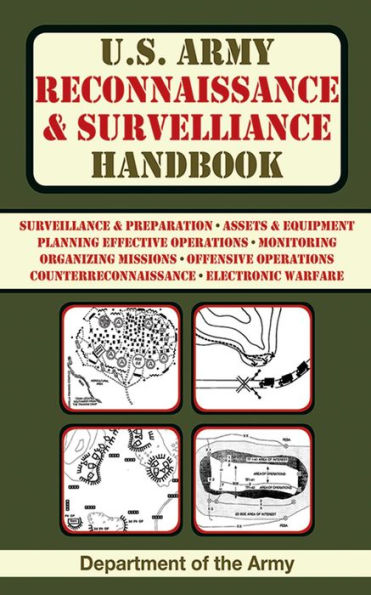
U.S. Army Reconnaissance and Surveillance Handbook
240Related collections and offers
10.99
In Stock

Product Details
| ISBN-13: | 9781628735567 |
|---|---|
| Publisher: | Skyhorse |
| Publication date: | 11/26/2013 |
| Series: | US Army Survival |
| Sold by: | SIMON & SCHUSTER |
| Format: | eBook |
| Pages: | 240 |
| File size: | 9 MB |
About the Author
From the B&N Reads Blog