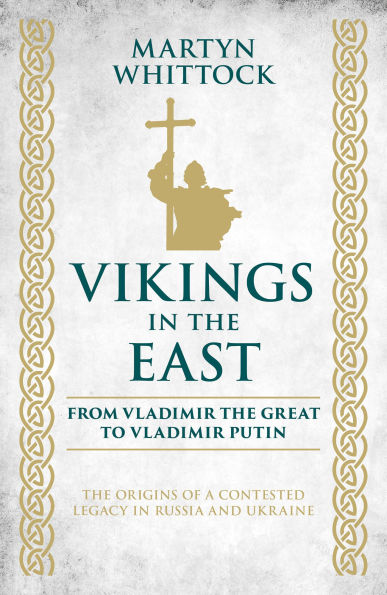
Vikings in the East
We commonly consider the Viking Age to be a western European phenomenon. This is not surprising, given the Viking impact on communities either side of the North Sea and the English Channel and across the British Isles. However, it also had a crucial eastern aspect that was a key cause of the Viking raids in the first place.

Changes taking place in the distant Islamic Caliphate disrupted the flow of silver to Scandinavia. For years, Islamic merchants and their middlemen had carried silver to northern Europe. There, they traded it for slaves, furs and amber. Facing this change, raiding in the West offered the Vikings an alternative way to get their hands on precious metals and slaves.

At the same time, the forest products of the eastern Baltic and the supply of slaves from there drew Swedish adventurers eastward. For several reasons, the Viking phenomenon increasingly had an eastern front. Utilizing the river systems, these Vikings soon became active on the Black Sea, the Caspian Sea and in the Byzantine Empire.

In this brilliantly timely book, historian Martyn Whittock explains how it was a Viking–Slav dynasty that created the first Russian state and how a rivalry between Viking leaders set up the states that would later become Russia and Ukraine, with consequences we are still living with today.

Since the sixteenth century, rulers in Russia have referenced these origins to enhance their power and secure control over the Ukrainian lands, most recently demonstrated by Vladimir Putin as his justification for the seizure of Crimea and then the Russian invasion of Ukraine.
1148018425
Vikings in the East
We commonly consider the Viking Age to be a western European phenomenon. This is not surprising, given the Viking impact on communities either side of the North Sea and the English Channel and across the British Isles. However, it also had a crucial eastern aspect that was a key cause of the Viking raids in the first place.

Changes taking place in the distant Islamic Caliphate disrupted the flow of silver to Scandinavia. For years, Islamic merchants and their middlemen had carried silver to northern Europe. There, they traded it for slaves, furs and amber. Facing this change, raiding in the West offered the Vikings an alternative way to get their hands on precious metals and slaves.

At the same time, the forest products of the eastern Baltic and the supply of slaves from there drew Swedish adventurers eastward. For several reasons, the Viking phenomenon increasingly had an eastern front. Utilizing the river systems, these Vikings soon became active on the Black Sea, the Caspian Sea and in the Byzantine Empire.

In this brilliantly timely book, historian Martyn Whittock explains how it was a Viking–Slav dynasty that created the first Russian state and how a rivalry between Viking leaders set up the states that would later become Russia and Ukraine, with consequences we are still living with today.

Since the sixteenth century, rulers in Russia have referenced these origins to enhance their power and secure control over the Ukrainian lands, most recently demonstrated by Vladimir Putin as his justification for the seizure of Crimea and then the Russian invasion of Ukraine.

25.95 In Stock
Vikings in the East

Vikings in the East

by Martyn Whittock
Vikings in the East

Vikings in the East

by Martyn Whittock

Hardcover

$25.95 
  • SHIP THIS ITEM
    In stock. Ships in 1-2 days.
  • PICK UP IN STORE

    Your local store may have stock of this item.

Related collections and offers


Overview

We commonly consider the Viking Age to be a western European phenomenon. This is not surprising, given the Viking impact on communities either side of the North Sea and the English Channel and across the British Isles. However, it also had a crucial eastern aspect that was a key cause of the Viking raids in the first place.

Changes taking place in the distant Islamic Caliphate disrupted the flow of silver to Scandinavia. For years, Islamic merchants and their middlemen had carried silver to northern Europe. There, they traded it for slaves, furs and amber. Facing this change, raiding in the West offered the Vikings an alternative way to get their hands on precious metals and slaves.

At the same time, the forest products of the eastern Baltic and the supply of slaves from there drew Swedish adventurers eastward. For several reasons, the Viking phenomenon increasingly had an eastern front. Utilizing the river systems, these Vikings soon became active on the Black Sea, the Caspian Sea and in the Byzantine Empire.

In this brilliantly timely book, historian Martyn Whittock explains how it was a Viking–Slav dynasty that created the first Russian state and how a rivalry between Viking leaders set up the states that would later become Russia and Ukraine, with consequences we are still living with today.

Since the sixteenth century, rulers in Russia have referenced these origins to enhance their power and secure control over the Ukrainian lands, most recently demonstrated by Vladimir Putin as his justification for the seizure of Crimea and then the Russian invasion of Ukraine.


Product Details

ISBN-13: 9781785909054
Publisher: Biteback Publishing, Ltd.
Publication date: 09/16/2025
Pages: 320
Product dimensions: 5.90(w) x 9.30(h) x 1.00(d)

About the Author

Martyn Whittock has been a consultant for the BBC, English Heritage and the National Trust in the UK, and he has written for several historical journals. In addition, as a commentator and columnist, he writes for several print and online news platforms, and has been interviewed on TV and radio news programmes exploring the impact of history on current events in Russia, Ukraine, the UK, the USA and globally. His previous books include The Vikings: From Odin to Christ (2018), The Secret History of Soviet Russia's Police State: Cruelty, Co-operation and Compromise, 1917–91 (2020), A Brief History of The Third Reich: The Rise and Fall of the Nazis (2011) and Tales of Valhalla: Norse Myths & Legends (2018).
From the B&N Reads Blog

Customer Reviews