Used and New from Other Sellers
from $35.38
Usually ships in 1-2 business days
(Save 5%)
Other sellers (Paperback)
-
All (7)
from
$35.38
-
New (4)
from
$35.38
-
Used (3)
from
$46.75
Note: Marketplace items are not eligible for any BN.com coupons and promotions
New Book. Shipped from UK within 4 to 14 business days. Established seller since 2000.
Ships from: Horcott Rd, Fairford, United Kingdom
Usually ships in 1-2 business days
- •Standard, 48 States
- •Standard (AK, HI)
BRAND NEW
Ships from: Avenel, NJ
Usually ships in 1-2 business days
- •Canadian
- •International
- •Standard, 48 States
- •Standard (AK, HI)
Buy with confidence. Excellent Customer Service & Return policy.
Ships from: Richmond, TX
Usually ships in 1-2 business days
- •Canadian
- •International
- •Standard, 48 States
- •Standard (AK, HI)
0226043509 Brand New. Exact book as advertised. Delivery in 4-14 business days (not calendar days). We are not able to expedite delivery.
Ships from: Romulus, MI
Usually ships in 1-2 business days
- •Canadian
- •International
- •Standard, 48 States
- •Standard (AK, HI)
More About This Textbook
Overview
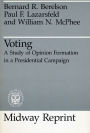
Voting is an examination of the factors that make people vote the way they do. Based on the famous Elmira Study, carried out by a team of skilled social scientists during the 1948 presidential campaign, it shows how voting is affected by social class, religious background, family loyalties, on-the-job relationships, local pressure groups, mass communication media, and other factors. Still highly relevant, Voting is one of the most frequently cited books in the field of voting behavior.
Product Details
Related Subjects
Table of Contents
Part I. The Setting
1. The Social and Historical Background: Elmira and the 1948 Election The Community The Period
2. The Political Background: Voting Trend and Political Interest Trend and Pattern of Party Preference Interest in the Election Summary
Part II. Social Processes
3. Social Institutions: The Political Role of Labor Unions and Other Organizations By John P. Dean and Edward Suchman The Political Activity of Labor Unions The Politics of Union Members Politics and Other Forman Organizations Summary
4. Social Differentiation: Socioeconomic and Ethnic Status Socioeconomic Status Minority Religious and Ethnic Status The Social Transmission of Political Choices Summary
5. Social Perception: Group Voting Norms Who Votes for Whom?
Political Perception and Social Distance Psychological and Social Functions Summary
6. Social Process: Small Groups and Political Discussion I. Political Homogeneity in Primary Groups The Family and Vote Personal Associations and Vote II. The Nature of Political Discussion The Social Group and the Political System Summary
7. Social Effects of the Campaign: Personal Influence and Political Polarization I. Voting Changes by Social Units II. Voting Changes by Time Units Summary
Part III. Political Processes
8. Political Institutions: Parties in the Local Community By John P. Dean and Edward Suchman Party Funds and Leadership Party Workers—Professional and Amateur Party Contact with the Citizenry The Role of the Party Summary
9. Political Differentiation: Issues in the Campaign Bases of Consensus Bases of Cleavage The Resolution of Differences Over Issues Summary
10. Political Perception: The Candidates' Stand on the Issues Perception and Voting Accuracy of Perception Inferences: Psychological and Political Summary
11. Political Processes: The Role of the Mass Media What the Candidates Did What the Local Newspapers Did What the Electorate Did The Effects of Political Exposure Summary
12. Political Effects: Leave-taking and Return Components of the Democratic Trend Demoralization of the New Deal Majority The Fair Deal Rally Psychological and Political Implications Summary
Part IV. Conclusion
13. The Social Psychology of the Voting Decision Implementation—a Forgotten Concern Process Analysis The Special Significance of Priority Variables Reactivation—an Example of a "Psychological Mechanism"
The Sociological Approach Conclusion
14. Democratic Practice and Democratic Theory Requirements for the Individual Requirements for the System Conclusion Appendixes A. Summary of Findings from Similar Election Studies B. Questionnaires and Indexes C. The Sample of the Study Index