
Welfare Work Without Welfare argues that women activists, wage workers, and homemakers in the Romanian capital Bucharest ensured others’ well-being in the interwar period through their "austerity welfare work".
Revealing links and tensions between the performers of different types of underpaid or unpaid austerity welfare work, each empirical chapter focuses on a key domain:
• knowledge production about social problems by "women welfare activists" (professional social workers, lay experts, left wing militants);
• municipal-level social assistance policy, with emphasis on a pioneering generation of women local politicians in shaping welfare practices;
• paid household work by underpaid servants;
• unpaid household work by homemakers or precariously employed women in working class communities.
The book offers a novel interpretation of state-society relations after the First World War, showing that unpaid labor and gender relations were crucial in responding to economic crisis in an Eastern European urban setting and beyond. At once a local and transnational history of women’s work, Welfare Work Without Welfare contributes to the historicization of social reproduction work and to the rethinking of the history of welfare states.
Welfare Work Without Welfare argues that women activists, wage workers, and homemakers in the Romanian capital Bucharest ensured others’ well-being in the interwar period through their "austerity welfare work".
Revealing links and tensions between the performers of different types of underpaid or unpaid austerity welfare work, each empirical chapter focuses on a key domain:
• knowledge production about social problems by "women welfare activists" (professional social workers, lay experts, left wing militants);
• municipal-level social assistance policy, with emphasis on a pioneering generation of women local politicians in shaping welfare practices;
• paid household work by underpaid servants;
• unpaid household work by homemakers or precariously employed women in working class communities.
The book offers a novel interpretation of state-society relations after the First World War, showing that unpaid labor and gender relations were crucial in responding to economic crisis in an Eastern European urban setting and beyond. At once a local and transnational history of women’s work, Welfare Work Without Welfare contributes to the historicization of social reproduction work and to the rethinking of the history of welfare states.

Welfare Work Without Welfare: Women and Austerity in Interwar Bucharest
280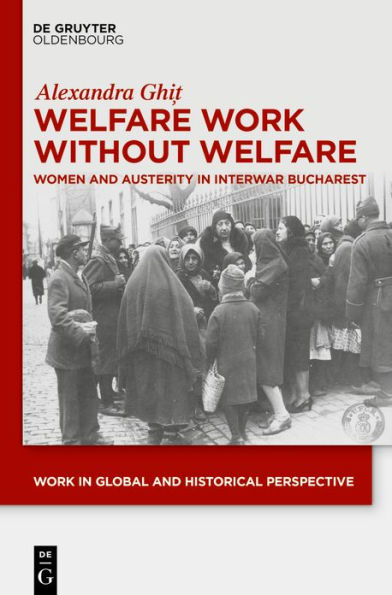
Welfare Work Without Welfare: Women and Austerity in Interwar Bucharest
280Related collections and offers

Product Details
| ISBN-13: | 9783111137513 |
|---|---|
| Publisher: | De Gruyter |
| Publication date: | 12/01/2025 |
| Sold by: | Barnes & Noble |
| Format: | eBook |
| Pages: | 280 |
| File size: | 3 MB |
| Age Range: | 18 Years |