Read an Excerpt
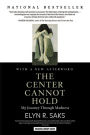
THE CENTER CANNOT HOLD
By Elyn R. Saks Hyperion
Copyright © 2007 Elyn R. Saks
All right reserved. ISBN: 978-1-4013-0138-5
Chapter One
When I was a little girl, I woke up almost every morning to a sunny day, a wide clear sky, and the blue green waves of the Atlantic Ocean nearby. This was Miami in the fifties and the early sixties-before Disney World, before the restored Deco fabulousness of South Beach, back when the Cuban "invasion" was still a few hundred frightened people in makeshift boats, not a seismic cultural shift. Mostly, Miami was where chilled New Yorkers fled in the winter, where my East Coast parents had come (separately) after World War II, and where they met on my mother's first day of college at the University of Florida in Gainesville.
Every family has its myths, the talisman stories that weave us one to the other, husband to wife, parents to child, siblings to one another. Ethnicities, favorite foods, the scrapbooks or the wooden trunk in the attic, or that time that Grandmother said that thing, or when Uncle Fred went off to war and came back with ... For us, my brothers and me, the first story we were told was that my parents fell in love at first sight.
My dad was tall and smart and worked to keep a trim physique. My mother was tall, too, and also smart and pretty, with dark curly hair and an outgoing personality. Soon after they met, my father went off to law school,where he excelled. Their subsequent marriage produced three children: me, my brother Warren a year-and-a-half later, then Kevin three-and-a-half years after that.
We lived in suburban North Miami, in a low-slung house with a fence around it and a yard with a kumquat tree, a mango tree, and red hibiscus. And a whole series of dogs. The first one kept burying our shoes; the second one harassed the neighbors. Finally, with the third, a fat little dachshund named Rudy, we had a keeper; he was still with my parents when I went off to college.
When my brothers and I were growing up, my parents had a weekend policy: Saturday belonged to them (for time spent together, or a night out with their friends, dancing and dining at a local nightclub); Sundays belonged to the kids. We'd often start that day all piled up in their big bed together, snuggling and tickling and laughing. Later in the day, perhaps we'd go to Greynolds Park or the Everglades, or the Miami Zoo, or roller skating. We went to the beach a lot, too; my dad loved sports and taught us all how to play the activity du jour. When I was twelve, we moved to a bigger house, this one with a swimming pool, and we all played together there, too. Sometimes we'd take the power boat out and water-ski, then have lunch on a small island not far from shore.
We mostly watched television in a bunch as well-The Flintstones, The Jetsons, Leave It to Beaver, Rawhide, all the other cowboy shows. Ed Sullivan and Disney on Sunday nights. When the Perry Mason reruns began, I saw them every day after school, amazed that Perry not only defended people but also managed to solve all the crimes. We watched Saturday Night Live together, gathered in the living room, eating Oreos and potato chips until my parents blew the health whistle and switched us to fruit and yogurt and salads.
There was always a lot of music around the house. My dad in particular was a jazz fan, explaining to us that when he was young, claiming a fondness for jazz had been considered fairly rebellious. My record collection overlapped with Warren's-The Beatles, Crosby, Stills & Nash, Janis Joplin. We drew the line at the Monkees (I liked them, he absolutely didn't), and he teased me mercilessly about the poster of Peter Noone from Herman's Hermits up on my bedroom wall.
And there were movies, which my parents attempted to supervise by appropriateness: Mary Poppins and The Sound of Music were OK for me, but one James Bond movie (I don't remember which one now, except it was Sean Connery) caused a battle royal with my dad: I wasn't yet seventeen, and Bond, with his martinis and his bikini-clad girlfriends, was out of bounds.
For a while in high school, I worked at a candy counter at a local movie house-"Would you also like a Coke with that?"-which meant I saw every movie I wanted to see, and many of them more than once; I think I saw Billy Jack more than a couple dozen times. It didn't take long, though, to decide that I didn't like movies that were scary or tension-filled-horror movies were out, and Clint Eastwood's Play Misty for Me, with its crazy woman stalker, freaked me out for weeks. When the theater manager was robbed after closing one night, my parents made me quit the job.
I confess to an energetic sibling rivalry with Warren. As the oldest, I did my best to stay ahead of him, working to excel at things a younger brother couldn't yet do. I learned to ride my bike first. Once he was riding one, too, I simply rode mine faster and farther. I water-skied first, and then more furiously than he did. I got good grades and made sure he knew it; he worked just as hard and made the grades, too. Dad was not a praiser (he thought it would invite the evil eye), so he never complimented anyone. But Mom did, and Warren and I competed for her attention.
As for Kevin, there were enough years between us that for a long time I thought of him as my child. One of my earliest, clearest memories is when he began to crawl, and how thrilled I was about that, to see him learn to make his way from one place to the other. Not only was he younger than Warren and I, he was intrinsically more sociable, too-easier to get along with and more interested in just hanging around with us rather than competing with us.
As somewhat observant Jews, we went to Temple and observed the High Holy Days. We kids were sent to Hebrew school, and we also made our Bat and Bar Mitzvahs. Although it was never spoken in so many words, I was somehow given to understand that in many places and circumstances, Jewish people were not very popular, and one needed to be both discreet and respectable in order to make one's way in life. We didn't keep kosher (although my father's parents did); another part of the mom-and-dad myth was that in order to impress her future in-laws with how observant she was, my mother-whose family had never kept kosher and didn't really know the rules-had misguidedly ordered lobster on the evening my father introduced his parents to her.
On the face of it, then, our family life was congenial-a Norman Rockwell magazine cover or a gentle fifties sitcom. Indeed, my mother was what today would be called a stay-at-home mom. She was there when we came home from school and always made sure we had a snack-to this day, cold cereal is my comfort food of choice. Our family ate its meals together, and although my mother didn't cook much (a housekeeper did, and in time, my father took it up, and excelled at it), there was always cake in the pantry (albeit store-bought), fresh fruit in the fridge, and clean laundry in our closets.
Under that pleasant surface, however, things were more complex, as family matters inevitably are. Like all parents, mine had their strengths and their weaknesses. They were profoundly close to each other; in fact, they've always enjoyed being with each other more than they like being with anyone else, including, sometimes, their children. In the style of many 1950s couples, they seemed not to exist in any way independent of each other. My mother was always very physically affectionate with my dad in public; he was less so with her, but never dismissive or rude. It was just always clear that he was the boss. For my mother, it was always "Anything you want, dear," just as it had been for her mother. If she'd had any particular professional ambition when she went off to college, I've never known what it was, although she was a central part of a successful antiques business she and my father started together. Still, nothing's changed much in their dynamic in the intervening years. Recently, my mother announced that she'd given up her own political opinions in order to share my father's.
For his part, in spite of a sense of humor that often verged on the bawdy, my father could be quite absolute in his opinions and reactions. There was also a touch of suspiciousness in his interactions with others, particularly when the subject at hand was money. In this, he was just as his own father had been.
My parents were both outspoken in their disgust for religious or racial bigotry. For example, we could swear all we wanted, but the use of racial or ethnic slurs was utterly and always forbidden. As provincial as Miami seemed back in those days (my father often said that it had all the disadvantages of a big city and none of the advantages), the tension between the city's African-Americans and Cuban immigrants, and the riots in 1970 (during which our African-American housekeeper was harassed by the police), taught us that even a familiar landscape could turn violent and unpredictable in the fog of prejudice.
Whatever their faults (or ours), there was no shortage of "I love you's" from my parents when I was a child, nor is there one now; to this day, they're openly affectionate with all of us, and even my friends are greeted with a hug and a kiss. My parents were never cruel or punitive, and never physical in the ways they disciplined us; they simply made it known from our earliest days that they had high expectations for our behavior, and when we missed the bar, they brought us up short.
Nor did we ever want for anything material. My family was solidly in the middle class, and as time went on, our means increased. My father's law practice dealt primarily with real estate, land deals, and some personal/estate planning, all of which expanded as Miami itself did. When I was thirteen, my parents opened a small antiques and collectibles shop a five-minute trip from our house. It, too, thrived, and they began to collect and sell items from Europe, which in time meant two or three trips to France each year and a lot of time spent in New York City as well.
So there were never any concerns about having a nice place to live, or good food to eat, or missing our yearly family vacation. It was expected that we would attend college; it was a given that our parents would pay for it. They were loving, hardworking, comfortably ambitious (for themselves and for their children), and more often than not, kind. To borrow a phrase from the psychological literature, they were "good enough"-and they raised three decent children, no easy feat in that or any age. My brothers grew up into fine men; Warren is a trader on Wall Street, and Kevin is a civil engineer in Miami. Both are accomplished in their professions, with wives and children they love and who love them in return. And my own penchant for hard work and my drive to succeed is traceable directly, I know, to my parents.
In short, they gave me and taught me what I needed to make the most of my talents and strengths. And (although I couldn't have predicted or understood back then how vitally important this would be to my life) they gave me what I needed to survive.
* * *
When I was about eight, I suddenly needed to do things a little differently than my parents would have wished me to do them. I developed, for loss of a better word, a few little quirks. For instance, sometimes I couldn't leave my room unless my shoes were all lined up in my closet. Or beside my bed. Some nights, I couldn't shut off my bedroom light until the books on my shelves were organized just so. Sometimes, when washing my hands, I had to wash them a second time, then a third time. None of this got in the way of whatever it was I was supposed to be doing-I made it to school, I made it to meals, I went out to play. But it all required a certain preparation, a certain ... precaution. Because it was imperative that I do it. It simply was. And it taxed the patience of anybody who was standing outside the bedroom door or the bathroom door waiting for me. "Elyn, come on, we're going to be late!" Or "You're going to miss the bus!" Or "You were sent to bed forty minutes ago!"
"I know, I know," I replied, "but I just have to do this one more thing and then everything will all be OK."
Not long after the little quirks became part of my life, they were joined by nights filled with terror, which came in spite of all the precautionary organizing and straightening. Not every night, but often enough to make bedtime something I didn't welcome. The lights would go out and suddenly it was darker in my room then I could bear. It didn't matter (if I could just ignore the sound of my heart thudding) that I could hear my parents' voices down the hallway; it didn't help to remember that my dad was big and strong and brave and fearless. I knew there was someone just outside the window, just waiting for the right moment, when we were all sleeping, with no one left on guard. Will the man break in? What will he do? Will he kill us all?
After the first three or four nights of this, I finally drummed up whatever courage I had left and told my mother about it. "I think somebody has been outside my window," I said in a very small and shaky voice. "In the yard. Waiting for you and Daddy to go to sleep at night, so he can come in and get us. Or hurt us. You have to find somebody to make him go away. Do you think we should call a policeman?"
The expression on her face was so kind that it made it hard for me to look directly into her eyes. "Oh, buby"-her term of endearment for me-"there's nobody out there, there's nobody in the bushes. There's nobody who would hurt us. It's in your imagination. Hmmmm, maybe we shouldn't have so many stories before bed. Or maybe we're eating dinner too late, and it's your tummy playing tricks on your brain. Don't be silly now." As far as she was concerned, that was the end of it.
I tried to believe her, I really did. And I fessed up to my fear to my brother Warren when the two of us were at home alone, and we tried our best to reassure each other-together, we'd muster up our courage to go see if someone was indeed standing just outside the front door. And of course, no one ever was. But my feelings didn't go away, and for a long time, falling asleep felt like sliding into a place of helplessness. I fought it every night, my head under the blankets, until finally, sheer exhaustion and a tired growing body just took me under.
I am seven, or eight, standing in the cluttered living room of our comfortable house, looking out at the sunny day.
"Dad, can we go out to the cabana for a swim?"
He snaps at me, "I told you I have work to do, Elyn, and anyway it might rain. How many times do I have to tell you the same thing? Don't you ever listen?"
My heart sinks at the tone of his voice: I've disappointed him.
And then something odd happens. My awareness (of myself, of him, of the room, of the physical reality around and beyond us) instantly grows fuzzy. Or wobbly. I think I am dissolving. I feel-my mind feels-like a sand castle with all the sand sliding away in the receding surf. What's happening to me? This is scary, please let it be over! I think maybe if I stand very still and quiet, it will stop.
This experience is much harder, and weirder, to describe than extreme fear or terror. Most people know what it is like to be seriously afraid. If they haven't felt it themselves, they've at least seen a movie, or read a book, or talked to a frightened friend-they can at least imagine it. But explaining what I've come to call "disorganization" is a different challenge altogether. Consciousness gradually loses its coherence. One's center gives way. The center cannot hold. The "me" becomes a haze, and the solid center from which one experiences reality breaks up like a bad radio signal. There is no longer a sturdy vantage point from which to look out, take things in, assess what's happening. No core holds things together, providing the lens through which to see the world, to make judgments and comprehend risk. Random moments of time follow one another. Sights, sounds, thoughts, and feelings don't go together. No organizing principle takes successive moments in time and puts them together in a coherent way from which sense can be made. And it's all taking place in slow motion.
Of course, my dad didn't notice what had happened, since it was all happening inside me. And as frightened as I was at that moment, I intuitively knew this was something I needed to hide from him, and from anyone else as well. That intuition-that there was a secret I had to keep-as well as the other masking skills that I learned to use to manage my disease, came to be central components of my experience of schizophrenia.
One early evening, when I was about ten, everyone else was out of the house for a while, and for some reason I can't recall now, I was there all alone, waiting for them to come home. One minute it was sunset; the next, it was dark outside. Where was everybody? They said they'd be back by now ... Suddenly, I was absolutely sure I heard someone breaking in. Actually, it wasn't so much a sound as a certainty, some kind of awareness. A threat.
(Continues...)
Excerpted from THE CENTER CANNOT HOLD by Elyn R. Saks Copyright © 2007 by Elyn R. Saks. Excerpted by permission.
All rights reserved. No part of this excerpt may be reproduced or reprinted without permission in writing from the publisher.
Excerpts are provided by Dial-A-Book Inc. solely for the personal use of visitors to this web site.