Fahrenheit 451

( 346 )

Overview


Ray Bradbury’s internationally acclaimed novel Fahrenheit 451 is a masterwork of twentieth-century literature set in a bleak, dystopian future.

Guy Montag is a fireman. In his world, where television rules and literature is on the brink of extinction, firemen start fires rather than put them out. His job is to destroy the most illegal of commodities, the printed book, along with the houses in which they are hidden.

Montag never questions the ...

See more details below
Paperback
$11.18
BN.com price
(Save 6%)$11.99 List Price

Pick Up In Store

Reserve and pick up in 60 minutes at your local store

Other sellers (Paperback)
  • All (51) from $3.93   
  • New (37) from $6.29   
  • Used (14) from $3.93   
Fahrenheit 451

Available on NOOK devices and apps  
  • Nook Devices
  • NOOK HD/HD+ Tablet
  • NOOK
  • NOOK Color
  • NOOK Tablet
  • Tablet/Phone
  • NOOK for Windows 8 Tablet
  • NOOK for iOS
  • NOOK for Android
  • NOOK Kids for iPad
  • PC/Mac
  • NOOK for Windows 8
  • NOOK for PC
  • NOOK for Mac
  • NOOK Study
  • NOOK for Web

Want a NOOK? Explore Now

NOOK Book (eBook)
$10.19
BN.com price
Marketplace
BN.com

All Available Formats & Editions

Overview


Ray Bradbury’s internationally acclaimed novel Fahrenheit 451 is a masterwork of twentieth-century literature set in a bleak, dystopian future.

Guy Montag is a fireman. In his world, where television rules and literature is on the brink of extinction, firemen start fires rather than put them out. His job is to destroy the most illegal of commodities, the printed book, along with the houses in which they are hidden.

Montag never questions the destruction and ruin his actions produce, returning each day to his bland life and wife, Mildred, who spends all day with her television "family." But then he meets an eccentric young neighbor, Clarisse, who introduces him to a past where people didn’t live in fear, and to a present where one sees the world through the ideas in books instead of the mindless chatter of television.

When Mildred attempts suicide, and Clarisse suddenly disappears, Montag begins to question everything he has ever known. He starts hiding books in his home, and when his pilfering is discovered, the fireman has to run for his life.

First published in 1953, Fahrenheit 451 is a classic novel set in the future when books forbidden by a totalitarian regime are burned. The hero, a book burner, suddenly discovers that books are flesh and blood ideas that cry out silently when put to the torch.

Read More Show Less

Editorial Reviews

From Barnes & Noble
The Barnes & Noble Review
Fahrenheit 451 is set in a grim alternate-future setting ruled by a tyrannical government in which firemen as we understand them no longer exist: Here, firemen don't douse fires, they ignite them. And they do this specifically in homes that house the most evil of evils: books.

Books are illegal in Bradbury's world, but books are not what his fictional -- yet extremely plausible -- government fears: They fear the knowledge one pulls from books. Through the government's incessant preaching, the inhabitants of this place have come to loathe books and fear those who keep and attempt to read them. They see such people as eccentric, dangerous, and threatening to the tranquility of their state.

But one day a fireman named Montag meets a young girl who demonstrates to him the beauty of books, of knowledge, of conceiving and sharing ideas; she wakes him up, changing his life forever. When Montag's previously held ideology comes crashing down around him, he is forced to reconsider the meaning of his existence and the part he plays. After Montag discovers that "all isn't well with the world," he sets out to make things right.

A brilliant and frightening novel, Fahrenheit 451 is the classic narrative about censorship; utterly chilling in its implications, Ray Bradbury's masterwork captivates thousands of new readers each year. (Andrew LeCount)

From the Publisher
"Frightening in its implications . . . Mr. Bradbury's account of this insane world, which bears many alarming resemblances to our own, is fascinating." —The New York Times
From the Publisher
"Stephen Hoye's narration is perfectly matched to the subject matter: his tone is low and ominous, and his cadence shifts with the prose to ratchet up tension and suspense." —-Publishers Weekly Starred Audio Review
Read More Show Less

Product Details

  • ISBN-13: 9781451673319
  • Publisher: Simon & Schuster
  • Publication date: 1/10/2012
  • Pages: 176
  • Lexile: 890L (what's this?)
  • Product dimensions: 5.68 (w) x 8.22 (h) x 0.50 (d)

Meet the Author

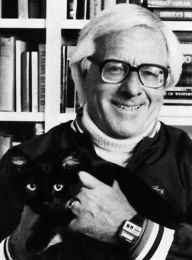
Ray Bradbury

Ray Bradbury (1920–2012) was the author of more than three dozen books, including Fahrenheit 451, The Martian Chronicles, The Illustrated Man, and Something Wicked This Way Comes, as well as hundreds of short stories. He wrote for the theater, cinema, and TV, including the screenplay for John Huston’s Moby Dick and the Emmy Award–winning teleplay The Halloween Tree, and adapted for television sixty-five of his stories for The Ray Bradbury Theater. He was the recipient of the 2000 National Book Foundation’s Medal for Distinguished Contribution to American Letters, the 2007 Pulitzer Prize Special Citation, and numerous other honors.

Biography

Ray Bradbury is one of those rare individuals whose writing has changed the way people think. His more than 500 published works -- short stories, novels, plays, screenplays, television scripts, and verse -- exemplify the American imagination at its most creative.

Once read, his words are never forgotten. His best-known and most beloved books -- The Martian Chronicles, The Illustrated Man, Fahrenheit 451, and Something Wicked This Way Comes -- are masterworks that readers carry with them over a lifetime. His timeless, constant appeal to audiences young and old has proven him to be one of the truly classic authors of the 20th Century -- and the 21st.

Ray Bradbury's work has been included in several Best American Short Story collections. He has been awarded the O. Henry Memorial Award, the Benjamin Franklin Award, the World Fantasy Award for Lifetime Achievement, the Grand Master Award from the Science Fiction Writers of America, and the PEN Center USA West Lifetime Achievement Award, among others. In recognition of his stature in the world of literature and the impact he has had on so many for so many years, Bradbury was awarded the National Book Foundation's 2000 Medal for Distinguished Contribution to American Letters and the National Medal of Arts in 2004.

On the occasion of his 80th birthday in August 2000, Bradbury said, "The great fun in my life has been getting up every morning and rushing to the typewriter because some new idea has hit me. The feeling I have every day is very much the same as it was when I was twelve. In any event, here I am, eighty years old, feeling no different, full of a great sense of joy, and glad for the long life that has been allowed me. I have good plans for the next ten or twenty years, and I hope you'll come along."

Good To Know

In our exclusive interview with Bradbury, he shared some fascinating facts with us:

"I spent three years standing on a street corner, selling newspapers, making ten dollars a week. I did that job every day for three hours and the rest of the time I wrote because I was in love with writing. The answer to all writing, to any career for that matter, is love."

"I have been inspired by libraries and the magic they contain and the people that they represent."

"I hate all politics. I don't like either political party. One should not belong to them -- one should be an individual, standing in the middle. Anyone that belongs to a party stops thinking."

Read More Show Less
    1. Also Known As:
      Leonard Douglas, William Elliott, Douglas Spaulding, Leonard Spaulding
      Ray Bradbury
    2. Hometown:
      Los Angeles, California
    1. Date of Birth:
      August 22, 1920
    2. Place of Birth:
      Waukegan, Illinois
    1. Education:
      Attended schools in Waukegan, Illinois, and Los Angeles, California
    2. Website:

Read an Excerpt

A New Introduction

by

Ray Bradbury

March 12, 2003

What is there new to be said about Fahrenheit 451? I have written three or four introductions in the past thirty years trying to explain where the novel came from and how it finally arrived.

The first thing to be said is that I feel very fortunate to have survived long enough to join with people who have been paying attention to the novel in this past year.

The novel was a surprise then and is still a surprise to me.

I've always written at the top of my lungs and from some secret motives within. I have followed the advice of my good friend Federico Fellini who, when asked about his work, said, "Don't tell me what I'm doing, I don't want to know."

The grand thing is to plunge ahead and see what your passion can reveal.

During the last fifty years I have written a short 25,000-word early version of the novel titled The Fireman, which appeared in Galaxy Science Fiction magazine, and several years later added another 25,000 words for its publication by Ballantine Books.

Occupying a house with a new baby daughter, we had to consider my trying to find somewhere that was a bit quieter to do my work. I had no money at that time to rent an office, but wandering around U.C.L.A. one day I heard typing in the basement of the library and went down to see what was going on. I found that there was a room with twelve typewriters that could be rented for ten cents per half hour. Excited at the prospect, I brought a bag of dimes with me and moved into the typing room.

I didn't know what the various students were writing at their typewriters and they hardly knew, nor did I know, what I was writing.

If there is any excitement to the novel at all, I think it can best be explained by the fact that every two hours or so during the next week and a half I ran up- and downstairs and in and out of the stacks, grabbing books off the shelf, trying to find proper quotes to put in the book. I am not a researcher and my memory is not all that accurate for things that I've read in the past, so the quotes that you find in the book were those wonderful accidents where pulling a book off the shelf and opening it just anywhere at all I found an amazing sentence or paragraph that could occupy a position in the novel.

This early version took exactly nine days and I spent $9.80 on it, not realizing that the book had some sort of long life ahead.

In the years since its first publication I have written a full two-act play and spent two summers in Connecticut writing an opera based on its text. The book seems to have a life that goes on re-creating itself.

If I try to find its genesis in the years prior to 1950 I would imagine one would turn to certain stories like "Burning Bright" and a few other tales that appeared in my early books.

The main thing to call attention to is the fact that I've been a library person all of my life. I sold newspapers until I was twenty-two and had no money to attend college, but I spent three or four nights a week at the local library and fed on books over a long period of time.

Some of my early stories tell of librarians and book burners and people in small towns finding ways to memorize the books so that if they were burned they had some sort of immortality.

The main surprise for the book occurred when I wrote the short story "The Pedestrian" in 1949.

I had been accosted by the police one night while I walked on a Los Angeles street with a friend. The police wanted to know what we were doing, when walking was our aim and talking occupied us.

I was so irritated by being stopped and asked about walking that I went home and wrote the story, "The Pedestrian," concerning a future where pedestrians were arrested for using the sidewalks.

Sometime later, I took the Pedestrian for a walk and when he turned a corner he encountered a young girl named Clarisse McClellan who took a deep breath and said, "I know who you are from the smell of kerosene. You're the man who burns books."

Nine days later the novel was finished.

What a wonderful experience it was to be in the library basement to dash up and down the stairs reinvigorating myself with the touch and the smell of books that I knew and books that I did not know until that moment.

When the first version of the novel was finished, I hardly knew what I had done. I knew that it was crammed with metaphors, but the word metaphor had not occurred to me at that time in my life. It was only later in time when I got to know the word and realized that my capacity for collecting metaphors was so complete.

In the years of writing my two-act play and the opera that followed, I let my characters tell me things about their lives that were not in the book.

I have been tempted to go back and insert these truths in the old text, but this is a dangerous practice which writers must refuse. These truths, while important, could ruin a work done years before.

In writing the play my Fire Chief, Beatty, told me why he had become a burner of books.

He had once been a wanderer of libraries and a lover of the finest literature in history. But when real life diminished him, when friends died, when a love failed, when there were too many deaths and accidents surrounding him, he discovered that his faith in books had failed because they could not help him when he needed the help.

Turning on them, he lit a match.

So that is one of the fine things that came out of the play and the opera. I'm glad to be able to speak of it now and tell you what Beatty had in his background.

After the book was published, in the following years I've had hundreds of letters from readers asking me what became of Clarisse McClellan. They were so intrigued with this fascinating, strange, and quixotic girl that they wanted to believe that somewhere out in the wilderness with the book people she had somehow survived.

I resisted the temptation to bring her back to life in future editions of my novel.

I left it to François Truffaut in his film version of Fahrenheit 451 in 1966 to give Clarisse a return to life, even though he had changed her name and given her extra years of maturity, which at the time I thought was a great mistake. But she did survive to the end of the film and at that time I decided that Truffaut was correct.

When I wrote the first version of the play I allowed Clarisse to survive among the book people in the wilderness. The same practice occurred when I wrote the opera.

She was too wonderful a character to be allowed to die and I realize now that I should have allowed her to appear at the end of my book.

That being said, the book is complete and untouched. I will not go back and revise anything. I have a great respect for the young man that I was when I sat down in that basement room with a bag of dimes and plunged into the passionate activity that resulted in the final work.

So here, after fifty years, is Fahrenheit 451. I didn't know what I was doing, but I'm glad that it was done.

Introduction for this edition copyright © 2003 by Ray Bradbury

Read More Show Less

Customer Reviews

Average Rating 4
( 346 )
Rating Distribution

5 Star

(168)

4 Star

(91)

3 Star

(47)

2 Star

(16)

1 Star

(24)

Your Rating:

Your Name: Create a Pen Name or

Barnes & Noble.com Review Rules

Our reader reviews allow you to share your comments on titles you liked, or didn't, with others. By submitting an online review, you are representing to Barnes & Noble.com that all information contained in your review is original and accurate in all respects, and that the submission of such content by you and the posting of such content by Barnes & Noble.com does not and will not violate the rights of any third party. Please follow the rules below to help ensure that your review can be posted.

Reviews by Our Customers Under the Age of 13

We highly value and respect everyone's opinion concerning the titles we offer. However, we cannot allow persons under the age of 13 to have accounts at BN.com or to post customer reviews. Please see our Terms of Use for more details.

What to exclude from your review:

Please do not write about reviews, commentary, or information posted on the product page. If you see any errors in the information on the product page, please send us an email.

Reviews should not contain any of the following:

  • - HTML tags, profanity, obscenities, vulgarities, or comments that defame anyone
  • - Time-sensitive information such as tour dates, signings, lectures, etc.
  • - Single-word reviews. Other people will read your review to discover why you liked or didn't like the title. Be descriptive.
  • - Comments focusing on the author or that may ruin the ending for others
  • - Phone numbers, addresses, URLs
  • - Pricing and availability information or alternative ordering information
  • - Advertisements or commercial solicitation

Reminder:

  • - By submitting a review, you grant to Barnes & Noble.com and its sublicensees the royalty-free, perpetual, irrevocable right and license to use the review in accordance with the Barnes & Noble.com Terms of Use.
  • - Barnes & Noble.com reserves the right not to post any review -- particularly those that do not follow the terms and conditions of these Rules. Barnes & Noble.com also reserves the right to remove any review at any time without notice.
  • - See Terms of Use for other conditions and disclaimers.
Search for Products You'd Like to Recommend

Recommend other products that relate to your review. Just search for them below and share!

Create a Pen Name

Your Pen Name is your unique identity on BN.com. It will appear on the reviews you write and other website activities. Your Pen Name cannot be edited, changed or deleted once submitted.

 
Your Pen Name can be any combination of alphanumeric characters (plus - and _), and must be at least two characters long.

Continue Anonymously
See All Sort by: Showing 1 – 20 of 347 Customer Reviews
  • Posted June 6, 2012

    Outstanding

    God bless you Ray. You gave us a vision of what might happen and so much of what you said did. Traffic cameras, the death of real conversation, the creation of an electronic family and social media. You will be greatly missed.

    7 out of 8 people found this review helpful.

    Was this review helpful? Yes  No   Report this review
  • Anonymous

    Posted December 25, 2011

    CLASSIC

    Nice

    6 out of 18 people found this review helpful.

    Was this review helpful? Yes  No   Report this review
  • Posted October 31, 2011

    One of literature's best!

    Written 50 years ago but still rings true in describing today's culture if you look at the themes metaphors,symbols and the message he's trying to tell. I think people who label it boring are just reading it literally and expecting a science fiction thriller.

    6 out of 7 people found this review helpful.

    Was this review helpful? Yes  No   Report this review
  • Anonymous

    Posted May 26, 2012

    Be A bit confusing but an iver all good book A but cinfusing but an overall good book

    I am in 7th grade but i still found this book very interestinh

    4 out of 6 people found this review helpful.

    Was this review helpful? Yes  No   Report this review
  • Anonymous

    Posted February 13, 2012

    Boring!

    This book was justnplain boring and stupid. I didnt get it at all, the plot was stipid and there was Too much detail! The way bradbury writes is confusing. I would not recomend this to ANYONE! I give it 0stars but i have to give it 1.

    4 out of 33 people found this review helpful.

    Was this review helpful? Yes  No   Report this review
  • Anonymous

    Posted January 10, 2012

    Overpriced

    Had to read the book for school , took a LONG time for the book to get interesting

    4 out of 12 people found this review helpful.

    Was this review helpful? Yes  No   Report this review
  • Anonymous

    Posted July 9, 2012

    Um what???

    How can u burn down a house if its fireproof!?

    2 out of 4 people found this review helpful.

    Was this review helpful? Yes  No   Report this review
  • Anonymous

    Posted June 3, 2012

    Fahrenheit 451: don't read it just for the plot

    I enjoyed Fahrenheit 451. True, it's hard to understand sometimes. I think what really made this book stand out to me was not the plot, but the motifs and symbolism. If you read this book just for plot, I will tell you that you will be confused and disappointed. The glory of this book is in how Ray Bradbury uses symbolism and motif. When I say motif, I mean like a theme. Like fire and water. Bradbury often uses fire to represent ignorance in the book, and water to represent knowledge. Or masks and mirrors. Bradbury will talk about some of the characters (usually the ones who are following the crowd, like the Montags) having "masks," while other characters (those who are different like Clarisse and Faber) are described as with mirrors.
    If you want to really read this book, I recommend getting one of those literature guides to read along with Fahrenheit. If you know the symbolism behind the book, you will enjoy it much more.

    2 out of 3 people found this review helpful.

    Was this review helpful? Yes  No   Report this review
  • Anonymous

    Posted January 21, 2001

    Bad Book

    F451 was a really interesting book the first 60 pages that I read. After that the book was just a bad read. The ending was horrible; it didn't explain what happened after the chase of Montag. What about Clarisse? She was the 'object' that made the beginning the most interesting. F451 was really just a waste of my reading time, and I wouldn't recommend it to anyone reading on their own time.

    2 out of 5 people found this review helpful.

    Was this review helpful? Yes  No   Report this review
  • Anonymous

    Posted December 31, 2012

    Am I Missing Something?

    This was one of the worst books I have ever read. I don't know if its because I was too young to understand it, but I could barely get through it. If it hadnt been a book for school I never would have finished it. It was confusing and unrelatable, the characters didn't make me want to keep reading, and the plot seemed flat. It got good reviews though so I guess I'll reread it sometime.

    1 out of 3 people found this review helpful.

    Was this review helpful? Yes  No   Report this review
  • Anonymous

    Posted December 26, 2012

    Omg

    So hard to follow and understand not a very good read

    1 out of 3 people found this review helpful.

    Was this review helpful? Yes  No   Report this review
  • Anonymous

    Posted December 25, 2012

    Awful

    This book is so bad I was almost crying with pain as I read it. Believe me, don't waste your money on this garbage book!

    1 out of 3 people found this review helpful.

    Was this review helpful? Yes  No   Report this review
  • Anonymous

    Posted December 24, 2012

    OMG

    NO WORDS FOR THE STUPIDITY OF THESE REViEWS. OMG

    1 out of 1 people found this review helpful.

    Was this review helpful? Yes  No   Report this review
  • Anonymous

    Posted December 12, 2012

    Great book

    I feel bad for all of the people who said this book was stupid. Not to offend anyone, but if you really get it and understand what it's saying then it has a really deep message. I get how its hard to understand because there are so many metaphors but if you think about it it is so much like our world today and this guy wrote it like 50 years ago. Just the fact that i am writing this review on an ereader and not actually having a conversation depicts what he wrote.

    1 out of 1 people found this review helpful.

    Was this review helpful? Yes  No   Report this review
  • Anonymous

    Posted September 13, 2012

    Anonymous

    Loved it, though the beginning was really slow.

    1 out of 1 people found this review helpful.

    Was this review helpful? Yes  No   Report this review
  • Anonymous

    Posted July 24, 2012

    Summer read

    Who is responsible for the banning of book
    Write review to answer my questin

    1 out of 2 people found this review helpful.

    Was this review helpful? Yes  No   Report this review
  • Anonymous

    Posted July 22, 2012

    Meh...

    My class had to read this book last year in 9th grade. I was one of the few who didn't cheat off of sparknotes. The plot was pretty original and creative. What I hated was his writing style. It was too overly descriptive in need of more dialogue. Also, the ending is too rushed and didn't make much sense. Sorry, but the most I can give this book is 2 stars. This book is selling on the sole fact that he just died.

    1 out of 2 people found this review helpful.

    Was this review helpful? Yes  No   Report this review
  • Anonymous

    Posted July 12, 2012

    INCREDIBLE BOOK!

    A little bit of a hard read, but if you liked 1984 or other dystopian novels, this will be great for you! Powerful, thoughtful, and amazing. My only point is that the ending wasn't as conclusive as I would've liked but still great.

    1 out of 1 people found this review helpful.

    Was this review helpful? Yes  No   Report this review
  • Posted July 7, 2012

    Highly Recommended!!

    This book is a wake up call to life as we know it. Taking place in the future it not only exploits the endless possibilities of what would happen in the future if we choose to neglect our: opinions and emotions but it also shines light on the endless fight, that man refuses to give up on in order, to resurrect from it's mistakes. Truly honoring one of the best scientific writer's of all time. Bradbury simply tells the story of Montag a firefighter who unlike the rest questions his very sanity after meeting a young girl Clarrisse unlike the rest. With the countless allusions, this book adopts broad time periods from authors from the victorian era and even ancient myths back in egyptian times. In the future where books are banned and roaring tv's take there place, people just stand in line and do as they are told the regular robots and people who aren't so adhesive to the rules are frowned upon and might even turn up dead. Teens kill each other in intentional car acciendents, people overdose on pills only to have their stomachs vaccumed out leaving them to do it over and over again, women who have constant abortions and husbands, and a war that seems to take place throughout the world and within the soceity.

    1 out of 1 people found this review helpful.

    Was this review helpful? Yes  No   Report this review
  • Posted June 22, 2012

    more from this reviewer

    This book was the worst book i've ever had to read in school. Ma

    This book was the worst book i've ever had to read in school. Makes sense that teachers made us read this because for some reason all the worst books get picked for mandatory reads. I don't recommend reading it or even acknowledge its existence. This book utterly disgusts me, the only reason people find this book good at all is because their teachers tell them it is...Don't read it...

    1 out of 5 people found this review helpful.

    Was this review helpful? Yes  No   Report this review
See All Sort by: Showing 1 – 20 of 347 Customer Reviews

If you find inappropriate content, please report it to Barnes & Noble
Why is this product inappropriate?
Comments (optional)