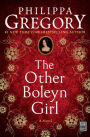
The Other Boleyn Girl [NOOK Book]

NOOK Book (eBook)
$12.99
BN.com price

Available on NOOK devices and apps

  • Nook Devices
  • NOOK
  • NOOK Color
  • NOOK Tablet
  • Tablet/Phone
  • NOOK for iPad
  • NOOK for iPhone
  • NOOK for Android
  • NOOK for Android (Tablet)
  • NOOK Kids for iPad
  • PC/Mac
  • NOOK Study
  • NOOK for PC
  • NOOK for Mac

Need a NOOK? Explore Now

Overview


Two sisters competing for the greatest prize: the love of a king

When Mary Boleyn comes to court as an innocent girl of fourteen, she catches the eye of Henry VIII. Dazzled by the king, Mary falls in love with both her golden prince and her growing role as unofficial queen. However, she soon realizes just how much she is a pawn in her familys ambitious plots as the kings interest begins to wane and she is forced to step aside for her best friend and rival: her sister, Anne. Then Mary knows that she must defy her family and her king, and take her fate into her own hands.

A rich and ...

See more details below

Overview


Two sisters competing for the greatest prize: the love of a king

When Mary Boleyn comes to court as an innocent girl of fourteen, she catches the eye of Henry VIII. Dazzled by the king, Mary falls in love with both her golden prince and her growing role as unofficial queen. However, she soon realizes just how much she is a pawn in her familys ambitious plots as the kings interest begins to wane and she is forced to step aside for her best friend and rival: her sister, Anne. Then Mary knows that she must defy her family and her king, and take her fate into her own hands.

A rich and compelling tale of love, sex, ambition, and intrigue, The Other Boleyn Girl introduces a woman of extraordinary determination and desire who lived at the heart of the most exciting and glamorous court in Europe and survived by following her own heart.

Editorial Reviews

From Barnes & Noble
Sibling rivalry and royal intrigue are at the heart of this Philippa Gregory's historical novel. With diabolical delight, the author of The Queen's Fool etches the story of the unsisterly machinations of Anne Boleyn and her sibling Mary. Though the story of King Henry VIII and his contentious consorts has been told often, The Other Boleyn Girl sustains our interest.
Publishers Weekly
Sisterly rivalry is the basis of this fresh, wonderfully vivid retelling of the story of Anne Boleyn. Anne, her sister Mary and their brother George are all brought to the king's court at a young age, as players in their uncle's plans to advance the family's fortunes. Mary, the sweet, blond sister, wins King Henry VIII's favor when she is barely 14 and already married to one of his courtiers. Their affair lasts several years, and she gives Henry a daughter and a son. But her dark, clever, scheming sister, Anne, insinuates herself into Henry's graces, styling herself as his adviser and confidant. Soon she displaces Mary as his lover and begins her machinations to rid him of his wife, Katherine of Aragon. This is only the beginning of the intrigue that Gregory so handily chronicles, capturing beautifully the mingled hate and nearly incestuous love Anne, Mary and George ("kin and enemies all at once") feel for each other and the toll their family's ambition takes on them. Mary, the story's narrator, is the most sympathetic of the siblings, but even she is twisted by the demands of power and status; charming George, an able plotter, finally brings disaster on his own head by falling in love with a male courtier. Anne, most tormented of all, is ruthless in her drive to become queen, and then to give Henry a male heir. Rather than settling for a picturesque rendering of court life, Gregory conveys its claustrophobic, all-consuming nature with consummate skill. In the end, Anne's famous, tragic end is offset by Mary's happier fate, but the self-defeating folly of the quest for power lingers longest in the reader's mind. (June 4) Forecast: Lovers of historical romances heavy on the history will relish this new entry from Gregory and perhaps propel it onto bestseller lists this summer. Copyright 2002 Cahners Business Information.
From The Critics
Before Henry VIII ever considered making Anne Boleyn his wife, her older sister, Mary, was his mistress. Historical novelist Gregory (Virgin Earth) uses the perspective of this "other Boleyn girl" to reveal the rivalries and intrigues swirling through England. The sisters and their brother George were raised with one goal: to advance the Howard family's interests, especially against the Seymours. So when Mary catches the king's fancy, her family orders her to abandon the husband they had chosen. She bears Henry two children, including a son, but Anne's desire to be queen drives her with ruthless intensity, alienating family and foes. As Henry grows more desperate for a legitimate son and Anne strives to replace Catherine as queen, the social fabric weakens. Mary abandons court life to live with a new husband and her children in the countryside, but love and duty bring her back to Anne time and again. We share Mary's helplessness as Anne loses favor, and everyone abandons her amid accusations of adultery, incest, and witchcraft. Even the Boleyn parents won't intervene for their children. Gregory captures not only the dalliances of court but the panorama of political and religious clashes throughout Europe. She controls a complicated narrative and dozens of characters without faltering, in a novel sure to please public library fans of historical fiction. Kathy Piehl, Minnesota State Univ., Mankato Copyright 2002 Cahners Business Information.

Product Details

  • ISBN-13: 9780743233088
  • Publisher: Touchstone
  • Publication date: 5/21/2002
  • Sold by: SIMON & SCHUSTER
  • Format: eBook
  • Pages: 672
  • Sales rank: 5,720
  • Series: Philippa Gregory Tudor Series, #2
  • File size: 667 KB
  • Items ship to U.S, APO/FPO and U.S. Protectorate addresses.

Meet the Author

Philippa Gregory
Philippa Gregory
Philippa Gregory has been penning compelling works of dramatic historical fiction since the mid-1980s, breaking out with the bestselling Wideacre trilogy and creating a buzz with The Other Boleyn Girl. As fellow author Peter Ackroyd once said of her, "She writes from instinct, not out of calculation, and it shows."

Biography

Philippa Gregory, author of the bestselling Wideacre trilogy and other celebrated historical novels, holds a B.A. in history and a Ph.D. in 18th-century literature. In her youth, however, the meticulous writer-researcher almost skipped going to university (she was, as she put it, "a bit of a rebel at school"). When she finally did enroll at Sussex University, she took a course taught by the historian Maurice Hutt, and the rest is -- what else? -- history.

"It was such a powerful experience that, really, it transformed my life," she explained in an interview with The Guardian. "I was looking for something that would explain everything -- I was that kind of earnest young woman! -- and history seemed to be able to do that."

Gregory earned her degree from Sussex, then traveled to Edinburgh to research 18th-century popular novels. The research spawned both a Ph.D. thesis and Gregory's first novel, Wideacre, which was a New York Times bestseller. It came, Gregory pointed out in a Barnes and Noble interview, "at a time when people wanted a new sort of historical fiction: more realistic, more radical, more sexy, and harder edged. That's how I see the world, so I never wrote for a market, I always wrote to reflect my own view of the period, and it has been phenomenally successful."

After extending Wideacre into a trilogy, Gregory continued to write fiction, delving into 16th-century witchcraft , 17th-century political turmoil, and 18th-century slave trading, as well as exploring contemporary life.

But while Gregory -- in her own view and in the views of many critics -- continued to improve as a writer, none of her books matched the popular success of Wideacre until she wrote The Other Boleyn Girl, a provocative tale of sexual politics in the court of Henry VIII, and The Queen's Fool, the story of a 14-year-old Jewish girl brought to the court of Queen Mary. Both novels became bestsellers and widely acclaimed storytelling tour de forces.

Gregory continues to mine the territory of Tudor England for stories -- and she continues with her historical research, building up an ever more dazzling, daring and complete picture of the period. "Accuracy is very important to me because I have a total commitment to history," Gregory told The Guardian. "It answered my deepest questions, of which, I suppose, the most profound is: ‘Why am I here?' Understanding your history can tell you that. It's how I understand who I am and where I came from. I would never lie to anyone about history."

Good To Know

I love reading and I love thinking -- the reason that I love my books so much is that in order to write them I have to read and to think for years at a time about the same period of time. By the time I settle down to write I have to know fairly intensely about the characters, the period, and the issues. I always get interested in some of the side issues -- like the currency or the change of agriculture.

I have a great passion for the countryside and I can't be happy unless I am walking in the country or riding once or twice a week. When we go on author tour my husband always makes sure that we have walking breaks to keep me sane!
    1. Hometown:
      Yorkshire, England
    1. Date of Birth:
      January 9, 1954
    2. Place of Birth:
      Nairobi, Kenya, East Africa
    1. Education:
      B.A. in history, Sussex University, 1982; Ph.D., 18th-century popular fiction, Edinburgh, 1984
    2. Website:

Read an Excerpt


Spring 1521

I could hear a roll of muffled drums. But I could see nothing but the lacing on the bodice of the lady standing in front of me, blocking my view of the scaffold. I had been at this court for more than a year and attended hundreds of festivities; but never before one like this.

By stepping to one side a little and craning my neck, I could see the condemned man, accompanied by his priest, walk slowly from the Tower toward the green where the wooden platform was waiting, the block of wood placed center stage, the executioner dressed all ready for work in his shirtsleeves with a black hood over his head. It looked more like a masque than a real event, and I watched it as if it were a court entertainment. The king, seated on his throne, looked distracted, as if he was running through his speech of forgiveness in his head. Behind him stood my husband of one year, William Carey, my brother, George, and my father, Sir Thomas Boleyn, all looking grave. I wriggled my toes inside my silk slippers and wished the king would hurry up and grant clemency so that we could all go to breakfast. I was only thirteen years old, I was always hungry.

The Duke of Buckinghamshire, far away on the scaffold, put off his thick coat. He was close enough kin for me to call him uncle. He had come to my wedding and given me a gilt bracelet. My father told me that he had offended the king a dozen ways: he had royal blood in his veins and he kept too large a retinue of armed men for the comfort of a king not yet wholly secure on his throne; worst of all he was supposed to have said that the king had no son and heir now, could get no son and heir, and that he would likely die without a son to succeed him to the throne.

Such a thought must not be said out loud. The king, the court, the whole country knew that a boy must be born to the queen, and born soon. To suggest otherwise was to take the first step on the path that led to the wooden steps of the scaffold which the duke, my uncle, now climbed, firmly and without fear. A good courtier never refers to any unpalatable truths. The life of a court should always be merry.

Uncle Stafford came to the front of the stage to say his final words. I was too far from him to hear, and in any case I was watching the king, waiting for his cue to step forward and offer the royal pardon. This man standing on the scaffold, in the sunlight of the early morning, had been the king's partner at tennis, his rival on the jousting field, his friend at a hundred bouts of drinking and gambling, they had been comrades since the king was a boy. The king was teaching him a lesson, a powerful public lesson, and then he would forgive him and we could all go to breakfast.

The little faraway figure turned to his confessor. He bowed his head for a blessing and kissed the rosary. He knelt before the block and clasped it in both hands. I wondered what it must

be like, to put one's cheek to the smooth waxed wood, to smell the warm wind coming off the river, to hear, overhead, the cry of seagulls. Even knowing as he did that this was a masque and not the real thing, it must be odd for Uncle to put his head down and know that the executioner was standing behind.

The executioner raised his ax. I looked toward the king. He was leaving his intervention very late. I glanced back at the stage. My uncle, head down, flung wide his arms, a sign of his consent, the signal that the ax could fall. I looked back to the king, he must rise to his feet now. But he still sat, his handsome face grim. And while I was still looking toward him there was another roll of drums, suddenly silenced, and then the thud of the ax, first once, then again and a third time: a sound as domestic as chopping wood. Disbelievingly, I saw the head of my uncle bounce into the straw and a scarlet gush of blood from the strangely stumpy neck. The black-hooded axman put the great stained ax to one side and lifted the head by the thick curly hair, so that we could all see the strange mask-like thing: black with the blindfold from forehead to nose, and the teeth bared in a last defiant grin.

The king rose slowly from his seat and I thought, childishly, "Dear God, how awfully embarrassing this is going to be. He has left it too late. It has all gone wrong. He forgot to speak in time."

But I was wrong. He did not leave it too late, he did not forget. He wanted my uncle to die before the court so that everybody might know that there was only one king, and that was Henry. There could be only one king, and that was Henry. And there would be a son born to this king -- and even to suggest otherwise meant a shameful death.

The court returned quietly to Westminster Palace in three barges, rowed up the river. The men on the riverbank pulled off their hats and kneeled as the royal barge went swiftly past with a flurry of pennants and a glimpse of rich cloth. I was in the second barge with the ladies of the court, the queen's barge. My mother was seated near me. In a rare moment of interest she glanced at me and remarked, "You're very pale, Mary, are you feeling sick?"

"I didn't think he would be executed," I said. "I thought the king would forgive him."

My mother leaned forward so that her mouth was at my ear and no one could have heard us over the creaking of the boat and the beat of the rowers' drum. "Then you are a fool," she said shortly. "And a fool to remark it. Watch and learn, Mary. There is no room for mistakes at court."

Copyright © 2001 by Philippa Gregory Ltd.

Introduction

Reading Group Guide for The Other Boleyn Girl

Discussion Points

1. Why does Philippa Gregory choose Mary to narrate the story? Keeping in mind the relationship between the observer and those observed, is Mary a good, trustworthy, narrator? As Mary ages, how is her loss of innocence reflected in her telling of the story?

2. Look at the exchange between Mary and her mother at the end of the first chapter. How does the author foreshadow what is to come? How do the events of the first chapter frame the entire story?

3. Discuss the Boleyn family's scheming and jockeying for favor in the court. In light of these politics, discuss the significance of Mary's explanation that she had "a talent for loving [the king]" (page 119). Is this simply a girl's fantasy? Why does Mary call herself and George "a pair of pleasant snakes" (page 131)?

4. On page 29, Mary professes her love and admiration for Queen Katherine and feels she can't betray her. In what ways are her honorable ideals compromised as she embarks on her adulterous affair with the king? Recount the whirlwind of events preceding Anne's becoming queen. Reading page 352, do you agree that "from start to finish" Mary "had no choice" but to betray Queen Katherine by taking the queen's letter to her uncle?

5. Consider pages 38 and 82. How does the author create sexual tension? How do the narrator's thoughts and feelings communicate the attraction between her and the king? Why is this important to the story of The Other Boleyn Girl?

6. On page 85, Anne tells Mary, "I am happy for the family. I hardly ever think about you." Do you think she's telling the truth? Later, Anne says to her sister,"We'll always be nothing to our family" (page 310). Do you think she believes this, especially given her overwhelming desire to advance her own status?

7. Why does Mary say, "I felt like a parcel..." (page 60)? What happens later to make Mary think she's no longer a "pawn" of the family, but "at the very least, a castle, a player in the game" (page 173)?

8. Look at the exchange between Mary and Anne about the king on page 72. Do you agree with Anne when she tells Mary that "you can't desire [the king] like an ordinary man and forget the crown on his head." What does this statement reveal about Anne's nature? And what does it reveal about Mary's?

9. In general, what are your impressions of the sisters? Keep in mind Anne and Mary's discussion on page 104: "So who would come after me?...I could make my own way." Also look at page 123, when Anne says, "Hear this, Mary...I will kill you." Why are these statements significant, particularly given their timing?

10. Share some of the characteristics that you like about historical fiction. For you, what aspect of The Other Boleyn Girl stands out the most? How does the book change your impressions of life in King Henry VIII's court? Looking at the letter on page 275, discuss the level of corruption in the court. Does it surprise you? Were you aware of Anne's dogged and exhausting pursuit of the king? Did the way Anne became queen shock you?

11. How do you feel about the idea that a woman had to be married before she could bed the king? What do you think about the king changing the laws to suit his needs? When Anne states that "Nothing will ever be the same for any woman in this country again," examine why she could believe she would be exempt from the same treatment. In other words, why didn't she realize that "when she overthrew a queen that thereafter all queens would be unsteady" (page 519)? Do you think the family realized this but persevered anyway?

12. Discuss Mary's evolution of thinking from when she realizes that after Queen Katherine's departure, "from this time onward no wife...would be safe" with her later thought (on page 468) that "the triumph of Anne, the mistress who had become a wife, was an inspiration to every loose girl in the country." What does this say about Mary's state of mind? Is she being a reliable narrator here?

13. On page 303, George exclaims to Mary, "You cannot really want to be a nobody." Why is this such a revolutionary idea in Henry's court, and for the Boleyns in particular? What should the response have been to Mary's question to Anne (page 330) about the rewards of Anne's impending marriage to the king: "What is there for me?"

14. In King Henry's court, homosexuality was a crime. Why do you think George essentially flaunted his preference? What do you make of the intimate kiss between George and Anne that Mary witnessed? What is the impetus behind George and Anne's relationship? Discuss whether or not you believe that George slept with Anne so that she might have a son, and why.

15. Why do you think George declares that Anne is "the only Boleyn anyone will ever know or remember" (page 410)? Was that true for you before you read The Other Boleyn Girl? What about now?

16. After Anne is arrested, Mary pleads for her by saying, "We did nothing more than that was ordered. We only ever did as we were commanded. Is she to die for being an obedient daughter?" (page 650). What is your reaction to these arguments? Did Henry have no choice but to sentence her to death?

Philippa Gregory is the New York Times bestselling author of several books, including The Other Boleyn Girl and The Boleyn Inheritance. A writer and broadcaster for radio and television, she lives in England. She welcomes visitors and messages at her website, www.philippagregory.com.

Reading Group Guide


Reading Group Guide for The Other Boleyn Girl

Discussion Points

1. Why does Philippa Gregory choose Mary to narrate the story? Keeping in mind the relationship between the observer and those observed, is Mary a good, trustworthy, narrator? As Mary ages, how is her loss of innocence reflected in her telling of the story?

2. Look at the exchange between Mary and her mother at the end of the first chapter. How does the author foreshadow what is to come? How do the events of the first chapter frame the entire story?

3. Discuss the Boleyn family's scheming and jockeying for favor in the court. In light of these politics, discuss the significance of Mary's explanation that she had "a talent for loving [the king]" (page 119). Is this simply a girl's fantasy? Why does Mary call herself and George "a pair of pleasant snakes" (page 131)?

4. On page 29, Mary professes her love and admiration for Queen Katherine and feels she can't betray her. In what ways are her honorable ideals compromised as she embarks on her adulterous affair with the king? Recount the whirlwind of events preceding Anne's becoming queen. Reading page 352, do you agree that "from start to finish" Mary "had no choice" but to betray Queen Katherine by taking the queen's letter to her uncle?

5. Consider pages 38 and 82. How does the author create sexual tension? How do the narrator's thoughts and feelings communicate the attraction between her and the king? Why is this important to the story of The Other Boleyn Girl?

6. On page 85, Anne tells Mary, "I am happy for the family. I hardly ever think about you." Do you think she's telling the truth? Later, Anne says to her sister, "We'll always be nothing to our family" (page 310). Do you think she believes this, especially given her overwhelming desire to advance her own status?

7. Why does Mary say, "I felt like a parcel..." (page 60)? What happens later to make Mary think she's no longer a "pawn" of the family, but "at the very least, a castle, a player in the game" (page 173)?

8. Look at the exchange between Mary and Anne about the king on page 72. Do you agree with Anne when she tells Mary that "you can't desire [the king] like an ordinary man and forget the crown on his head." What does this statement reveal about Anne's nature? And what does it reveal about Mary's?

9. In general, what are your impressions of the sisters? Keep in mind Anne and Mary's discussion on page 104: "So who would come after me?...I could make my own way." Also look at page 123, when Anne says, "Hear this, Mary...I will kill you." Why are these statements significant, particularly given their timing?

10. Share some of the characteristics that you like about historical fiction. For you, what aspect of The Other Boleyn Girl stands out the most? How does the book change your impressions of life in King Henry VIII's court? Looking at the letter on page 275, discuss the level of corruption in the court. Does it surprise you? Were you aware of Anne's dogged and exhausting pursuit of the king? Did the way Anne became queen shock you?

11. How do you feel about the idea that a woman had to be married before she could bed the king? What do you think about the king changing the laws to suit his needs? When Anne states that "Nothing will ever be the same for any woman in this country again," examine why she could believe she would be exempt from the same treatment. In other words, why didn't she realize that "when she overthrew a queen that thereafter all queens would be unsteady" (page 519)? Do you think the family realized this but persevered anyway?

12. Discuss Mary's evolution of thinking from when she realizes that after Queen Katherine's departure, "from this time onward no wife...would be safe" with her later thought (on page 468) that "the triumph of Anne, the mistress who had become a wife, was an inspiration to every loose girl in the country." What does this say about Mary's state of mind? Is she being a reliable narrator here?

13. On page 303, George exclaims to Mary, "You cannot really want to be a nobody." Why is this such a revolutionary idea in Henry's court, and for the Boleyns in particular? What should the response have been to Mary's question to Anne (page 330) about the rewards of Anne's impending marriage to the king: "What is there for me?"

14. In King Henry's court, homosexuality was a crime. Why do you think George essentially flaunted his preference? What do you make of the intimate kiss between George and Anne that Mary witnessed? What is the impetus behind George and Anne's relationship? Discuss whether or not you believe that George slept with Anne so that she might have a son, and why.

15. Why do you think George declares that Anne is "the only Boleyn anyone will ever know or remember" (page 410)? Was that true for you before you read The Other Boleyn Girl? What about now?

16. After Anne is arrested, Mary pleads for her by saying, "We did nothing more than that was ordered. We only ever did as we were commanded. Is she to die for being an obedient daughter?" (page 650). What is your reaction to these arguments? Did Henry have no choice but to sentence her to death?

Customer Reviews
Average Rating 4.5
( 1150 )

Rating Distribution

If you've bought this product, tell the world how you liked it.
Write a Review
See All Sort by: Showing 1 – 20 of 1157 Customer Reviews
  • Posted May 22, 2010

    more from this reviewer

    Couldn't put it down.

    If this era fascinates you, then you will find this book one you will not want to put down. I enjoyed the fact that it was based around Mary Boelyn, even after the king began to favor Ann. Although, a story based on Ann Boelyn's point of view would also be very intriguing. This is the first book I've read by Philippa Gregory and I'm excited to read more!

    I would also like to add, please don't read this book if you are trying to learn some hard facts. Don't review this book and give it one star just because it's not written like a history book. That's why it's under the fiction section! It's mean't to be entertaining and fun and actually makes your imagination wheels spin rather than just feeding facts to mindless readers. :) Happy reading.

    5 out of 5 people found this review helpful.

    Was this review helpful? Yes  No   Report this review
  • Anonymous

    Posted June 14, 2008

    Oh dear....ya....not much more to say.

    Two questions:Entertaining? Yes, it was. Turthful? Not in the least! I've spent next to a quarter of my life studying the Tudors, and I assure you that there are several, plot changing, dire mistakes in this book, which could only have come about by the Author's 1)sheer ignorance, or 2)inability to care. You want to read this, then I say go for it. It is an entertaining way to pass the time, but please PLEASE don't take half the things in this book for fact. It just simply is not.

    5 out of 6 people found this review helpful.

    Was this review helpful? Yes  No   Report this review
  • Posted November 18, 2008

    more from this reviewer

    I Also Recommend:

    Much Better Than Movie

    If you've seen the movie - you must read the book. I saw the movie first and it struck my curiousity due to how it ended and the characters remaining - didn't realize the lineage of Elizabeth I - The Virgin Queen. So I picked out several books by Gregory and read The Constant Princess first, followed by The Other Boleyn Girl.
    Gregory is a great writer and you get a manner of s history lesson without feeling like you're reading a text book. Amazing what families did and put their loved one's through to gain favor with royalty - makes you thankful to be a woman in today's society.

    Consider this a GREAT read and can not wait to read more from Gregory

    4 out of 4 people found this review helpful.

    Was this review helpful? Yes  No   Report this review
  • Anonymous

    Posted June 20, 2008

    MORE FICTION THAN HISTORY

    I love history, so historical fiction is a passion of mine. It just so happens that i am fascinated with king henry viii... And anne boleyn. I found this book well written, but i was disappointed on her lack of historical facts. Mary was not the younger sister... Phillipa portrays mary as this sweet, naive, girl... But history knows that she is known as the 'english mare' to king francis, and was passed along to more that one nobleman. I personally found distain in her portrayal of anne, almost as if she had a personal piff against her. Anne was as much a victim of her father's scheming as mary was. But mary came out alive after her family was excecuted. I was not too thrilled with this book... If you know the real story of the boleyn's, andlove true history... You will be disappointed

    4 out of 6 people found this review helpful.

    Was this review helpful? Yes  No   Report this review
  • Posted September 26, 2009

    Made my top ten!

    A taste - no, a mouthfull of everything one would want from a historical romance. Couldn't wait to get home & continue reading. Finished in 4 days. This was my first Phillipa Gregory novel but, certainly not the last!

    3 out of 3 people found this review helpful.

    Was this review helpful? Yes  No   Report this review
  • Anonymous

    Posted June 30, 2002

    An interesting but disappointing novel of the Boleyns

    'The Other Boleyn Girl' was a engrossing novel but went overboard on literary license. Marry was not married at the age of twelve, she was Anne's older sister, and Anne was nowhere near the witch (though she was no saint) that she is portrayed as in this novel. The whole incest scandal was way overplayed. Most modern people dismiss the adultery/incest charges against Anne as entirely Henry's invention. Anne was not stupid. Even if she were crazy enough to commit adultery, don't you think she could find a slightly more suitable candidate than her own brother??? If the adultery charges were true, then she'd obviously found four other 'worthy' men. Even the author admits that the whole homosexual scandal was gotten from one author's thesis! This book seemed hell-bent on making Anne Boleyn look like the Queen of the Damned, the most selfish and vile and sinful thing ever to walk the earth!!! It scooped up all the nastiest gossip about her, presented it as fact, and included some rather nasty unrequired sex-talk scenes into the bargain. I do, however, applaud the seemingly accurate description of Katherine of Aragon. ~Pilar P.S. For the woman who watched 'Elizabeth' to get more historical information, you couldn't have picked a more historically inaccurate movie. Read Antonia Frasier or Alison Weir.

    3 out of 5 people found this review helpful.

    Was this review helpful? Yes  No   Report this review
  • Anonymous

    Posted July 28, 2002

    Other Boleyn Girl

    An extremely interesting setup, the love-hate relationship between two sisters. However, the repetition of the 'court-is-a-sham-must-perform-intricate-court-dance-to-further-ambition idea got old fast. It's like, if you hate court that much then just...I don't know....leave? Besides, the way rumors widely believed to be untrue were presented as fact is maddening to someone who KNOWS the facts. Good historical fiction teaches you about the period it is set in. TOBG just informed you of the gossip and scandals of that period. Overall, this book seemed designed to make a sensation and not to instill people with a interest and curiosity in the true Tudor period

    3 out of 5 people found this review helpful.

    Was this review helpful? Yes  No   Report this review
  • Posted March 12, 2009

    Good read, but. . .

    This is the first book that I read regarding Tudor England. When I first read it, I loved it, and I still think it was an amazing piece of fiction. It definitely got me interested in the period and the characters. But as I started my own research and reading other books on the subject, I began to feel as though I had been misled. . .She actually gets a lot of her facts wrong. And I know that this is just a pitfall of historical fiction, but she was heavily biased. Ann came out looking like a horrible person, and Katherine of Aragon and her daughter Mary saints. I feel like this is an unfair portrayal of the characters, especially since later in her life Mary came to be known as Bloody Mary!!! I liked it and I would recommend it, but only if you know going into it that you are reading more fiction than history.

    2 out of 4 people found this review helpful.

    Was this review helpful? Yes  No   Report this review
  • Anonymous

    Posted August 7, 2008

    Horrible twisting of facts..........

    Let's start by saying I cannot believe that they actually made a movie about this piece of garbage! Why they would not choose to make a film about history on actual historic events is beyond me. I have considerable knowledge on the subject of Tudor England, and this book does not even come close to a shred of accuracy! I don't understand how the author could get something like their ages incorrect! Obviously she did no research for this book, and it shows in her poor rendition of true events. I would not recommend this book to anyone! It really makes me angry that so many inconsistencies existed in this book. I wanted to like it, I really did. It fell critically short on anything that would make a good historical novel.

    2 out of 4 people found this review helpful.

    Was this review helpful? Yes  No   Report this review
  • Posted April 28, 2009

    more from this reviewer

    Left me fustrated

    For the most part enjoyed reading this book, but it left me really fustrated with the parts of history that the author took creative licencing on. There were many times that I had to put the book down because my fustrations stopped me from actually enjoying the book. The first big thing is that Mary was not younger than Anne, and the flubs in history just keep going from there. Be advised if you know a lot about Tudor history, you may have to turn your historical brain off at times durring the book. If you are looking for a mindless book to read give it a try, but be warned that it's not overly historical. If you are looking for something that is a bit more historically accurate try reading "The Last Bolyen".

    1 out of 3 people found this review helpful.

    Was this review helpful? Yes  No   Report this review
  • Posted March 11, 2009

    I Also Recommend:

    a MUST read!

    People normally think that history is not very interesting and quite dull, I was once one of those people, but after I read this book I became fascinated with history. This book shows a side of history we are not normally prone to see. The lies and betrayal that come side by side to power are incredible. Henry VII, an English king was happily married to his beautiful Spanish wife Catherine of Aragon, who unfortunately, could not give Henry the thing he most yearned for and needed...an heir to the throne, a son. This is where the Boleyn family enters . The handsome and fickle king immediately had his eyes on the beautiful Mary Boleyn, awestruck that a king wanted her, Mary fell in love and became the King's mistress. Only to find out later that her family had planned this all along, she was to give birth to a Tudor son. But what about the other Boleyn girl, Anne? Tired of being under her sisiter's shadow, she decides it's her time in the spotlight. This strong-willed brunnete takes over in one of the greatest courts in all the world. This book shows us the power that women have over men, even the most greedy, self-centered ones and the astonishing things a woman will do to get to the top, even sidestep her own flesh and blood. This book immerses you in a life full of drama, betrayal, sex and lies, a courtier's life. The Other Boleyn Girl will keep you flipping the pages untiil you finish, ignoring everything else altogether. The characters will make you love them or they will make you want to throw the book at a wall, but keep on reading, it's worth it.

    1 out of 1 people found this review helpful.

    Was this review helpful? Yes  No   Report this review
  • Anonymous

    Posted September 25, 2007

    Curious about the Boleyns? Don't start here.

    Phillipa Gregory has a knack for drawing you in with her histrionics, but that's about it. Actually, I did read the book in just two days -- not just because her overdramatic style drew me in against my will (drat!), however, but because she writes as if her target audience has a sixth-grade reading level. The 500-something pages in big type, bad writing and simpleton wording merely flew by. Gregory really ought to stress that her novels are much, much more than filling in the conversation to historically known facts. Instead she passes her (very, very) vividly-imagined goings-on as something that might be worth considering as a truthful possibility. This tripe was more overwrought, soap-opera-esque dramatic flailings than actual history. It is unnecessary and ruinous, as this period in history was borderline unbelievable by itself. She made a joke of it all, and makes a joke of all historic fiction by association. I am sorely disappointed this rendition was chosn to be presented to the public in movie form. I'm sad at the misconceptions that will abound as a result. If you want an excellent read about the Boleyn girls (from Mary's point of view), that pays more attention to detail and is more intelligently written, pick up a copy of 'The Last Boleyn'. Better historical fiction authors are Jean Plaidy / Victoria Holt, and Margaret George.

    1 out of 3 people found this review helpful.

    Was this review helpful? Yes  No   Report this review
  • Anonymous

    Posted October 27, 2006

    What's All The Fuss About?

    Why is it that so many people love this book? I am an avid fan of the Tudors and I found this book totally inaccurate. I found that the content of the book messed up historical facts in order to make Mary more likable and to make Anne Boleyn seem like an evil witch. She was not! Anne could be vindictive and cruel, but she had her good side. She was interested in charity, she was intelligent, and I simply find her to be someone born in the wrong era. Anne was outspoken about her ideas and the public back then didn't like women who had their own minds. Let's also not forget that Henry initiated his relationship with Anne. I also had trouble with the author's prose, which was more romance novel than literature and Mary just wasn't belivable as a narrator to me. If you like heavy literature, don't buy this book!

    1 out of 2 people found this review helpful.

    Was this review helpful? Yes  No   Report this review
  • Anonymous

    Posted September 9, 2005

    Eh?

    I honestly don't understand why people like this book. I thought it was trashily written and melodramatic, and it is absurdly historically inaccurate.

    1 out of 2 people found this review helpful.

    Was this review helpful? Yes  No   Report this review
  • Anonymous

    Posted April 3, 2003

    Other Boleyn Girl

    I've always loved historical fiction, especially about the Tudor era, and so I was ecstatic when I discovered this book. Sadly, I found it to be grossly innaccurate (there is such a thing as artistic license, but this book takes it too far), with unrealistic characters, some unneeded and disgusting sex diaologues, and too completely modern dialogue altogether! It's really a shame as it is very interestingly written, but if you are looking for great historical fiction I don't reccommend this book.

    1 out of 3 people found this review helpful.

    Was this review helpful? Yes  No   Report this review
  • Anonymous

    Posted November 20, 2002

    Disappointing

    I'm very interested in the Tudor era of England, so I thought I'd give this book a try. While the author is great with imagery, at times the book reads like a cheap romance novel. There's not much depth... The main characters aren't very likeable. It's interesting to see the author's interpretation of events, and historically it's pretty accurate. Overall though I'd say it's a letdown; it's fluff writing without much depth and there seems to be something missing from the book. Good idea, poorly executed.

    1 out of 3 people found this review helpful.

    Was this review helpful? Yes  No   Report this review
  • Posted February 7, 2012

    Excellent, page turner!

    This book is about 550 pages; the first 500, I could not put down! The last 50 or so where just as good, but I think the ending was a little rushed.
    I finished this book in between working, family, and sleeping - in about a week, it was just that good. Love the historical accuracy, and where the author takes liberties it just enhances the story. Would definitely recommend, and will read again.

    Was this review helpful? Yes  No   Report this review
  • Posted January 29, 2012

    Highly Recommended-check it out

    I love this book. it is a real page turner can't putt my ebook down. the chacaters really come to life.

    Was this review helpful? Yes  No   Report this review
  • Anonymous

    Posted January 28, 2012

    Best BOok evey Best Book Ever

    The book is amazing but wait unt you see the movie

    Was this review helpful? Yes  No   Report this review
  • Posted January 17, 2012

    more from this reviewer

    A magnificent page-turner, wow!

    This is by far the best book that I have read in a long time. A beautiful historic novel, couldn't put it down. Never a dull or boring moment, just flawless. Highly recommended!

    Was this review helpful? Yes  No   Report this review
See All Sort by: Showing 1 – 20 of 1157 Customer Reviews

If you find inappropriate content, please report it to Barnes & Noble
Why is this product inappropriate?
Comments (optional)
500 character limit