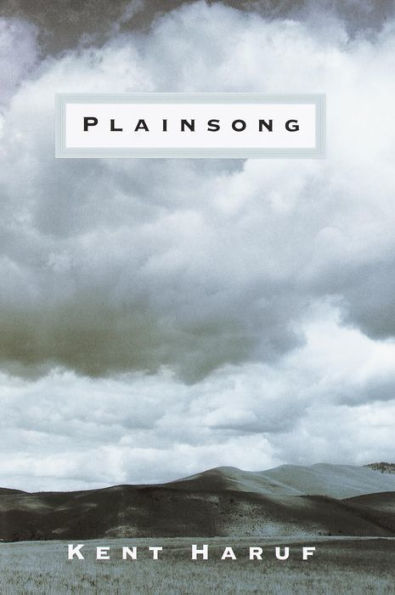
Plainsong [NOOK Book]

NOOK Book (eBook)
$11.99
BN.com price

Available on NOOK devices and apps

  • Nook Devices
  • NOOK
  • NOOK Color
  • NOOK Tablet
  • Tablet/Phone
  • NOOK for iPad
  • NOOK for iPhone
  • NOOK for Android
  • NOOK for Android (Tablet)
  • NOOK Kids for iPad
  • PC/Mac
  • NOOK Study
  • NOOK for PC
  • NOOK for Mac

Need a NOOK? Explore Now

Overview

A heartstrong story of family and romance, tribulation and tenacity, set on the High Plains east of Denver.
In the small town of Holt, Colorado, a high school teacher is confronted with raising his two boys alone after their mother retreats first to the bedroom, then altogether. A teenage girl -- her father long since disappeared, her mother unwilling to have her in the house -- is pregnant, alone herself, with nowhere to go. And out in the country, two brothers, elderly bachelors, work the family homestead, the only world they've ever known.

From these unsettled lives emerges a vision of life, and of the town and landscape that bind them together -- ...

See more details below

Overview

A heartstrong story of family and romance, tribulation and tenacity, set on the High Plains east of Denver.
In the small town of Holt, Colorado, a high school teacher is confronted with raising his two boys alone after their mother retreats first to the bedroom, then altogether. A teenage girl -- her father long since disappeared, her mother unwilling to have her in the house -- is pregnant, alone herself, with nowhere to go. And out in the country, two brothers, elderly bachelors, work the family homestead, the only world they've ever known.

From these unsettled lives emerges a vision of life, and of the town and landscape that bind them together -- their fates somehow overcoming the powerful circumstances of place and station, their confusion, curiosity, dignity and humor intact and resonant. As the milieu widens to embrace fully four generations, Kent Haruf displays an emotional and aesthetic authority to rival the past masters of a classic American tradition.

Utterly true to the rhythms and patterns of life, Plainsong is a novel to care about, believe in, and learn from.

1999 National Book Award nominee for Fiction.

Editorial Reviews

From Barnes & Noble
Critically acclaimed author Kent Haruf, the recipient of a PEN/Hemingway special citation and a Whiting Award for his debut novel, The Tie That Binds, follows with the intensely affecting story of family, tribulation, and tenacity, set on the High Plains east of Denver. In the small town of Holt, Colorado, a high school teacher struggles to raise his two sons alone; a pregnant teenager, deserted by her older boyfriend, is cast out of her mother's house; two elderly brothers, lifelong bachelors, farm their declining family homestead. Despite differences of place and station in life, Haruf's unforgettable characters come together to survive, with their confusion, dignity, and humor intact and resonant.
Joshua Klein
Kent Haruf's third novel Plainsong-- already been nominated for the National Book Award--indicates just how much the novel has resonated with readers. Haruf himself must be surprised, but not that surprised: A professor at Southern Illinois University and an honest-to-goodness son of a preacher, Haruf is so adept at capturing the heart of an innocent side of America that it's hard to believe anyone wouldn't be affected by his work. Plainsong is set in Holt, Colorado, a rural community well outside Denver; the setting is timeless, with only the occasional, fleeting reference to VCRs or pop culture indicating that the book takes place closer to "now" than "then." Tom Guthrie is a high-school teacher left raising two young sons after his depressed and disappointed wife moves to the city. His children bake cookies, ride horses, and run a paper route, but at the same time they almost consciously seek out a cool, hardened, cowboy sense of maturity.

Meanwhile, another teacher helps a pregnant teen disowned by her mother find love and acceptance in two hilariously well-intentioned elderly brothers. The two tentatively take the girl on as a boarder on their cattle farm even though they barely know how to communicate with anyone but each other. These seven characters form the core of Plainsong, which switches vantages from chapter to chapter like a more direct Faulkner, though the prose is no less poetic and evocative. Through this device, Haruf illustrates how relationships are formed and what makes them last, how responsibility and accountability make people good, and how cooperation can make a small town strong in times of conflict. A fast, encouraging, enlightening read, Plainsong is beautiful, real, and wise: a true great American novel.

From The Critics
...[a plainspoken and moving novel] that weaves together the voices of half a dozen people living in a small Colorado town and turns their overlapping stories into a powerful portrait of a community...
New York Times

Product Details

  • ISBN-13: 9780375726934
  • Publisher: Knopf Doubleday Publishing Group
  • Publication date: 4/3/2001
  • Sold by: Random House
  • Format: eBook
  • Sales rank: 35,475
  • Series: Vintage Contemporaries Series
  • File size: 251 KB
  • Items ship to U.S, APO/FPO and U.S. Protectorate addresses.

Meet the Author

Kent Haruf
Kent Haruf
"Haruf's gifts as a writer go beyond choreography. He has caught his prairie people with the skill of Wright Morris, the prairie itself with the sweeping eye of Willa Cather," said the Rocky Mountain News of Kent Haruf's signature style.

Biography

Though many readers know Kent Haruf as the author of 1999's acclaimed novel Plainsong, Haruf had already made an auspicious debut with The Tie That Binds in 1984. Where You Once Belonged followed in 1990. Some short stories appeared in literary magazines, but it was another nine years before Haruf surfaced again on the bookshelves.

Despite the long gestation period, Plainsong yielded rich returns. The story weaves together several characters: pregnant 17-year-old Victoria Roubideaux; the McPherons, an elderly pair of cattle rancher brothers who take Victoria in; Tom Guthrie and his two young sons, abandoned by their depressed mother; and a high school teacher who knows them all, Maggie Jones. Each chapter is titled for one of the characters, carrying the reader along with one or another as all of them intersect. Nominated for the National Book Award, Plainsong became a bestseller and was warmly reviewed. "It has the power to exalt the reader," the New York Times Book Review declared.

Plainsong, which derives its title from the unadorned vocal music often sung in Christian churches, is aptly named. The tale is simply told, the action moves slowly, and dialogue resides within the text, unframed by quotation marks. All of Haruf's novels are set in the High Plains community of Holt, in eastern Colorado -- a fictional town much like the ones Haruf grew up in. "In the Plains, things are stripped down to the essentials, and that seems to fit what [Plainsong] is about and that seemed to be an obvious setting for this story," he says in a publisher's interview. The rhythms of nature and simple work are a latticework underlying the author's stories. Like the landscape of the setting, the progression of Haruf's tales is subtle. He is a thoughtful, understated writer who writes with a restrained sympathy for his characters, even when they seem not to warrant much.

Haruf revisited some of Plainsong's characters in Eventide, continuing Victoria's story as she heads off to college and bringing both tragedy and renewal to the McPheron brothers. The theme of unconventional family units continues, as does the mixing of modern urban problems and simple rural life. An 11-year-old orphan cares for his grandfather; a mother of two copes with being abandoned by her husband; and a mentally disabled couple struggle to keep their family intact.

Like his later novels, The Tie That Binds and Where You Once Belonged feature Haruf's straightforward narrative style and rural setting. However, both have a sharper edge and more explosive content, dealing with hard crimes and focusing more on individual characters. Tie focuses on one woman's tragic life story of family sacrifice; Belonged tells about the crimes inflicted on the town of Holt by one of its former residents, an ex-football hero.

Haruf's stories end as openly as they begin; though well crafted and thoroughly imagined, they are not about tight plot construction or surprising twists. Instead, Haruf is more concerned with expressing emotional truths. "Our lives are generally pretty messy," Haruf told the Kansas City Star in a 2000 interview about Plainsong. "What I want to suggest at the end [of the book] is that at this point, at least this day and this point in their lives, all these people have found a place in a small community -- it may even be an extended family -- in which they can connect with other people and find solace and communion."

Good To Know

Over the years, Haruf has worked as at a variety of places, including: a chicken ranch in Colorado, the Royal Gorge in the Rocky Mountains, a construction site in Wyoming, the railroad tracks in southeastern Montana, a pest control company in Kansas, a rehabilitation hospital in Denver, an orphanage in Montana, a surgery wing in a hospital in Phoenix, a presidential library in Iowa, an alternative high school in Wisconsin, a country school in Colorado, and a college in Nebraska.

Haruf lives with his wife Cathy. Between them, the two have eight children from previous marriages. Haruf has three daughters.

Haruf taught at Southern Illinois University before the profits from Plainsong allowed him to retire and move back to Colorado.

Plainsong was made into a CBS TV movie in 2004. Rachel Griffiths starred as Maggie.

    1. Hometown:
      South Central Mountains of Colorado
    1. Date of Birth:
      February 24, 1943
    2. Place of Birth:
      Pueblo, Colorado
    1. Education:
      B.A., Nebraska Wesleyan University, 1965; M.F.A., Iowa University (Writers' Workshop), 1973

Read an Excerpt

Here was this man Tom Guthrie in Holt standing at the back window in the kitchen of his house smoking cigarettes and looking out over the back lot where the sun was just coming up. When the sun reached the top of the windmill, for a while he watched what it was doing, that increased reddening of sunrise along the steel blades and the tail vane above the wooden platform. After a time he put out the cigarette and went upstairs and walked past the closed door behind which she lay in bed in the darkened guest room sleeping or not and went down the hall to the glassy room over the kitchen where the two boys were.

The room was an old sleeping porch with uncurtained windows on three sides, airy-looking and open, with a pinewood floor. Across the way they were still asleep, together in the same bed under the north windows, cuddled up, although it was still early fall and not yet cold. They had been sleeping in the same bed for the past month and now the older boy had one hand stretched above his brother's head as if he hoped to shove something away and thereby save them both. They were nine and ten, with dark brown hair and unmarked faces, and cheeks that were still as pure and dear as a girl's.

Outside the house the wind came up suddenly out of the west and the tail vane turned with it and the blades of the windmill spun in a red whir, then the wind died down and the blades slowed and stopped.

You boys better come on, Guthrie said.

He watched their faces, standing at the foot of the bed in his bathrobe. A tall man with thinning black hair, wearing glasses. The older boy drew back his hand and they settled deeper under the cover. One of them sighed comfortably.

Ike.

What?

Come on now.

We are.

You too, Bobby.

He looked out the window. The sun was higher, the light beginning to slide down the ladder of the windmill, brightening it, making rungs of rose-gold.

When he turned again to the bed he saw by the change in their faces that they were awake now. He went out into the hall again past the closed door and on into the bathroom and shaved and rinsed his face and went back to the bedroom at the front of the house whose high windows overlooked Railroad Street and brought out shirt and pants from the closet and laid them out on the bed and took off his robe and got dressed. When he returned to the hallway he could hear them talking in their room, their voices thin and clear, already discussing something, first one then the other, intermittent, the early morning matter-of-fact voices of little boys out of the presence of adults. He went downstairs.

Ten minutes later when they entered the kitchen he was standing at the gas stove stirring eggs in a black cast-iron skillet. He turned to look at them. They sat down at the wood table by the window.

Didn't you boys hear the train this morning?

Yes, Ike said.

You should have gotten up then.

Well, Bobby said. We were tired.

That's because you don't go to bed at night.

We go to bed.

But you don't go to sleep. I can hear you back there talking and fooling around.

They watched their father out of identical blue eyes. Though there was a year between them they might have been twins. They'd put on blue jeans and flannel shirts and their dark hair was uncombed and fallen identically over their unmarked foreheads. They sat waiting for breakfast and appeared to be only half awake.

Guthrie brought two thick crockery plates of steaming eggs and buttered toast to the table and set them down and the boys spread jelly on the toast and began to eat at once, automatically, chewing, leaning forward over their plates. He carried two glasses of milk to the table.

He stood over the table watching them eat. I have to go to school early this morning, he said. I'll be leaving in a minute.

Aren't you going to eat breakfast with us? Ike said. He stopped chewing momentarily and looked up.

I can't this morning. He recrossed the room and set the skillet in the sink and ran water into it.

Why do you have to go to school so early?

I have to see Lloyd Crowder about somebody.

Who is it?

A boy in American history.

What'd he do? Bobby said. Look off somebody's paper?

Not yet. I don't doubt that'll be next, the way he's going.

Ike picked at something in his eggs and put it at the rim of his plate. He looked up again. But Dad, he said.

What.

Isn't Mother coming down today either?

I don't know, Guthrie said. I can't say what she'll do. But you shouldn't worry. Try not to. It'll be all right. It doesn't have anything to do with you.

He looked at them closely. They had stopped eating altogether and were staring out the window toward the barn and corral where the two horses were.

You better go on, he said. By the time you get done with your papers you'll be late for school.

He went upstairs once more. In the bedroom he removed a sweater from the chest of drawers and put it on and went down the hall and stopped in front of the closed door. He stood listening but there was no sound from inside. When he stepped into the room it was almost dark, with a feeling of being hushed and forbidding as in the sanctuary of an empty church after the funeral of a woman who had died too soon, a sudden impression of static air and unnatural quiet. The shades on the two windows were drawn down completely to the sill. He stood looking at her. Ella. Who lay in the bed with her eyes closed. He could just make out her face in the halflight, her face as pale as schoolhouse chalk and her fair hair massed and untended, fallen over her cheeks and thin neck, hiding that much of her. Looking at her, he couldn't say if she was asleep or not, but he believed she was not. He believed she was only waiting to hear what he had come in for, and then for him to leave.

Do you want anything? he said.

She didn't bother to open her eyes. He waited. He looked around the room. She had not yet changed the chrysanthemums in the vase on the chest of drawers and there was an odor rising from the stale water in the vase. He wondered that she didn't smell it. What was she thinking about.

Then I'll see you tonight, he said.

He waited. There was still no movement.

All right, he said. He stepped back into the hall and pulled the door shut and went on down the stairs.

As soon as he was gone she turned in the bed and looked toward the door. Her eyes were intense, wide-awake, outsized. After a moment she turned again in the bed and studied the two thin pencils of light shining in at the edge of the window shade. There were fine dust motes swimming in the dimly lighted air like tiny creatures underwater, but in a moment she closed her eyes again. She folded her arm across her face and lay unmoving as though asleep.

Downstairs, passing through the house, Guthrie could hear the two boys talking in the kitchen, their voices clear, high-pitched, animated again. He stopped for a minute to listen. Something to do with school. Some boy saying this and this too and another one, the other boy, saying it wasn't any of that either because he knew better, on the gravel playground out back of school. He went outside across the porch and across the drive toward the pickup. A faded red Dodge with a deep dent in the left rear fender. The weather was clear, the day was bright and still early and the air felt fresh and sharp, and Guthrie had a brief feeling of uplift and hopefulness. He took a cigarette from his pocket and lit it and stood for a moment looking at the silver poplar tree. Then he got into the pickup and cranked it and drove out of the drive onto Railroad Street and headed up the five or six blocks toward Main. Behind him the pickup lifted a powdery plume from the road and the suspended dust shone like bright flecks of gold in the sun.

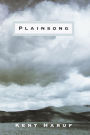
Table of Contents

First Chapter

Chapter One

Here was this man Tom Guthrie in Holt standing at the back window in the kitchen of his house smoking cigarettes and looking out over the back lot where the sun was just coming up. When the sun reached the top of the windmill, for a while he watched what it was doing, that increased reddening of sunrise along the steel blades and the tail vane above the wooden platform. After a time he put out the cigarette and went upstairs and walked past the closed door behind which she lay in bed in the darkened guest room sleeping or not and went down the hall to the glassy room over the kitchen where the two boys were.

The room was an old sleeping porch with uncurtained windows on three sides, airy-looking and open, with a pinewood floor. Across the way they were still asleep, together in the same bed under the north windows, cuddled up, although it was still early fall and not yet cold. They had been sleeping in the same bed for the past month and now the older boy had one hand stretched above his brother's head as if he hoped to shove something away and thereby save them both. They were nine and ten, with dark brown hair and unmarked faces, and cheeks that were still as pure and dear as a girl's.

Outside the house the wind came up suddenly out of the west and the tail vane turned with it and the blades of the windmill spun in a red whir, then the wind died down and the blades slowed and stopped.

You boys better come on, Guthrie said.

He watched their faces, standing at the foot of the bed in his bathrobe. A tall man with thinning black hair, wearing glasses. The older boy drew back his hand and they settled deeper under the cover. One of them sighed comfortably.

Ike.

What?

Come on now.

We are.

You too, Bobby.

He looked out the window. The sun was higher, the light beginning to slide down the ladder of the windmill, brightening it, making rungs of rose-gold.

When he turned again to the bed he saw by the change in their faces that they were awake now. He went out into the hall again past the closed door and on into the bathroom and shaved and rinsed his face and went back to the bedroom at the front of the house whose high windows overlooked Railroad Street and brought out shirt and pants from the closet and laid them out on the bed and took off his robe and got dressed. When he returned to the hallway he could hear them talking in their room, their voices thin and clear, already discussing something, first one then the other, intermittent, the early morning matter-of-fact voices of little boys out of the presence of adults. He went downstairs.

Ten minutes later when they entered the kitchen he was standing at the gas stove stirring eggs in a black cast-iron skillet. He turned to look at them. They sat down at the wood table by the window.

Didn't you boys hear the train this morning?

Yes, Ike said.

You should have gotten up then.

Well, Bobby said. We were tired.

That's because you don't go to bed at night.

We go to bed.

But you don't go to sleep. I can hear you back there talking and fooling around.

They watched their father out of identical blue eyes. Though there was a year between them they might have been twins. They'd put on blue jeans and flannel shirts and their dark hair was uncombed and fallen identically over their unmarked foreheads. They sat waiting for breakfast and appeared to be only half awake.

Guthrie brought two thick crockery plates of steaming eggs and buttered toast to the table and set them down and the boys spread jelly on the toast and began to eat at once, automatically, chewing, leaning forward over their plates. He carried two glasses of milk to the table.

He stood over the table watching them eat. I have to go to school early this morning, he said. I'll be leaving in a minute.

Aren't you going to eat breakfast with us? Ike said. He stopped chewing momentarily and looked up.

I can't this morning. He recrossed the room and set the skillet in the sink and ran water into it.

Why do you have to go to school so early?

I have to see Lloyd Crowder about somebody.

Who is it?

A boy in American history.

What'd he do? Bobby said. Look off somebody's paper?

Not yet. I don't doubt that'll be next, the way he's going.

Ike picked at something in his eggs and put it at the rim of his plate. He looked up again. But Dad, he said.

What.

Isn't Mother coming down today either?

I don't know, Guthrie said. I can't say what she'll do. But you shouldn't worry. Try not to. It'll be all right. It doesn't have anything to do with you.

He looked at them closely. They had stopped eating altogether and were staring out the window toward the barn and corral where the two horses were.

You better go on, he said. By the time you get done with your papers you'll be late for school.

He went upstairs once more. In the bedroom he removed a sweater from the chest of drawers and put it on and went down the hall and stopped in front of the closed door. He stood listening but there was no sound from inside. When he stepped into the room it was almost dark, with a feeling of being hushed and forbidding as in the sanctuary of an empty church after the funeral of a woman who had died too soon, a sudden impression of static air and unnatural quiet. The shades on the two windows were drawn down completely to the sill. He stood looking at her. Ella. Who lay in the bed with her eyes closed. He could just make out her face in the halflight, her face as pale as schoolhouse chalk and her fair hair massed and untended, fallen over her cheeks and thin neck, hiding that much of her. Looking at her, he couldn't say if she was asleep or not, but he believed she was not. He believed she was only waiting to hear what he had come in for, and then for him to leave.

Do you want anything? he said.

She didn't bother to open her eyes. He waited. He looked around the room. She had not yet changed the chrysanthemums in the vase on the chest of drawers and there was an odor rising from the stale water in the vase. He wondered that she didn't smell it. What was she thinking about.

Then I'll see you tonight, he said.

He waited. There was still no movement.

All right, he said. He stepped back into the hall and pulled the door shut and went on down the stairs.

As soon as he was gone she turned in the bed and looked toward the door. Her eyes were intense, wide-awake, outsized. After a moment she turned again in the bed and studied the two thin pencils of light shining in at the edge of the window shade. There were fine dust motes swimming in the dimly lighted air like tiny creatures underwater, but in a moment she closed her eyes again. She folded her arm across her face and lay unmoving as though asleep.

Downstairs, passing through the house, Guthrie could hear the two boys talking in the kitchen, their voices clear, high-pitched, animated again. He stopped for a minute to listen. Something to do with school. Some boy saying this and this too and another one, the other boy, saying it wasn't any of that either because he knew better, on the gravel playground out back of school. He went outside across the porch and across the drive toward the pickup. A faded red Dodge with a deep dent in the left rear fender. The weather was clear, the day was bright and still early and the air felt fresh and sharp, and Guthrie had a brief feeling of uplift and hopefulness. He took a cigarette from his pocket and lit it and stood for a moment looking at the silver poplar tree. Then he got into the pickup and cranked it and drove out of the drive onto Railroad Street and headed up the five or six blocks toward Main. Behind him the pickup lifted a powdery plume from the road and the suspended dust shone like bright flecks of gold in the sun.
Copyright© 1999 by Kent Haruf. Excerpted by permission of Knopf, a division of Random House, Inc. All rights reserved. No part of this excerpt may be reproduced or reprinted without permission in writing from the publisher.

Reading Group Guide

Discussion Questions from the Publisher
1. Why might Kent Haruf have chosen Plainsong as the title for this novel? What meaning, or meanings, does the title have in relation to Haruf's story and characters?

2. How does the small town of Holt figure as a character in each novel? How are the characters in each of the novels completely believable and different? How does Haruf repeat some character traits in his novels and to what effect? How do the characters and the image of the town change from book to book?

3. Few hints are given in the novel about what life might have been like for the Guthrie family before Ella left. What do you imagine that life to have been like? What sort of a marriage did Tom and Ella have, and what made it go wrong? What might account for Ella's nearly total withdrawal even from the children she seems to love?

4. How do the three teenagers having sex in the abandoned house inform and affect Ike and Bobby? What does this sight tell them about sex? About love? About the relationships and power struggle between men and women?

5. Do you believe there are marked differences between Raymond and Harold McPheron? If so, what are they?

6. Why do you think the McPheron brothers have chosen to spend their lives together rather than start families of their own? Are they lonely or unhappy before Victoria's arrival, or do they feel sufficient in themselves? What does Maggie mean when she tells them, "This is your chance" [p. 110]?

7. What parallels can you draw between the McPheron brothers and the young Guthrie boys? Why is the relationship so close in each case? What sort of a future do you see for the Guthrie boys? Do you think they will marry and have families?

8. The McPheron brothers think they know nothing about young girls. Is that the case? Has their solitary life close to the earth handicapped them so far as human relations go, or has it, in fact, provided them with hidden advantages?

9. What examples of parents abandoning children--either by desertion, emotional withdrawal, or death--can be found in this novel? What do these incidents have in common? How does abandonment affect children, and how does it shape their lives and relationships?

10. It is usually women who are portrayed as nurturers, but in this novel, men--Tom Guthrie and the McPheron brothers--provide shelter and comfort. How do men differ from women in this respect? What do these men offer that a woman might not be able to?

11. "These are crazy times," Maggie Jones says. "I sometimes believe these must be the craziest times ever" [p. 124]. What does she mean by this? In what way are our times "crazier" than earlier eras? How does such "craziness" affect the lives of young people such as Victoria, Ike, and Bobby?

12. What motives and feelings might have driven Tom to sleep with Judy when it was really Maggie he was interested in? Why might Maggie have seemed momentarily frightening or intimidating to him?

13. Why do the Guthrie boys befriend Iva Stearns? What are they looking for in this tentative friendship? Do they find what they are seeking?

14. Why do the Guthrie boys go to the McPheron brothers after Iva's death rather than to someone closer to home, like their father or Maggie? Is there any indication that they connect Iva's death with their mother's abandonment? Why do they place their mother's bracelet on the train tracks, then bury it?

15. The inhabitants of Holt and its surroundings are extremely laconic: they speak only sparingly, as though they mistrust words. What might cause this? In what way does it affect the characters' relationships with one another?

16. How would you describe Holt, Colorado? What are its limitations, its disadvantages, and what are its strengths? In what ways is it typical of any American small town, and in what ways is it different? What help does it provide for people who need healing, like the characters in this book?

17. Plainsong depicts some unusual "family" groups. How might Kent Haruf define family?

18. For general discussion of Kent Haruf's works -- a. How does Kent Haruf's writing style change from his first novel to the National Book Award finalist Plainsong? What is the effect of Haruf's style in each and use of language on the reader?

-- b. How does the small town of Holt figure as a character in each novel? How are the characters in each of the novels completely believable and different? How does Haruf repeat some character traits in his novels and to what effect? How do the characters and the image of the town change from book to book?

Suggested Reading from the Publisher

Sherwood Anderson, Winesburg, Ohio; Willa Cather, My Ántonia; William Faulkner, Sanctuary, The Sound and the Fury; Charles Frazier, Cold Mountain; David Guterson, Snow Falling on Cedars; Ernest Hemingway, In Our Time; Harper Lee, To Kill a Mockingbird; William Maxwell, So Long, See You Tomorrow; Cormac McCarthy, The Border Trilogy; Carson McCullers, The Ballad of the Sad Café, The Heart is a Lonely Hunter; Rohinton Mistry, A Fine Balance; William Styron, Lie Down in Darkness; Anne Tyler, The Accidental Tourist, Ladder of Years; Eudora Welty, The Golden Apples, The Optimist's Daughter.

Customer Reviews
Average Rating 4
( 104 )

Rating Distribution

If you've bought this product, tell the world how you liked it.
Write a Review
See All Sort by: Showing 1 – 20 of 104 Customer Reviews
  • Posted October 26, 2009

    Plainsong

    A inside look at small town life is exactly what you get from Plainsong, a novel by Kent Haruf. Holt, Colorado is a typical small town with its fair share of drama and problems. This story of unlikely friends brought together by their family problems is heartwarming and will leave you wanting more.
    At first glance Holt might seem like the perfect small town, but at a closer look you will see that it has a set of problems. A pregnant teen that gets kicked out of her house and Tom Guthrie's wife leaving him to raise two young boys on his own a just a couple of difficulties the town experiences. Luckily there are people with big hearts to help them out.
    Maggie Jones offers Victoria a place to stay, but after her father and Victoria have a conflict it is clear it isn't going to work. So Raymond and Harold McPherons offer for her to go stay with them. It is a weird considering that the McPherons brothers are old farmers that had never lived with a girl except their mother who died when they were young. The relationship they form is what makes this story heartwarming and inspirational.
    Another odd relationship that is formed is between the Guthrie boys and an old lady that lives in an apartment. After their mother leaves them she is one of the few women that they have in their lives. She enjoys the boys company because she doesn't have any other visitors. They form a great relationship that helps the boys through the tough time in their lives. In the little town when things seem like they are falling apart it seems like there is always someone there to catch it, but can it stay that way forever?
    Overall, Plainsong is an excellent book that people that like to learn about small town life would love. The story is heartwarming, inspirational and can provide hope to people that are at a tough point in their life.

    1 out of 1 people found this review helpful.

    Was this review helpful? Yes  No   Report this review
  • Anonymous

    Posted July 23, 2008

    Yuck- That's all I can say

    My library is one that does not have alot of good books. Most of them are stupid, secular books that have no theme and no character devolopment. When I read the info on what this book was about, I literally thought to myself, 'Ok, this is going to be one of the rare books that is pretty good and well-written.' Well, about four chapters into the book, I realized that this book was the same, if not worse, than the others. I guess maybe I'm being paranoid, but it had every bad word in the English language multiple times. Almost all of the book dealt with adult content that young adults should not be reading, and there was absolutely nothing to learn. The characters had no development, there was no real plot, and even though I read it in one day, I can say that this is one that I will talk to my library about removing to save all the other teens from reading a book that is not worth reading.

    1 out of 4 people found this review helpful.

    Was this review helpful? Yes  No   Report this review
  • Posted November 29, 2010

    VERY moving; couldn't put it down

    This was my first read from Kent Haruf. The hardships and happiness in this novel are believable and well built (there's got to be a better word... it's just GREAT!). Being from a small midwest town myself, I was amazed by the details that were placed perfectly. This book is a great read and you will not want to put it down.

    Was this review helpful? Yes  No   Report this review
  • Anonymous

    Posted April 25, 2010

    I Also Recommend:

    Very Northern Midwestern

    Very much a northern, small town, midwestern story. It is a story in "black and white." Not colorful. But.....it is the way people live, think, problem solve up there. A sweet story with realistic events.

    Was this review helpful? Yes  No   Report this review
  • Anonymous

    Posted November 3, 2009

    Plainsong

    It's a good read !! I would like to be neighbors with the townpeople and farmers/ranchers, good hearted, lovable

    Was this review helpful? Yes  No   Report this review
  • Posted April 21, 2009

    A Story of Fragmented Lives Intertwined

    Holt is a small town in eastern Colorado where young boys on bicycles deliver papers in the early morning hours and collect each month from their patrons. It's a place where everyone knows everyone and where their problems and their successes become the main topic of conversation among the citizens. The "good" guys are: Tom Guthrie a conscientious high school teacher; his two young boys who long for their mother, lost in a deep depression; Victoria a shy, pregnant seventeen-year-old girl, whose mother has kicked her out of her home; two old farmer brothers, Raymond and Harold, openhearted and generous, who have lived together all of their lives; Maggie Jones, also openhearted and generous, also a high school teacher who cares for her aged father stricken with a form of dementia; and the old lady who lives and dies in her apartment above the barbershop. The "bad" guys in this story are: the father of the baby, Victoria carries; the local barber who has a tight, mean heart; the spoiled-rotten high school boy and his parents who enable their son to be a failure; the pregnant girl's mother; and the boys' aunt, sister to their mother, so insensitive as to be cruel.
    In this story of fragmented lives intertwined, we see how even non-related people can become family. Plainsong, also now a movie, is an excellent story. Eunice Boeve, Author of Ride a Shadowed Trail

    Was this review helpful? Yes  No   Report this review
  • Posted November 18, 2008

    Amazing Powerful story

    This book is amazing, you feel the way the characters feel, the book is brought to life. The story is one that many girls face when becoming pregnant at an early age this book can give them hope that even in the worst situations you survive and endure way more than expected.

    Was this review helpful? Yes  No   Report this review
  • Anonymous

    Posted September 3, 2008

    Loved It

    So good, I read about a third of the book in one sitting and had to tear myself away to make it last longer. The characters to begin with, play at the readers heartstrings and only grow into more deeply lovable characters, flaws and all. This book deals with real issues but manages not to focus solely on the tragedy and mistakes made but that some good can come out of their troubles. I didn't want it to end.

    Was this review helpful? Yes  No   Report this review
  • Anonymous

    Posted September 7, 2008

    Kent Haruf - fantastic author

    I just recently discovered Kent Haruf's books. His writing is amazing..would compare him with Elizabeth Berg and Pat Conroy. I certainly hope he is at work on another book. Would recommend this author to anyone who totally enjoys reading.

    Was this review helpful? Yes  No   Report this review
  • Anonymous

    Posted July 8, 2008

    A reviewer

    Outstanding book. Written beautifully, yet a storyline one cannot put down - a rare combination. As a total 'city kid' I thought I couldn't relate to these mid-western characters they are people and characters so deep yet easy to understand, that you won't be able to put it down and will suddenly wish you actually knew your neighbors.

    Was this review helpful? Yes  No   Report this review
  • Anonymous

    Posted November 23, 2007

    Simply Wonderful

    One of my favorite reads for a long time. The author's writing style seems deceptively simple, yet he conveys so very much reality, in its beauty and in its pain. I fell in love with the McPherons, and found myself wishing they were my 'grandfathers!' I'm not sure how this book could have been longer, but I wish it had been.

    Was this review helpful? Yes  No   Report this review
  • Anonymous

    Posted August 21, 2007

    so what that the characters are developed

    Lets hope after 300 long pages we get some character development. Not a page turner, but not bad on the other hand. One of those books when your friends see left on your coffee table, they think you are smart. Too many situations that made me feel uneasy. Glad I finished/got it over with.

    Was this review helpful? Yes  No   Report this review
  • Anonymous

    Posted September 18, 2007

    wonderful all time favorite

    I absolutely loved this book. Even months after reading it, it is like a movie running throught my head. The characters were so well developed. growing up in a ranching comunity I have to admit that their manerism described so many people I know. I could not put the book down. It touched me so much that I still get the chills thinking about it. Yes, there were some graphic parts, but for some reason I think they were necessary for the book to be what it was. Real... Lets face it real life is graphic. The way that the story lines of all the characters wove together and how they all afected the others lives left me in awe. beautiful, wonderful, powerful.

    Was this review helpful? Yes  No   Report this review
  • Anonymous

    Posted May 11, 2006

    A Book Club book

    I loved this book and couldn't put it down. The 'agape' love woven throughout the book was beautiful. The characters were very well developed and multi-faceted. A wonderful read, complete with difficult passages and truths.

    Was this review helpful? Yes  No   Report this review
  • Anonymous

    Posted December 14, 2005

    Interesting read!

    I thought that Plainsong was a good book, although i did think that it was a little graphic and had to many swear words. This novel has a great story ling about a girl getting pregnatnt at the are of 17. She got kicked out of her mothers house and than was taken in my two elderly men you stepped out of their normal dayly routine to take care of her and love her.

    Was this review helpful? Yes  No   Report this review
  • Anonymous

    Posted December 13, 2005

    Simple Bonds

    Plainsong, accurately named, is one of the most wonderful novels I have read. It tells of a complex tale, where the characters are constantly weaving in and out of each other, and yet there is a simplicity to the straightforward country tale. It is graphically written with simple language and structure. The novel remains easy to understand, telling things as they are. My favorite characters are the brothers: both pairs. I love the relationship between Bobby and Ike honest, childlike and real. They have a bond that Haruf portrays without many words spoken between the two of them. The McPheron brothers have a more developed relationship, more or less an older version of the younger boys. They continually make me laugh they are so simplistic, honest and kind it creates heartache for the ¿good ol¿ days¿. Their initial kindness and growing tenderness toward Victoria are nothing short of endearing their uncomplicated, contented lifestyle subtly reinforces what should be most important in life. There are many more elements, characters and themes that lace this novel and yet this is just a mere review. I greatly enjoyed this novel and highly recommend it be read.

    Was this review helpful? Yes  No   Report this review
  • Anonymous

    Posted December 14, 2005

    kept me reading

    This novel is a good book that has a very interesting story line. It kept me reading and interested through the entire book. i would recomend that you read this book if you like those kind of stories that everything goes wrong and in the end eveything gets better. I would sugest that if swearing and graphic delails bother you, this book is not for you. All in all, its a good read and worth your time.

    Was this review helpful? Yes  No   Report this review
  • Anonymous

    Posted July 18, 2005

    GREAT READ

    I bought this book as a second book for the beach but got so caught up in the characters that I couldn¿t put it down. Kent Haruf did a wonderful job in introducing each and every one. I loved that each chapter switched between each mini story. As I read the book I always kept wondering how he was going to intertwine all the characters. I was afraid I would be disappointed when this occurred. But Kent Haruf did a beautiful job bringing it all together. I highly recommended ¿Plainsong¿ if you are looking for a good read with interesting characters.

    Was this review helpful? Yes  No   Report this review
  • Anonymous

    Posted June 25, 2005

    Only half a novel. Sure to disappoint.

    It's truly sad that this novel was published in its current form. I've completely lost my respect for Kent Haruf. The editors at Knopf should be ashamed of themselves for not sending it back for a rewrite. This is how promising authors are ruined. The story wonderfully sets up two plotlines, one with an unwed mother whose boyfriend threatens to take the newborn and the other with an out-of-control teenage thug with a vendetta for a teacher and his family. Unfortunately, this story leaves the reader standing at the altar. The plotlines are never truly married. Rather than providing the reader with even a miniscule sense of resolution, the author simply stops the story and hand waves the problems away as if the novel you've just read isn't worth the effort. This is the point in a novel where great novels provide the payoff that a reader remembers years later. This is where mediocre novels provide a simplistic resolution that is quickly forgotten. This novel doesn't even bother to provide mediocrity. You've invested eight hours in a line at Disney only to find that they never built the ride.

    0 out of 1 people found this review helpful.

    Was this review helpful? Yes  No   Report this review
  • Anonymous

    Posted May 24, 2005

    Excellent!

    The perfect book! I loved this simple story of 'misplaced souls' coming together in a small town.

    Was this review helpful? Yes  No   Report this review
See All Sort by: Showing 1 – 20 of 104 Customer Reviews

If you find inappropriate content, please report it to Barnes & Noble
Why is this product inappropriate?
Comments (optional)
500 character limit