
Computer Simulation Using Particles
Computer simulation of systems has become an important tool in scientific research and engineering design, including the simulation of systems through the motion of their constituent particles. Important examples of this are the motion of stars in galaxies, ions in hot gas plasmas, electrons in semiconductor devices, and atoms in solids and liquids. The behavior of the system is studied by programming into the computer a model of the system and then performing experiments with this model. New scientific insight is obtained by observing such computer experiments, often for controlled conditions that are not accessible in the laboratory.
Computer Simulation using Particles deals with the simulation of systems by following the motion of their constituent particles. This book provides an introduction to simulation using particles based on the NGP, CIC, and P3M algorithms and the programming principles that assist with the preparations of large simulation programs based on the OLYMPUS methodology. It also includes case study examples in the fields of astrophysics, plasmas, semiconductors, and ionic solids as well as more detailed mathematical treatment of the models, such as their errors, dispersion, and optimization.
This resource will help you understand how engineering design can be assisted by the ability to predict performance using the computer model before embarking on costly and time-consuming manufacture.
1012143051
Computer Simulation using Particles deals with the simulation of systems by following the motion of their constituent particles. This book provides an introduction to simulation using particles based on the NGP, CIC, and P3M algorithms and the programming principles that assist with the preparations of large simulation programs based on the OLYMPUS methodology. It also includes case study examples in the fields of astrophysics, plasmas, semiconductors, and ionic solids as well as more detailed mathematical treatment of the models, such as their errors, dispersion, and optimization.
This resource will help you understand how engineering design can be assisted by the ability to predict performance using the computer model before embarking on costly and time-consuming manufacture.
Computer Simulation Using Particles
Computer simulation of systems has become an important tool in scientific research and engineering design, including the simulation of systems through the motion of their constituent particles. Important examples of this are the motion of stars in galaxies, ions in hot gas plasmas, electrons in semiconductor devices, and atoms in solids and liquids. The behavior of the system is studied by programming into the computer a model of the system and then performing experiments with this model. New scientific insight is obtained by observing such computer experiments, often for controlled conditions that are not accessible in the laboratory.
Computer Simulation using Particles deals with the simulation of systems by following the motion of their constituent particles. This book provides an introduction to simulation using particles based on the NGP, CIC, and P3M algorithms and the programming principles that assist with the preparations of large simulation programs based on the OLYMPUS methodology. It also includes case study examples in the fields of astrophysics, plasmas, semiconductors, and ionic solids as well as more detailed mathematical treatment of the models, such as their errors, dispersion, and optimization.
This resource will help you understand how engineering design can be assisted by the ability to predict performance using the computer model before embarking on costly and time-consuming manufacture.
Computer Simulation using Particles deals with the simulation of systems by following the motion of their constituent particles. This book provides an introduction to simulation using particles based on the NGP, CIC, and P3M algorithms and the programming principles that assist with the preparations of large simulation programs based on the OLYMPUS methodology. It also includes case study examples in the fields of astrophysics, plasmas, semiconductors, and ionic solids as well as more detailed mathematical treatment of the models, such as their errors, dispersion, and optimization.
This resource will help you understand how engineering design can be assisted by the ability to predict performance using the computer model before embarking on costly and time-consuming manufacture.
265.0
In Stock
5
1

Computer Simulation Using Particles
562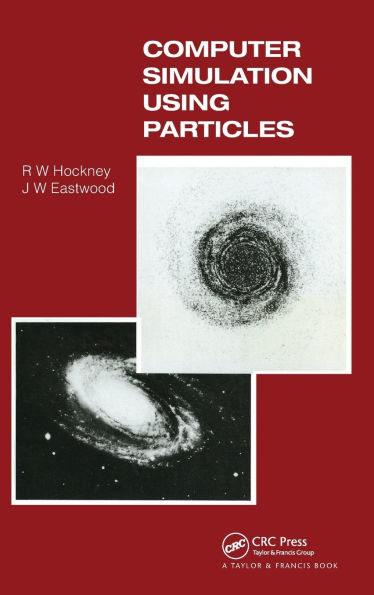
Computer Simulation Using Particles
562
265.0
In Stock

Product Details
| ISBN-13: | 9781138413375 |
|---|---|
| Publisher: | Taylor & Francis |
| Publication date: | 07/27/2017 |
| Pages: | 562 |
| Product dimensions: | 6.12(w) x 9.19(h) x (d) |
About the Author
From the B&N Reads Blog