An Exclusive Interview with Simon Cornwell and Stephen Cornwell, Executive Producers of The Night Manager
The Night Manager (TV Tie-in Edition)
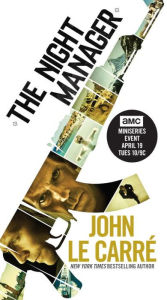
Paperback $9.99
The Night Manager (TV Tie-in Edition)
Paperback $9.99
AMC’s new drama, The Night Manager, premiering on Tuesday, April 19 at 10/9c, is a contemporary interpretation of John le Carré’s espionage drama—and the first television adaptation of a le Carré novel in more than twenty years. The Night Manager, a six-part miniseries, follows hotel manager Jonathan Pine (Tom Hiddleston) in his quest to bring down international arms dealer Richard Roper (Hugh Laurie). Pine, a former soldier, is thrust into a world of international intrigue when he is recruited by a British intelligence officer (Olivia Colman) to infiltrate Roper’s inner circle. To get to the heart of Roper’s vast empire, Pine must withstand the allure of Roper’s beautiful girlfriend Jed (Elizabeth Debicki) and the suspicious interrogations of his venal chief of staff Major Corkoran (Tom Hollander). In his quest to do the right thing, Pine must first become a criminal himself.
Executive producers include Simon Cornwell, Stephen Cornwell, Stephen Garrett, John le Carré, Writer David Farr and Academy Award Winning Director Susanne Bier. We had a chance to chat exclusively with Simon Cornwell and Stephen Cornwell.
B&N: The Night Manager is one of your father’s most beloved books; you’ve talked about not “pickling the book in aspic” and approaching it as a living work, changing the ending in order to keep the audience on its toes. Did your father need to be convinced that this was the right approach, or was he on board right away?
Stephen & Simon: We did decide to change the ending, yes. Of course our father was involved in the discussion, but he was very supportive of the process. ‘Not pickling the book in aspic’ is actually his phrase, not ours: he has always seen the books as the starting point for the creative process of film-making, not the end point.
Having said that, of course, one of the great achievements of our screenwriter David Farr was to make those plot changes in a way that felt very true to the spirit of the novel, and to its characters. Our audience will have to judge for themselves of course whether we’ve succeeded, but we believe we have, and our father has been very pleased with the results too, luckily.
You’ve also updated the setting to the present day, changed many details, and even turned Leonard Burr into Angela Burr (played by the fantastic Olivia Colman). What inspired these changes?
We took the decision to update the story to the present day early on, simply because (like many of le Carré’s stories) it’s one that, sadly enough, has if anything grown in relevance with the passing of time, and we decided to embrace that and tell the story in a contemporary context.
Once we had decided to do that, turning Leonard Burr into Angela Burr was a logical step: the world has changed a lot in the 23 years since the novel was written, and it would be hard to imagine an intelligence service today that did not have women in senior positions. But it also made huge sense creatively: Burr is the moral heart of the novel in many ways, and to have her played by a woman, and visibly pregnant, gave great resonance to that.
Were there any changes you were nervous about suggesting?
Well, suggesting that we changed the sex of one of the lead characters of the novel was something we thought hard about before approaching our father, as you can imagine. But he instantly understood the reasoning behind it and gave the idea his blessing. And when we cast Olivia Colman, the extraordinary depth she brought to the role gave it more weight than we had dared hope. So it ended happily!
Did you always see The Night Manager as a TV miniseries? Did you consider making it a feature film?
There had been two previous attempts to make it as a feature film. Paramount bought the novel for Sidney Pollack to direct, and commissioned a script from Robert Towne, who wrote Chinatown among many other great films. And a few years ago Brad Pitt’s company Plan B optioned the book and again tried to get it off the ground.
But it’s a huge story, around 500 pages long and with characters who muscle their way off the pages. It’s hard to distill into 100 minutes.
So when we looked at it, television, which gives you time to spend with those characters, and time to develop a complex plot, seemed a natural choice.
Word is you’re in talks for a second season of The Night Manager, which would put you in story territory outside the bounds of the original novel. Would John le Carré provide the story for that, or act more as a consultant? Do you see the possibility of further seasons after the second?
Well, happily the show has been a massive success in the UK, drawing audiences of over 10 million viewers. Given that, of course there’s been a lot of talk about a second series. But no decisions have been made yet and as you can imagine, it’s really not something we can talk about at this stage.
You’ve worked together on several projects now as producers and writers. What’s your process of collaboration like?
Well, we are brothers, and so we know each other pretty well. And we trust each other too. That sounds simple but it’s really important. Sometimes too it probably means we can say things to each other that other people might find hard to say: that’s very valuable, and hopefully it helps us make better decisions. We’re still learning though: every project brings new challenges … thank goodness, or it wouldn’t be much fun!
Why do you think le Carré’s novels have been so enduringly popular?
Perhaps—aside from the sheer quality of his story-telling—it’s because the spy is such an enduring and powerful metaphor. We all have secrets: no one, even our relatives or our closest friends, knows everything about us.
For a spy—as for Jonathan Pine in The Night Manager—keeping those secrets hidden is a matter of life and death. Even if that’s something completely outside our everyday lives, it’s something we can understand and relate to.
Now that you’ve worked with him, do you think Tom Hiddleston could be the next James Bond?
Tom is a brilliant actor. He has brought an extraordinary, layered and intense performance to The Night Manager. So much so that right now we can’t imagine him as anyone other than Jonathan Pine!
But with the gifts that Tom has, he’s certain to have a wonderful range of roles to choose from in the coming years.
Here in the U.S., Hugh Laurie is probably best known as Dr. Gregory House from the TV showHouse. What do you think American audiences will make of his performance as Richard Onslow Roper—a.k.a. “The Worst Man in the World”?
Well, Richard Roper is certainly a very different person from Dr. House. But what American audiences will see is a wonderfully intense and focused performance, and certainly its sheer quality will be familiar.
But I hope people will enjoy the fact that he’s English. And maybe that will make it just that little bit natural that he’s the worst man in the world …
Your father actually did work for MI6, and in old interviews Stephen joked about worrying about Soviet “bugs” in the house. Are there still things your father can’t tell you about?
Yes, to this day there are many stories that our father will not tell. Secrets are sworn to be exactly that—and as we said earlier, for a spy that’s a matter of life and death.
Keeping those secrets is not a promise he’s broken. Nor, in fairness, should he.
AMC’s new drama, The Night Manager, premiering on Tuesday, April 19 at 10/9c, is a contemporary interpretation of John le Carré’s espionage drama—and the first television adaptation of a le Carré novel in more than twenty years. The Night Manager, a six-part miniseries, follows hotel manager Jonathan Pine (Tom Hiddleston) in his quest to bring down international arms dealer Richard Roper (Hugh Laurie). Pine, a former soldier, is thrust into a world of international intrigue when he is recruited by a British intelligence officer (Olivia Colman) to infiltrate Roper’s inner circle. To get to the heart of Roper’s vast empire, Pine must withstand the allure of Roper’s beautiful girlfriend Jed (Elizabeth Debicki) and the suspicious interrogations of his venal chief of staff Major Corkoran (Tom Hollander). In his quest to do the right thing, Pine must first become a criminal himself.
Executive producers include Simon Cornwell, Stephen Cornwell, Stephen Garrett, John le Carré, Writer David Farr and Academy Award Winning Director Susanne Bier. We had a chance to chat exclusively with Simon Cornwell and Stephen Cornwell.
B&N: The Night Manager is one of your father’s most beloved books; you’ve talked about not “pickling the book in aspic” and approaching it as a living work, changing the ending in order to keep the audience on its toes. Did your father need to be convinced that this was the right approach, or was he on board right away?
Stephen & Simon: We did decide to change the ending, yes. Of course our father was involved in the discussion, but he was very supportive of the process. ‘Not pickling the book in aspic’ is actually his phrase, not ours: he has always seen the books as the starting point for the creative process of film-making, not the end point.
Having said that, of course, one of the great achievements of our screenwriter David Farr was to make those plot changes in a way that felt very true to the spirit of the novel, and to its characters. Our audience will have to judge for themselves of course whether we’ve succeeded, but we believe we have, and our father has been very pleased with the results too, luckily.
You’ve also updated the setting to the present day, changed many details, and even turned Leonard Burr into Angela Burr (played by the fantastic Olivia Colman). What inspired these changes?
We took the decision to update the story to the present day early on, simply because (like many of le Carré’s stories) it’s one that, sadly enough, has if anything grown in relevance with the passing of time, and we decided to embrace that and tell the story in a contemporary context.
Once we had decided to do that, turning Leonard Burr into Angela Burr was a logical step: the world has changed a lot in the 23 years since the novel was written, and it would be hard to imagine an intelligence service today that did not have women in senior positions. But it also made huge sense creatively: Burr is the moral heart of the novel in many ways, and to have her played by a woman, and visibly pregnant, gave great resonance to that.
Were there any changes you were nervous about suggesting?
Well, suggesting that we changed the sex of one of the lead characters of the novel was something we thought hard about before approaching our father, as you can imagine. But he instantly understood the reasoning behind it and gave the idea his blessing. And when we cast Olivia Colman, the extraordinary depth she brought to the role gave it more weight than we had dared hope. So it ended happily!
Did you always see The Night Manager as a TV miniseries? Did you consider making it a feature film?
There had been two previous attempts to make it as a feature film. Paramount bought the novel for Sidney Pollack to direct, and commissioned a script from Robert Towne, who wrote Chinatown among many other great films. And a few years ago Brad Pitt’s company Plan B optioned the book and again tried to get it off the ground.
But it’s a huge story, around 500 pages long and with characters who muscle their way off the pages. It’s hard to distill into 100 minutes.
So when we looked at it, television, which gives you time to spend with those characters, and time to develop a complex plot, seemed a natural choice.
Word is you’re in talks for a second season of The Night Manager, which would put you in story territory outside the bounds of the original novel. Would John le Carré provide the story for that, or act more as a consultant? Do you see the possibility of further seasons after the second?
Well, happily the show has been a massive success in the UK, drawing audiences of over 10 million viewers. Given that, of course there’s been a lot of talk about a second series. But no decisions have been made yet and as you can imagine, it’s really not something we can talk about at this stage.
You’ve worked together on several projects now as producers and writers. What’s your process of collaboration like?
Well, we are brothers, and so we know each other pretty well. And we trust each other too. That sounds simple but it’s really important. Sometimes too it probably means we can say things to each other that other people might find hard to say: that’s very valuable, and hopefully it helps us make better decisions. We’re still learning though: every project brings new challenges … thank goodness, or it wouldn’t be much fun!
Why do you think le Carré’s novels have been so enduringly popular?
Perhaps—aside from the sheer quality of his story-telling—it’s because the spy is such an enduring and powerful metaphor. We all have secrets: no one, even our relatives or our closest friends, knows everything about us.
For a spy—as for Jonathan Pine in The Night Manager—keeping those secrets hidden is a matter of life and death. Even if that’s something completely outside our everyday lives, it’s something we can understand and relate to.
Now that you’ve worked with him, do you think Tom Hiddleston could be the next James Bond?
Tom is a brilliant actor. He has brought an extraordinary, layered and intense performance to The Night Manager. So much so that right now we can’t imagine him as anyone other than Jonathan Pine!
But with the gifts that Tom has, he’s certain to have a wonderful range of roles to choose from in the coming years.
Here in the U.S., Hugh Laurie is probably best known as Dr. Gregory House from the TV showHouse. What do you think American audiences will make of his performance as Richard Onslow Roper—a.k.a. “The Worst Man in the World”?
Well, Richard Roper is certainly a very different person from Dr. House. But what American audiences will see is a wonderfully intense and focused performance, and certainly its sheer quality will be familiar.
But I hope people will enjoy the fact that he’s English. And maybe that will make it just that little bit natural that he’s the worst man in the world …
Your father actually did work for MI6, and in old interviews Stephen joked about worrying about Soviet “bugs” in the house. Are there still things your father can’t tell you about?
Yes, to this day there are many stories that our father will not tell. Secrets are sworn to be exactly that—and as we said earlier, for a spy that’s a matter of life and death.
Keeping those secrets is not a promise he’s broken. Nor, in fairness, should he.