The Last Jedi Is a Potent Reminder of the Power of Princess Leia
 Luke, Leia, and Chewbacca are all that’s left of the original flesh-and-blood gang at the start of the surprising, challenging The Last Jedi, which somehow felt like it took forever to arrive, even though it’s only been twelve months since the last SW movie. Still in the grip of a nasty popcorn/porg hangover, here are a few thoughts on the latest episode in the saga.
Some spoilers ahead!
The Last Jedi: Expanded Edition (Star Wars)
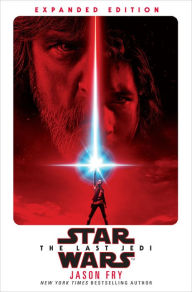
Hardcover $28.99
The Last Jedi: Expanded Edition (Star Wars)
By Jason Fry
Hardcover $28.99
Rian Johnson’s dark, but cheeky film mirrors, in a sense, the arc of the original trilogy: if The Force Awakens was a clear riff on A New Hope, this new film ups the stakes and the drama à la The Empire Strikes Back. But it doesn’t stop there. At several critical junctures, The Last Jedi uses the established mythology of Star Wars to completely mess with our expectations. From Luke’s casual disregard for that most potent of Star Wars icons, his old lightsaber, to character arcs that zig and zag and end at unexpected moments, the movie toys with fans in ways that might infuriate many of them.
I found it exhilarating.
Johnson doesn’t always give us what we wanted, but we absolutely are given what we needed. I’m talking, of course, about more screentime for (and a virtuoso farewell to) the late Carrie Fisher as Princess/Senator/General Leia. Mark Hamill makes a nuanced return as Luke Skywalker, and Daisy Ridley’s Rey remains the lead character in the new SW era, but Fisher is the heart of the film, and of the saga writ large.
Star Wars has never been a simple tale of good guys and bad guys, of ultimate right versus ultimate wrong. Whether or not Han shot first, he was always a smuggler in debt to gangsters. The shadows grew deeper in Empire, where we learned that our great hero Luke was the progeny of the darkest villain. And in Return of the Jedi, we discover even ultimate evil might be redeemed. For all of their problems, Lucas’ prequel films tried to tell a complicated story of a once-noble Republic rotting from within after surrendering to fear and corruption. Luke calls out the Jedi for their failings as protectors of galactic order in The Last Jedi, and he’s not wrong.
Rian Johnson’s dark, but cheeky film mirrors, in a sense, the arc of the original trilogy: if The Force Awakens was a clear riff on A New Hope, this new film ups the stakes and the drama à la The Empire Strikes Back. But it doesn’t stop there. At several critical junctures, The Last Jedi uses the established mythology of Star Wars to completely mess with our expectations. From Luke’s casual disregard for that most potent of Star Wars icons, his old lightsaber, to character arcs that zig and zag and end at unexpected moments, the movie toys with fans in ways that might infuriate many of them.
I found it exhilarating.
Johnson doesn’t always give us what we wanted, but we absolutely are given what we needed. I’m talking, of course, about more screentime for (and a virtuoso farewell to) the late Carrie Fisher as Princess/Senator/General Leia. Mark Hamill makes a nuanced return as Luke Skywalker, and Daisy Ridley’s Rey remains the lead character in the new SW era, but Fisher is the heart of the film, and of the saga writ large.
Star Wars has never been a simple tale of good guys and bad guys, of ultimate right versus ultimate wrong. Whether or not Han shot first, he was always a smuggler in debt to gangsters. The shadows grew deeper in Empire, where we learned that our great hero Luke was the progeny of the darkest villain. And in Return of the Jedi, we discover even ultimate evil might be redeemed. For all of their problems, Lucas’ prequel films tried to tell a complicated story of a once-noble Republic rotting from within after surrendering to fear and corruption. Luke calls out the Jedi for their failings as protectors of galactic order in The Last Jedi, and he’s not wrong.
The Force Awakens (Star Wars)
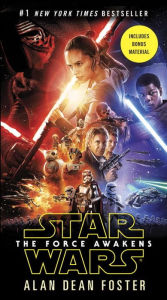
Paperback $11.00
The Force Awakens (Star Wars)
In Stock Online
Paperback $11.00
I loved The Force Awakens, but there’s no question that much of its appeal rests on nostalgia. All of the new characters were placed in familiar situations and faced similar threats as a way of easing us into their stories. It was by design, a way to hit a soft reset button and remind us what we’ve always loved about Star Wars. It was necessary, I think, after decades of books, comics, prequels, spin-offs, and cartoons. Much of that Extended Universe material is brilliant, but the sheer volume of it, and Star Wars’ exalted place in our cultural canon, made it hard to remember what was at its core. That was the job The Force Awakens had to accomplish, but it’s only in The Last Jedi that the promise gets fulfilled. TFA reminded us of the rules; The Last Jedi breaks them.
Almost every character is challenged, and not just in a battle-against-evil way. The heroes are forced to face their preconceptions in a way that’s daunting for them and thrilling for us. The opening sees the final assault on the last Resistance base by the First Order. Poe Dameron is ordered by Leia to break off his attack against the ridiculously large dreadnought that threatens the escapees. Hungry for a “win” against the villains, Poe refuses. And he does claim a victory, but at enormous cost. Later, he (and we) are lead to believe Leia’s replacement and childhood friend, Vice Admiral Amilyn Holdo (Laura Dern) is leading the Resistance to certain defeat. She seems to represent a particularly stereotypical type of female leadership: passive, standoffish, steadfast in her unwillingness to listen to logic. The truth turns out to be much more complicated for the cocky pilot who thought he had all the answers.
Of course, the dark/light duality of Kylo Ren and Rey is at the heart of the film, as each seeks to find his and her own place in the Force, with the aid of very different but almost equally damaged mentors. For the first time, we’re led to suspect the answer isn’t as simple as dark side versus light side. One of pop culture’s ultimate avatars of the light, Luke Skywalker, has spent quite a bit of time questioning his choices and retreating from the idea that anything is that simple.
Even Chewbacca winds up rethinking the taste of roasted porg.
I loved The Force Awakens, but there’s no question that much of its appeal rests on nostalgia. All of the new characters were placed in familiar situations and faced similar threats as a way of easing us into their stories. It was by design, a way to hit a soft reset button and remind us what we’ve always loved about Star Wars. It was necessary, I think, after decades of books, comics, prequels, spin-offs, and cartoons. Much of that Extended Universe material is brilliant, but the sheer volume of it, and Star Wars’ exalted place in our cultural canon, made it hard to remember what was at its core. That was the job The Force Awakens had to accomplish, but it’s only in The Last Jedi that the promise gets fulfilled. TFA reminded us of the rules; The Last Jedi breaks them.
Almost every character is challenged, and not just in a battle-against-evil way. The heroes are forced to face their preconceptions in a way that’s daunting for them and thrilling for us. The opening sees the final assault on the last Resistance base by the First Order. Poe Dameron is ordered by Leia to break off his attack against the ridiculously large dreadnought that threatens the escapees. Hungry for a “win” against the villains, Poe refuses. And he does claim a victory, but at enormous cost. Later, he (and we) are lead to believe Leia’s replacement and childhood friend, Vice Admiral Amilyn Holdo (Laura Dern) is leading the Resistance to certain defeat. She seems to represent a particularly stereotypical type of female leadership: passive, standoffish, steadfast in her unwillingness to listen to logic. The truth turns out to be much more complicated for the cocky pilot who thought he had all the answers.
Of course, the dark/light duality of Kylo Ren and Rey is at the heart of the film, as each seeks to find his and her own place in the Force, with the aid of very different but almost equally damaged mentors. For the first time, we’re led to suspect the answer isn’t as simple as dark side versus light side. One of pop culture’s ultimate avatars of the light, Luke Skywalker, has spent quite a bit of time questioning his choices and retreating from the idea that anything is that simple.
Even Chewbacca winds up rethinking the taste of roasted porg.
Leia, Princess of Alderaan (Journey to Star Wars: The Last Jedi)

Hardcover $17.99
Leia, Princess of Alderaan (Journey to Star Wars: The Last Jedi)
By Claudia Gray
Hardcover $17.99
But, more than any of this, The Last Jedi is a potent and timely reminder of the central place of Princess Leia in our pop culture landscape. While The Force Awakens teased us with the idea of the tough general leading the heroes from behind the scenes, her time onscreen was sadly limited. Not so here: the general is where she belongs, rarely far from the center of action. It’s not that Leia was the first capable woman in sci-fi, exactly, but she was the most capable woman in the biggest sci-fi thing of all time. It was easy to be distracted by the elaborate hair and, later, the metal bikini—maybe, blinded by the lightsabers, we didn’t always notice the princess was more than a match for not only the Empire, but our notions of what a science fiction hero could be.
As Carrie Fisher aged, those distractions became less apparent. There are no bikinis and no acrobatics in The Last Jedi, just the indispensable general who helped to found the rebellion, without whom it would never have persisted. You can see every one of Carrie Fisher’s 60 years in Leia’s eyes as, at the last, the character and actress become inseparable. Maybe Fisher lacked Leia’s tactical prowess, but Leia lacked some of Fisher’s wit (and flawless aim with a handful of glitter).
The Last Jedi leaves us with General Leia as the eternal heart and soul of the Resistance, while Fisher remains a flawed, foul-mouthed, transcendent totem for difficult times. Leia’s apotheosis comes early in the film, with a staggering moment of power that might have seemed silly were we not rightly predisposed to believe in, and to need, Princess Leia—now more than ever. Carrie Fisher’s death last year was heartbreaking, but, like old Ben Kenobi, Princess Leia, avatar of hope and persistence, has become more powerful than we could have possibly imagined.
The Last Jedi is in theaters now; you can read the novelization in March.
But, more than any of this, The Last Jedi is a potent and timely reminder of the central place of Princess Leia in our pop culture landscape. While The Force Awakens teased us with the idea of the tough general leading the heroes from behind the scenes, her time onscreen was sadly limited. Not so here: the general is where she belongs, rarely far from the center of action. It’s not that Leia was the first capable woman in sci-fi, exactly, but she was the most capable woman in the biggest sci-fi thing of all time. It was easy to be distracted by the elaborate hair and, later, the metal bikini—maybe, blinded by the lightsabers, we didn’t always notice the princess was more than a match for not only the Empire, but our notions of what a science fiction hero could be.
As Carrie Fisher aged, those distractions became less apparent. There are no bikinis and no acrobatics in The Last Jedi, just the indispensable general who helped to found the rebellion, without whom it would never have persisted. You can see every one of Carrie Fisher’s 60 years in Leia’s eyes as, at the last, the character and actress become inseparable. Maybe Fisher lacked Leia’s tactical prowess, but Leia lacked some of Fisher’s wit (and flawless aim with a handful of glitter).
The Last Jedi leaves us with General Leia as the eternal heart and soul of the Resistance, while Fisher remains a flawed, foul-mouthed, transcendent totem for difficult times. Leia’s apotheosis comes early in the film, with a staggering moment of power that might have seemed silly were we not rightly predisposed to believe in, and to need, Princess Leia—now more than ever. Carrie Fisher’s death last year was heartbreaking, but, like old Ben Kenobi, Princess Leia, avatar of hope and persistence, has become more powerful than we could have possibly imagined.
The Last Jedi is in theaters now; you can read the novelization in March.