




 Order History
 Premium Membership & Rewards
 Help Center / FAQ


5 Books To Read After You’ve Reread The Handmaid’s Tale

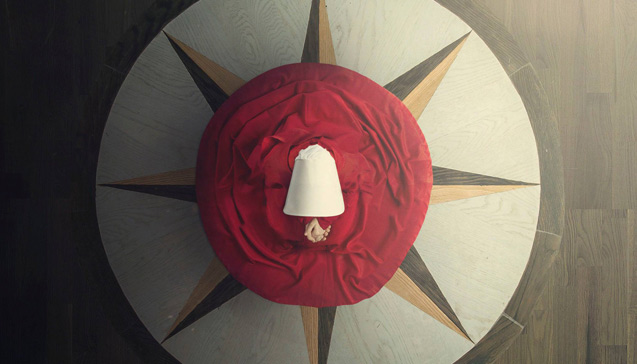 Confession: I’d never read The Handmaid’s Tale before this weekend, when I picked it up and read it for this article. I knew it was a dystopia, I knew there was a TV series coming to Hulu based on it, and I knew it was written by the great Margaret Atwood. Finally I binged it and loved every word. It’s a beautifully written classic about a future in which the U.S. government has been replaced by a religious dictatorship that prohibits women from reading books, using money, or choosing a career path beyond “wife.” The handmaid of the title is Offred, one of many women kept by rich men as, essentially, brood sows, in a world where fertility rates are at a perilous low. For various reasons, this frightening classic is a timely read. If you’ve just finished rereading The Handmaid’s Tale, or if you’re reading it for the first time and want to follow it up with something similar, here are five YAs that’ll satisfy you until the Hulu series comes out in April.

This item is currently out of stock online.
The Jewel, by Amy Ewing
Much like Atwood’s heroine Offred, Violet has been bred for a life of servitude—specifically, a life providing children to the Jeweled Elite of the Lone City. Born in the Marsh at the bottom of the social hierarchy, Violet has always understood where she fits. Purchased at auction by the Duchess of the Lake, however, she quickly learns there’s more to her new life than meets the eye. Especially with Ash in the picture, a boy purchased for the Duchess’s niece. When a romance blossoms between them, Violet has to fight even harder to survive…or face devastating consequences.

This item is currently out of stock online.
The Wrath and the Dawn, by Renée Ahdieh
In this gorgeous retelling of A Thousand and One Nights, a girl dies every dawn at the hand of the ruthless boy king Khalid. Each night he takes a bride, each morning finds her dead. The families of the young women in his kingdom start each morning in terror, including that of Shahrzad’s dearest friend, Shiva. After the death of her friend, Shazi vows to be Khalid’s next bride—and she vows to survive. By weaving him stories through the night, Shazi stays alive, and gets to know the boy king, realizing he’s not the monster she thought. Worse, she begins to fall in love with him. But each night could be her last, and there are forces Khalid has to answer to that she’s only beginning to understand.

This item is currently out of stock online.
Parable of the Sower, by Octavia Butler
Butler’s novel was published in 1993, before the explosion of the YA genre as we know it happened, particularly the dystopian subgenre. It follows Lauren Olamina, an 18-year-old minister’s daughter who grew up in a walled community before her world went to hell. After a night of terror in which her family dies, Lauren flees her home with a few other survivors, heading to a world without walls. As an empath, Lauren feels deeply for the people around her—a feeling that leads to her starting a new religion. A classic much like Atwood’s, this one’s a must-read.

This item is currently out of stock online.
Gathering Blue, by Lois Lowry
Many of us have read Lowry’s The Giver, whether in class or because someone told us to pick it up. One of my favorite aspects of both Lowry and Atwood’s novels is that they begin in a society where the rules are long established, yet include at least one character who can remember the way it was before. In Gathering Blue, a companion novel to The Giver, 16-year-old Kira lives in a world where any sort of weakness is frowned upon. Born with a twisted foot, she relies on her skill with weaving, the only thing saving her in society. As she repairs a robe to be worn by a singer, a robe that tells the history of the world, she realizes society’s grip on her people is much tighter than she could have initially imagined.

This item is currently out of stock online.
Unwind, by Neal Shusterman
This is one of the first dystopians I ever picked up, at the recommendation of a friend. It quickly became one of my favorites, not only for its unique premise but for its characters. It’s set in a futuristic America where abortion is outlawed, and parents have the option to “unwind” their children between the ages of 13 and 18—that is, to allow them to be harvested for organs, seen as a “useful” procedure. Told from the perspectives of three teenagers who are going to be unwound—Connor, who’s being unwound as punishment; Risa, a ward of the state being unwound due to budget cuts; and Lev, whose unwinding is seen as a tithe by his religious family—Shusterman’s novel deals with complex themes in a society where nothing is as it seems.