


 Order History
 Premium Membership & Rewards
 Help Center / FAQ


Judy Blume: Flight Paths and Trigger Warnings


Most of us know Judy Blume as the woman who wrote those books we devoured as we grew up — novels that shaped our development, perhaps more than we even realized. We may have started with Tales of a Fourth Grade Nothing and the rest of the Fudge series, then moved on to books like Starring Sally J. Freedman as Herself; Blubber; Are You There God? It’s Me, Margaret; Deenie and Then Again, Maybe I Won’t; and eventually graduating to that dog-eared copy of Forever we giggled over with our friends and hid from our parents.
We’ve passed these much-loved paperbacks along to our children. Perhaps some of us have remained Blume readers even in adulthood — digging into her books for grown-ups, like Wifey, Smart Women, and the 1998 bestseller Summer Sisters. When Blume wrote the latter, she said it would be her last book for an adult audience, and she remained true to her word for years. But then, in 2009, the idea for her new book, In the Unlikely Event, hit her — like “a ton of bricks,” she says — and she knew she had to write it.
In the Unlikely Event, which is raking in press accolades, is a fictional story based on actual historical events the author lived through while growing up in Elizabeth, New Jersey, in the 1950s. For reasons that remain somewhat mysterious — the official determination was that trio of tragic accidents were unrelated, just a strange coincidence, “a most unusual accumulation of bad luck” — three planes crashed within fifty-eight days, in the winter of 1951−52, in Blume’s hometown, just a few miles from Newark Airport, cumulatively claiming 119 lives.
The first flight went down just blocks away from the junior high school Blume was attending at the time and where the novel’s fifteen-year-old main character, Miri Ammerman, is a student. The second crashed near the high school Blume would later attend. The third plane — the only one from which any passengers survived — slammed into a field near a local orphanage, where another of the novel’s characters, Miri’s boyfriend, Mason, lives.
“Nobody knew what was going on, including the adults in the community. But as kids you make it up and of course it has to be about you,” Blume, now seventy-seven, says, recalling the theory among her fellow middle schoolers that someone or something — they weren’t sure who or what — was out to get the children of Elizabeth, New Jersey.
Yet while the novel includes some of Blume’s own memories (not to mention a coming-of-age story that will be comfortingly familiar to her longtime readers), make no mistake: In the Unlikely Event is not memoir but rather a work of well-researched fiction — Blume spent months poring over library microfiche machines and jotting down notes — peppered with rewritten newspaper reports and told from the perspectives of multiple characters.
The Barnes & Noble Review caught up with the beloved author on the phone. She was in New York, briefly catching her breath before jetting off to the U.K. for the final two weeks of a whirlwind book tour that had already taken her all over the U.S. — on about fifteen planes, all of which had arrived safely. — Amy Reiter
The Barnes & Noble Review: You’re not at all afraid to fly? Given the subject matter of the book and your experiences as a child, one might imagine you to have been a little trepidatious.
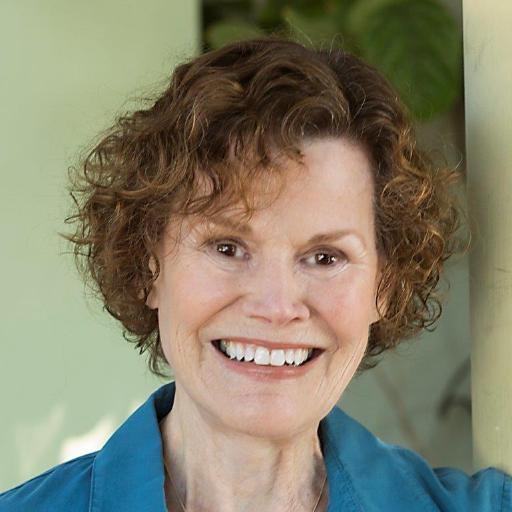
Judy Blume: No, working on the book had the opposite effect. For the first time in my life I can sleep on planes. I don’t know if it’s because the tour is so exhausting or because I have a better understanding of flying, but I’ve just been able to let go. I think the process must have been somewhat cathartic.
Still, I’ve never been a terrified flyer. I used to love getting on planes. I loved the packing and going places. Now I don’t, because I’ve developed these really bad sinuses. I have to take a prednisone to fly, but it works and I’m OK.
BNR: Speaking of anxiety, when you were promoting Summer Sisters, you kept an “anxiety diary.” You’re not doing that this time around?
JB: That was the anxiety of writing a book and having it come out and what would happen when it reached the public. That was the writer’s anxiety.
BNR: Has that eased up for you?
JB: You don’t get over that. I mean, maybe some people do, but nobody I know.
BNR: It doesn’t get any easier?
JB: No, I think it gets harder. In the beginning you don’t know anything. Early on, I had no expectations because I really didn’t know anything. I wasn’t part of any scene or group of young writers or anything like that, so I wasn’t afraid.
I think when you’re new at something and you don’t have any particular expectation, you’re so thrilled just that something’s going to be published. I didn’t know enough to worry about reviews or bestseller lists. I just loved the writing, and the idea that it was going to be published was so exciting that that was all I needed.
BNR: So what made you decide to write this book now? It’s such a ripe subject I’m actually surprised you never wrote about it before.
JB: So am I. Nobody is more surprised than I am that I never wrote about it before. I can’t explain it. When you’re a writer and you have a story like that, you tell it.
BNR: You’ve been writing other things, but it’s been seventeen years since you released Summer Sisters. What made you sit back down to write a novel for adults after such a long break?
JB: I was hit over the head with a ton of bricks by this story. This story demanded to be written. It had never demanded that before. It’s not like I didn’t know about it. I had never forgotten about it, but it never occurred to me to write about it, which again is very strange.
BNR: So there was a specific moment when you knew that you had to write the story?
JB: I was at the Key West Literary Seminar, in the audience, in January 2009, and our topic that year was New Voices in Literature. Rachel Kushner, someone most of us had never heard of then, was onstage talking about her first book, Telex from Cuba. She said, “The inspiration for writing this book came from stories my mother told me about growing up in Cuba in the ’50s.” And that’s what I heard: ” . . . in the ’50s, in the ’50s . . . growing up in the ’50s.” I thought, “Oh my god, I have a story and I have to tell it!” It came to me with — I don’t want to say everything, but it came to me in a way that nothing has ever come to me before, with characters, with three families, almost with a structure and what I knew was going to happen. I knew the ending.
It still took me five years to write. “OK Judy, if you know all that, how come it took five years to write it?” Well, because it did. It was five months of research and a long, complicated story to tell. I wanted to get it right.
BNR: Was the process of writing it different from your usual approach?
JB: I don’t know that the process was that different, except that I always make myself what I call a “security notebook,” and this time my security notebook was filled with the research that I had collected over the five months — real newspaper stories, coverage of the crashes, and that time in America. I remembered much of it, but I didn’t know all the details about the crashes. I got so much from those newspaper stories, everything from characters to scenes to just a lot. I’m so grateful to the newspapermen who wrote them.
BNR: The newspaper stories in the book were not taken directly from newspaper articles of the time, though, were they?
JB: My intention was to take them directly and use them exactly as they were, but even though the newspapers were defunct and the reporters, the newspapermen of the day, were no longer living, I still was told by my publisher that, because they came with bylines, I could not use them exactly as they were and give them another byline. I could have used them exactly as they were had I used the bylines of the real people, but because I had a fictional character who was supposedly covering the crashes and writing these stories — a major character in my book, Henry Ammerman — I needed the byline to be his. I wasn’t told this until last fall, and that was a scary moment because it’s like, “Oh, I’m not finished revising my book. I can’t possibly take this on.” That’s when my husband stepped in and said, “I can help you. I will be your Henry Ammerman.”
BNR: How did he help you?
JB: He was able to take the stories and compile a little bit from this one, a little bit from that one, still using the language of the ’50s small-town newspaper writers that was so important to me to get in — you know, “fell to the ground like an angry wounded bird,” that was real and used in the story.
BNR: How much of the book was based on your own experiences? It sounds like Miri is not you.
JB: She’s not me. No, I’m sorry. I’d love to say she is. My own experiences [when the planes crashed] were different. I was fourteen — younger than Miri, a year behind her in school. I wanted her to be as old as she could be but still be at that junior high, because what I remember best is standing in the hallways and the boys coming up with their crazy reasons to explain what was going on. Nobody knew what was going on, including the adults in the community. But as kids you make it up, and of course it has to be about you. So it seemed that because of where each plane crashed — so close to a school or, in the third crash, the field of an orphanage — that “they” were out to get the kids. We didn’t know who “they” were, so the boys came up with [those theories about] the aliens and the space ships, the flying saucers, or maybe the communists, because everything was about the communists in those days.
And the smart girls stood around saying it was “sabotage.” Sabotage is a great word, but like, OK, who’s out to get us? Who’s doing this to us? We didn’t know.
I met one of the smart girls recently in Chicago. I haven’t seen her since high school graduation. And she told me she became morbidly obsessed, fascinated by these crashes. She kept scrapbooks of everything about them. I was not morbidly fascinated by them — unless I’ve totally buried it, but I don’t really think I have — and I find that interesting too.
So no, I’m not Miri, although my father was, like Dr. O, a dentist who was called in to identify the victims. Dr. O was a fictional character, but he was inspired by a real person, my father.
BNR: Is he the only character directly traceable to a person you know or knew?
JB: I think so, yes. I never knew anyone like Natalie or Natalie’s family, really, although I’ve given them Dr. O. How lucky I gave them Dr. O. I never really knew Miri’s family, either. I knew people like that, but I didn’t know Rusty. I didn’t know Irene.
BNR: What about the people on the planes, like Ruby Granik?
JB: I knew from the time I read about the twenty-two-year-old dancer who was going to dance at the Vagabond Club in Miami who died on that plane that I wanted her as a character. I tried to keep things as real as could be, but of course I only knew she was on that plane. I didn’t know anything, really, about what happened to her once she got on that plane. I also didn’t want to lose her as a character when that plane went down, so I found a way to keep her in Natalie.
BNR: You’ve said you had been reluctant to write about the ’50s. Why?
JB: I never thought I wanted to write about the ’50s, because I thought it was the most boring and bland decade to grow up in, and I never wanted to go back there. To write about the kid that I was or the kinds of kids that we were didn’t interest me at all. I was much more interested in the younger kids when everything was new and fresh and possible. It seemed to me that the ’50s were just, meh, not the best decade to grow up in. Then here I found all this stuff about what was going on. It was a world of secrets, and adults and kids didn’t communicate very well.
BNR: It seems to me the book is not just about plane crashes, but about growing up and aging and coming to terms with our younger selves and our own foolish mistakes, as well those made by the people around us.
JB: The plane crashes are the background for these fictional families — but I like what you just said. I’m not good at talking about what books are about. I let other people do that because I just know the people. I’m writing about the people and involved with their lives. But I think it’s about the unlikely events that are good, too. Just as Miri tells the little girl on the plane, Lily: Some unlikely events are good, like meeting her on the plane. I mean that is what life is, isn’t it? It’s just a series of unlikely events, and we don’t know what’s going to happen and we just have to keep moving on and going with it and doing the best we can do.
BNR: You say you don’t think about the messages that you are putting out, but so many generations have grown up reading your books — I did and now my children are. Do you feel a sense of responsibility about the characters that you’re bringing out and the messages in your books?
JB: Yeah, but that’s a dangerous place to be as a writer. I mean, when I’m not writing I’m incredibly grateful for and appreciative of everything you just said, but when I am writing, if I let myself go there and start thinking about what am I telling my audience, I don’t know.
I’m an optimistic person, so I like to leave my readers with a sense of hopefulness. I may not always tell them everything that happens to my characters, but in this book I wanted to know what happened to everyone, so for once I was able to share that with my readers.
BNR: You spoke with many of the victims’ families, right?
JB: Yeah, many of them, and on my tour, oh my god, they just came out from everywhere in every city. The one that was the most exciting was — I don’t know if you remember this — but in the third crash there was a teenage girl named Cele Bell. She was going to Miami with her mother. She survived that crash, but she wouldn’t leave the plane without her mother, who was unconscious and stuck underneath the seat. She got her mother free and later was interviewed for the paper. She was asked, “Will you ever fly again?” and she said, “Yes, I want my vacation in Miami Beach.” Cele Bell came to Paramus — a lovely, tall, straight eighty-one-year-old woman — and I asked her did she ever get to go to Miami on her vacation, and she said, “Two weeks later.”
So that was a real thrill to find. Because I never expected to hear from anybody I actually wrote about by name.
BNR: What a lesson in resilience.
JB: Yes, but families who were affected by these crashes, it becomes part of the family lore. You never get over it. They all had yellowed newspaper stories. One story you may not remember from the book — Venturini and Griffiths, two guys who were going fishing. The flight attendant made them change their seats at the last minute, which saved their lives, and then Venturini pulled Griffiths out of the plane. Venturini went on to open a restaurant near Paramus, New Jersey, and this restaurant is now run by his grandson. They have photos from the crash and an actual piece of that National Airlines plane hanging in the restaurant dining room. They had me sign the front cover of my book because they were going to put that up in the restaurant, too. We promised to come see it sometime. There were a lot of people whose lives were affected.
BNR: What happens after you finish the tour? Will you take some time to recuperate, or are you already working on something else?
JB: No, no, no, no! How can I be working on anything? I barely finished this book.
BNR: A lot of the coverage of the book has been sort of lifetime-achievement-awardish and valedictory, and I wonder how you feel about that.
JB: I know! I’m good — very, very, very good. I’ve never had such good reviews in my life, and I of course did spend two seconds asking myself, “Wait, wait, am I getting these reviews because I’m seventy-seven, or do they really like the book?” I decided to go with “they really like the book.”
But the coverage, I agree, is lifetime achievement. I’m never doing it again, so that’s fine. I mean, I’m never writing another long, complicated 400-page book. As far as I know now, that’s not what I plan to do, for the next five years.
BNR: I like all the carefully constructed caveats. You left yourself a lot of wiggle room there.
JB: Oh, you know I change my mind every time somebody asks me. I mean, I said it after Summer Sisters: “I’m never doing this again.” And I meant it when I said it. But then this one hit me over the head. It was very exciting to have a story like this to tell. I needed to do it, but I don’t think I’ll do this again. I’m not saying I’ll never write, because the creative juices are running just as — however creative juices run; you can decide that yourself. Do they run hot? Do they run fast?
BNR: Swiftly, maybe?
JB: Yes. They’re still running. But as far as now, I’m just going to take time off. I really, really need a break. After the U.K. tour, we have a month in Santa Fe, where I’ve been working for two summers 24/7. This summer it will be nice to be there and not have to work for a change.
BNR: I can imagine. What about your anti-censorship efforts? Are you still involved with that cause?
JB: Yeah. NCAC [National Coalition Against Censorship] is very dear to my heart. They’re talking a lot about trigger warnings right now, and I’m right there with them.
BNR: Trigger warnings?
JB: At colleges, some students are asking for what they call trigger warnings, like, “I want to know if there’s anything in this book that might make me uncomfortable before I ever read it.” This is college, where we’re supposed to be learning and challenging ourselves and others. It’s crazy.
Just when you think, well, this could never happen again [Blume’s books have occasionally been banned or “challenged” in schools and libraries by those who object to her frank approach to sex and other topics], there’s something new. And you think, what are these people thinking? What is wrong with our students who think they have to be warned before they read a book because there could be something in it that makes them uncomfortable? We’re supposed to be uncomfortable when we read something. That’s how we learn.
BNR: Maybe helicopter parents have passed their concerns on to the next generation.
JB: Maybe so. I certainly did have two very interesting experiences at different events. At one a young girl got up — she must have been nine years old — and asked me why the turtle had to die in Tales of a Fourth Grade Nothing. She was very, very upset. Now, I wrote that book in the ’70s. I never heard from one kid who was upset that way, and now it seems to be something that’s going on all the time. “Don’t you know turtles have feelings, too? Don’t you know that that wasn’t being kind to an animal?” It was actually a true story from the newspaper. This little toddler who swallowed one of those tiny little turtles — that’s where the idea came from. But she asked me why did the turtle have to die in front of like 700 people. And so I said, “Well, did it make you sad?” And she said, “Yes, very sad.” And I told her that I was sorry that it made her sad but that the doctors were trying to save Fudge and in order to save Fudge they had to use laxatives to get the turtle out and the turtle just wasn’t able to survive that. I don’t know what I said. Later I read a tweet from her mother that said, “My daughter will never read another book by Judy Blume.” And I thought, “OK, mom, now we see where you’re coming from and why your daughter was so upset that night.”
And then at another place I had a mother get up — a very charming woman who had two little boys. She said, “Tell me if this was censorship. When I was reading my children Tales of a Fourth Grade Nothing, I came to the chapter where their dad is in charge for the weekend because mom has gone away to help out Linda with the new baby. I decided, when I saw that Dad did not know how to cook or do the dishes, not to read my children that chapter. I just skipped it. Is that censorship?”
And I said, “Well, no, that’s your decision, if you don’t want to read your kids that chapter, but frankly I think you’d have done better reading it to your kids and then laughing with them about that dad and how he didn’t know how to do any of those things.”
And she said, “Well, I just didn’t want them to know that there were men who couldn’t cook or do the dishes.”
So you have both ends going on here.
BNR: Yet people do learn from your books. I did. My children are. In fact, one rather wonders how the generations that grew up before your books learned anything.
JB: We learned a lot of wrong information, and we didn’t learn the right information for a very long time, which is why a lot of my generation wasn’t able to tell their kids — who are your generation — a lot. They didn’t know how because they didn’t even know it themselves. There was some study about asking men what is a uterus and how few men of a certain generation were able to answer that question.
But if you want your kids to read the books, if you want them to like the books that you read when you were kids — and this does not have to do with my three-cent royalty or anything else — you’ve got to give them new covers so it looks cool. The books that Mom read and loved at a certain point, they don’t want that because it doesn’t look cool to them. They’ll stay with it for the Fudge books because that’s fun, the family can share that, but after that, when they start to get more personal, no.
Leave those books around the house and then, I tell parents, every once in a while say, “I don’t think you’re quite ready for that one,” because that’s a sure way to get them to read them.