


 Order History
 Premium Membership & Rewards
 Help Center / FAQ


The Charge to Be Fair: Ta-Nehisi Coates and Roxane Gay in Conversation

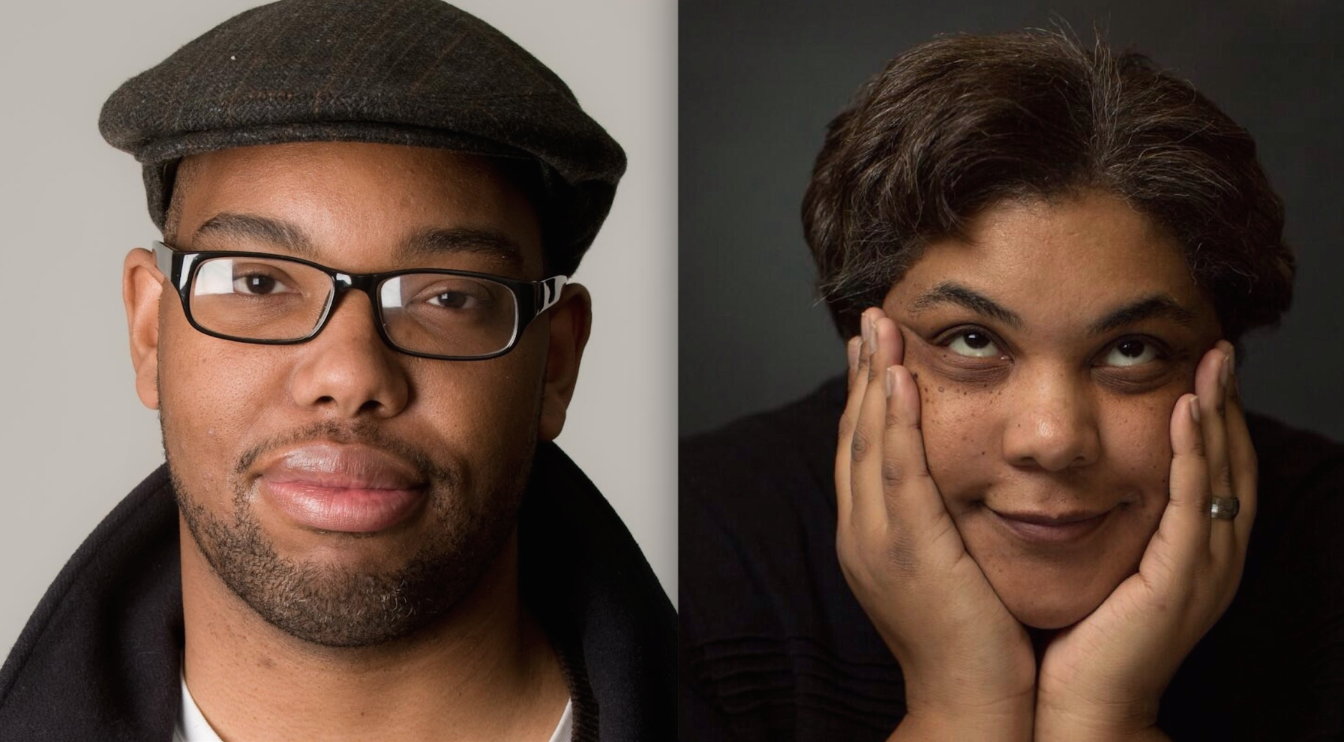
As 2015 draws to a close, we’re revisiting some of our favorite pieces from this year’s Barnes & Noble Reivew, including this revealing conversation from August between writers Ta-Nehisi Coates and Roxane Gay, about Coates’s electrifying new book Between the World and Me. — The Editors
Ta-Nehisi Coates has been heralded by some as the heir to James Baldwin. Like Baldwin, he writes about race with a fierce passion, and the urgency that can only be captured by living within a black body in a place and time where the black body is endangered. Yet it may be fairer to say Ta-Nehisi Coates is unique. While he may be an heir to predecessors like Baldwin, he is also carving his own path and establishing his own voice.
Coates is the author of two memoirs — The Beautiful Struggle and the recently released Between the World and Me. He also serves as a national correspondent for The Atlantic, where he writes about race and culture while curating one of the most interesting, and dare I say, thoughtful comment sections online. His award-winning 2014 essay, “The Case for Reparations,” is a searing argument for reparations as a means of addressing the moral debts of slavery, segregation, and discriminatory housing practices.
Like all black intellectuals — like all intellectuals from underrepresented groups, really — Coates is forced into a difficult position in which he is expected to be many things to many people. He carries the expectations of a great many people who are not accustomed to having their experiences — or something akin to their appearances — voiced.
In Between the World and Me, Coates writes a letter to his son on living with a black body that faces too many dangers. He writes about the fear that black parents have, and the ways in which that fear shapes how they raise and discipline their children. From his childhood in Baltimore, to “The Mecca” of Howard University, to the early years of parenting his son, Coates examines the black man’s place in America, and how he grew into a father raising his son to be whole and confident when “The entire narrative of this country argues against the truth of who you are.”
Coates and I had a great conversation via email, where we discussed Between the World and Me, the rhetoric of the black body, and what it takes to discuss race in a culture that makes such discussions so contentious and, at times, seemingly impassable. —Roxane Gay
Roxane Gay: How are you handling the book’s amazing reception so far?
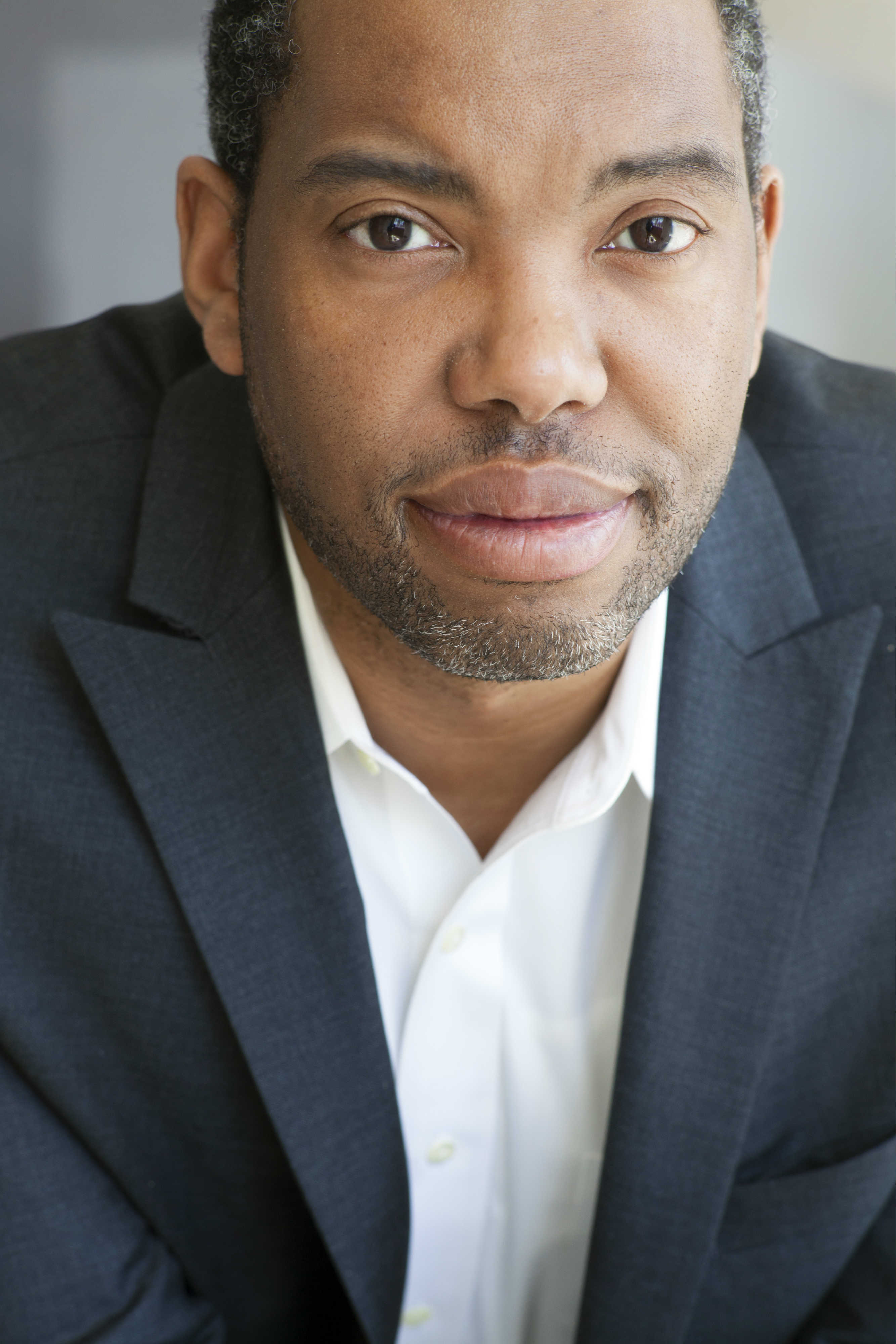
Ta-Nehisi Coates: It’s a bit overwhelming. I mean, you know about this. When you write, you’re inside the project. You can’t really think about the reception. It has to be worth it even if no one reads it. So I’m shocked. I was not prepared.
RG: Has your son read this book yet? What does he think?
TC: Yup. In draft. And then in galley. He was very proud.
RG: How do you handle such lofty comparisons like those, for example, to James Baldwin?
TC: I think that bothers other people a lot more than it bothers me. It’s fairly clear there will not be another Baldwin. I take a great deal of inspiration from his work. I think Toni Morrison’s opinion is an opinion for one book. It is not a guarantee on the next book.
RG: In Between the World and Me, you center much of the discussion on the black body. What compelled you to make this rhetorical choice?
TC: There is tendency in academia and in (some) social justice circles to make that which is oppressive distant and abstract. We use a language, which at times obscures what’s going on -– racial discrimination, racial segregation, racial justice, etc. This sort of language eliminates the actual actions of actual people. It was deeply important to me to situate racism as a done thing: as a thing you actually feel. I should add that in my stripe of atheism, it’s very hard to see beyond the body. There is a tendency to adopt euphemism when confronted with the very real violence that comes with having a foot on your neck.

RG: One of the strongest critiques I’ve seen of Between the World and Me is that black women don’t figure as significantly as black men. At the same time, this is one of those critiques we often see toward writing about difference — that a given text needs to be everything to every one. Is it your responsibility to center black women in a work that is memoir and a letter to your son?
TC: I’d say that Between the World and Me is a personal essay in three parts. It can’t really be a history of pain and struggle. I don’t want to get into a citation war here, but there is the threat of rape and how my grandmother communicates that danger to my mother. There is the enslavement, personalized, and rendered through a black woman’s eyes. There is the incredible work of historian Thavolia Glymph on the specific violence done to black women, undergirding (and cited) my understanding of enslavement.
But even with that I’d accept that this a story told through a black man’s eyes, through his lens. That has some effects. I’ve been saying that what we need is more books by black women, but I don’t know that that quite gets it. The two endorsements I’m most proud of come from Isabel Wilkerson and Toni Morrison. The latter is the greatest American fiction writer of our time, and the former is on her way to being the greatest American nonfiction writer of our time. There is the work of Thavolia Glymph. There is the work of Kidada Williams. There is the work of Paula Giddings. There is the work of Natasha Tretheway. And of course there is you.

Ships in 1-2 days.
All of these writers are different — and not simply in genre but in their actual interest and approach. Their work represents something larger, even as it is — must be — the reflection of individuals. I say that to say, there can’t really be a black women’s version of Between the World and Me because there really isn’t a black man’s version of it. There’s Ta-Nehisi’s version of it. And that is necessarily, individual, and limited. Ultimately, I suspect that maybe this isn’t about the book, but how certain people — most of them white — have received the book. I don’t know what to say or do about that. I write my truth. How white people react is not in my control, and thus can never be in my consideration.
RG: What do you see as your responsibilities as a writer?
TC: I guess I feel charged to be “fair” to people. I feel some need to represent where I’m from. But ultimately I think my only real responsibility is to — as much as possible — interrogate my own truths. This is to say not merely writing what I think is true, but using the writing to turn that alleged truth over and over, to stress-test it, in the aim of producing something readable.
RG: Discussions about race, particularly in mixed company, are often combative and contentious. How the hell do we talk about race?
TC: No idea. I just try to communicate with as much honesty and respect as possible. I think we should not forget that a not so insufficient portion of this country sees it as in their interest to disrupt and marginalize such discussions. Everyone isn’t convince-able.
RG: Do you have an intended or imagined audience when you write about race?
TC: I think a lot about the private emotions of black people — what we feel and yet is rarely publicly expressed. I guess in that sense, the audience is black people.
RG: How can allies best serve as allies? What is an ally? Are they needed?
TC: I don’t know. I think it’s probably terribly important to listen. It’s terribly important to try to become more knowledgeable. It’s important to not expect that acquiring of that knowledge — in this case of the force of racism in American history — to be a pleasant experience or to proceed along just lines. They certainly don’t proceed that way for black people. It’s going to be painful. Finally I think one has to even abandon the phrase “ally” and understand that you are not helping someone in a particular struggle; the fight is yours.
RG: What books have made you into the man you are?
TC: Oh God, Roxane, where to begin: Jonah’s Gourd Vine. Battlecry of Freedom. American Freedom, American Slavery. Mothers of Invention. The Forever War. The Great Gatsby. Postwar. The Country Between Us. Quilting. The Book of Light. Where the Sidewalk Ends. Slaughterhouse-Five.
So it goes. LOL.
RG: How did you develop your voice and confidence in your voice?

The Beautiful Struggle: A Father, Two Sons, and an Unlikely Road to Manhood
Ta-Nehisi Coates
5
Paperback
$20.00
Ships in 1-2 days.
TC: I don’t really know. I just write a lot. I don’t think there’s much point in writing if you’re doing it in someone else’s voice. It just kills the fun.
RG: It seems like every week, if not every day, we have a new tragedy to mourn. Do you ever feel like it is all too much? What do you do in those moments?
TC: No. Never. This has always been life. And I suspect it will always be my life. I know we’re in this new moment where it seems like the police have suddenly gone crazy. But police violence is not new and it is only the most spectacular end of a range of violence black people live under.
RG: What are you asked too often? What do you wish more interviewers asked you and how would you answer that question?
TC: Why don’t I have “hope.” I don’t know. I don’t have a preference re: questions. I just want people to really read the work before talking about it.
RG: What’s next for you? How is that novel coming along?
TC: It’s coming.
RG: What do you like most about your writing?
TC: The actual doing it. It is a beautiful thing to have a feeling, a notion and then transform it into something tangible. It’s like being in the X-Men.