


 Order History
 Premium Membership & Rewards
 Help Center / FAQ


Why Orphan Black’s Clone Club Make Excellent YA Role Models

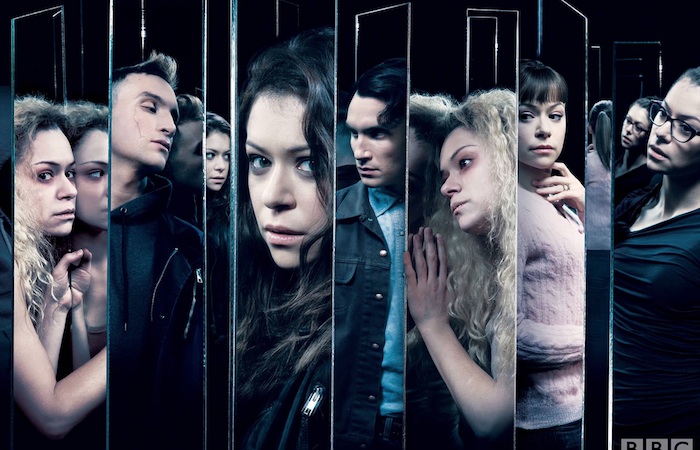 A recent New York Times profile on Orphan Black star Tatiana Maslany reflects that her masterful portrayals of Project Leda’s disparate clones represent a range of female TV archetypes, from Desperate Housewives to a European horror story to a police procedural. I’d like to argue that the members of the Clone Club also embody many of the archetypes observed in YA novels: the scrappy fighter, the schemer, the girl struggling not to be defined by physical or mental illness. Ever since they learned about their status as clones, Sarah, Alison, Cosima, and Helena have continually faced the kind of existential fear that starts in adolescence: that you’re just like everyone else, you’re not unique. Add to that the fact that they’ve discovered they’re technically the property of the Dyad Institute, who created them, and you have to admire them for not falling apart.
Credit that resilience to accepting their physical similarities and embracing their odd but undeniable sisterhood. (The Clone Club’s destressing dance parties are also key.) Last week, Eric Smith recommended five YAs for Orphan Black fans written from the perspectives of manipulated clones. Now let’s move beyond the shadow of the Dyad Institute and examine how the feats and flaws of each woman make her an unforgettable role model. Since we’re talking about sisterhood, I’ve found some YA heroines who share the Clone Club’s best qualities.
Sarah Manning
Tough. As. Nails. While Sarah is scrappy enough to survive as a con artist before the events of Orphan Black, it’s her responses to the surreal situation into which she’s thrust that are the true measure of her strength and ingenuity. Every twist the Dyad Institute throws at her, Sarah fights her way out of. To that end, Sarah has proven herself to be an adept chameleon, taking on the personas of her sisters as needed. (Sarah-as-Rachel in the season 3 premiere was so fascinating to watch!) This ability to shift between identities brings to mind Tris Prior, whose Divergence allows her to embody the qualities of various factions in the Divergent series. But Sarah’s strongest identifying trait is her fierce devotion to her daughter, Kira—the kind of loyalty we also admire in the strong, independent Laura from beloved book The Changeover, and A Wrinkle in Time‘s Meg Murry, empowered by love.
Alison Hendrix
While she’s the clone most prone to emotional histrionics, housewife Alison has proven she shares her sisters’ steeliness when confronted with both meddling Dyad operatives and mommy frenemies. Her ability to navigate the social niceties of suburbia reflects the court politics that face young noble Meliara Astiar in Crown Duel. Moreover, the fact that Alison fits very comfortably in the role of homemaker doesn’t mean she takes any crap from the men in her life. Like the titular heroine of The Disreputable History of Frankie Landau-Banks, who starts a prank war with her boyfriend’s all-male secret society, Alison insists on being on equal footing with her husband (and monitor) Donnie.
Cosima Niehaus
As the only queer clone among the main cast, Cosima’s sexual orientation is neither an abnormality nor an obstacle: It’s simply part of who she is, like the weirdo-liberating Jessie from The Difference Between You and Me. The brightest member of the Clone Club, Cosima is in charge of unraveling the mystery of their genetic code. Her hours in the lab spent poring over slides conjure up images of Harry Potter‘s Hermione Granger going through ancient magical texts to uncover prophecies and spells. Unfortunately, she shares Hermione’s penchant for keeping secrets, like her copy of The Island of Dr. Moreau (filled with Ethan Duncan’s cipher notes in the margins). Whether this will hurt or harm her in season 3, we have yet to discover. Since season one, Cosima has also been defined by her potentially fatal illness (shared with another clone, Katja), for which she is trying to find a cure. Like The Fault in Our Stars‘ “grenade” Hazel Grace Lancaster, more than once Cosima has been forced to face her own mortality. But her sisters’ support—and a bone marrow transplant from Sarah’s daughter, Kira—keeps Cosima fighting, her brain never failing her even as her body threatens to.

Ships in 1-2 days.
Helena
Like Cosima, Helena is marked by tragedy: Brainwashed by the cult of the Proletheans into murdering her seestras, she has started the slow process of rewiring her brain chemistry and trusting her fellow clones. Helena’s tendency to get very attached (especially to her twin, Sarah, and niece, Kira) is reflected in Kippy Bushman, the misunderstood protagonist of No One Else Can Have You, who often has a disconnect between her good intentions and how they are put into action. But even at her most well-meaning, Helena is still dangerously unhinged; this is a woman who has a childish sweet tooth and a snarky scorpion spirit animal hallucination. Helena’s constant struggle against the nurture that turned her into a ruthless killer is not unlike cult leader’s daughter Harlowe fighting her own bloody compulsions in The Violet Hour.