


 Order History
 Premium Membership & Rewards
 Help Center / FAQ


5 Books That Give Old Legends a New Spin

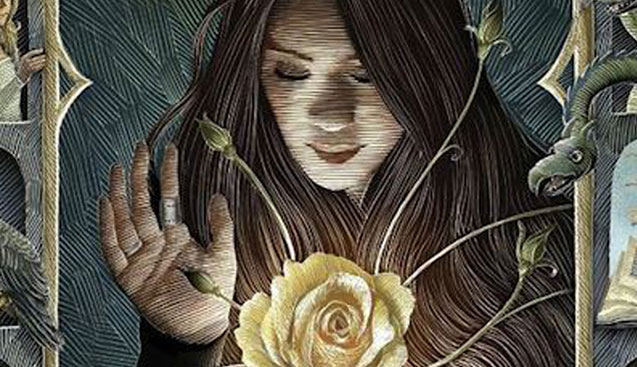 Myths and legends are a keystone of any culture, and certainly of genre writing—the new stories that draw from history, the older ones that have stood the test of time. Fantasy and sci-fi allow us to examine and remix these stories into new forms, update them with contemporary mores, or alter them until they are near-unrecognizable. Here are five stories that take their inspiration from myth and legend.

The Bloody Chamber: And Other Stories: 75th-Anniversary Edition (Penguin Classics Deluxe Edition)
Angela Carter
Paperback
$17.00
Ships in 1-2 days.
The Bloody Chamber, by Angela Carter
Noted feminist and fabulist Angela Carter decided to retell and recontextualize classic fairy tales in her own unique manner, and the result was The Bloody Chamber, a collection of sensual, sometimes violent tales, including a version of “Little Red Riding Hood” that involves werewolves, a modern update of “Beauty and the Beast,” and riffs on other classic legends. Carter’s mastery of the fantastic form is unmatched, and the way she plays with fairy tales (her take on “Puss in Boots” as “the ultimate cynical story about cat as con man” is inspired) creates stories that stand on their own, well beyond their fairy-tale trappings. The book was recently released in an edition commemorating the author’s 75th birthday, with an introduction by the similarly incomparable Kelly Link.

Ships in 1-2 days.
Two Years Eight Months and Twenty-Eight Nights, by Salman Rushdie
Much of Rushdie’s work is anchored in myth, but his most recent novel pulls from it directly, the title even riffing on The Thousand and One Nights. Drawing from the middle eastern stories of the jinn, a race of powerful spirits with godlike powers, Rushdie weaves a series of interlocking tales involving a jinn princess named Dunia, her romance with a disgraced human philosopher, and their children, whose powers awaken thousands of years later after a mysterious storm hits present-day New York. This sparks off a war between jinn and Dunia’s ancestors that will last a thousand-and-one nights, or two years, eight months, and twenty-eight nights. While there are modern touches, Rushdie’s prose keeps close to its inspirational texts as it moves from its ancient beginnings to post-storm New York, and even further in the future.

Ships in 1-2 days.
The Girls at the Kingfisher Club, by Genevieve Valentine
Genevieve Valentine’s second novel revamps the fairy tale “The Twelve Dancing Princesses,” setting it during the Jazz Age, when the role of women in America was expanding due to sexual and political revolutions. “General” Jo Hamilton and her eleven sisters sneak out of their father’s palatial house every night to dance their evenings away at the Kingfisher Club. Valentine could easily have penned straight retelling, only transposing the setting; instead, she breathes life into the plot by imbuing the characters with their own agency and motives. Characters that seem stock at first gain deeper motivations as the dance continues, and the twelve central characters refuse to be defined by any single personality trait.

Ships in 1-2 days.
The Snow Queen, by Joan D. Vinge
While this epic science fiction novel takes some of its cues from the classic fairy tale “The Snow Queen,” it only uses it as a framework for a much larger, deeper, and more complex story. On the planet of Tiamat, a place that fluctuates between a long summer and equally long winter (with two civilizations, one rudimentary and one technologically advanced, who rule over each season), a young woman named Moon is named a kind of seer known as a sibyl. This choice has far-reaching consequences, as Moon turns out to also be the clone of the Winter Queen, who wants her to take the throne, upend tradition, and preserve her rule. Vinge does an stunning job building this world, not just outlining the culture and customs of the two peoples, but also that of the Hegemony, a crumbling former empire that spanned galaxies. It recently made its way back into print in a new 35th anniversary edition, giving those curious a chance to rediscover a sci-fi classic.
Uprooted, by Naomi Novik
Naomi Novik takes the basic idea of a fairy tale (in this case, a crossbreed between the legends of dragon sacrifices and “Beauty and the Beast”) and reconstructs it simply by adding depth. A powerful wizard known as the Dragon protects the surrounding lands from the corrupting influence of the Wood, but at a price— once every ten years, he chooses a young woman from a nearby village to live with him. While Agnieszka and her friend Kasia are sure Kasia will be the one chosen, the Dragon picks Agnieszka after she displays some acumen with magic. What starts out as a fairly simple story twists and turns, becoming something much darker and stranger the more you thinks you have the measure of it. It also serves as a discussion of an entire genre’s worth of tropes along, and gives the nameless forest settings of most fairy tales a tangible place and a form.
What’s your favorite example of a legend reinvented?