




 Order History
 Premium Membership & Rewards
 Help Center / FAQ


The Real Lolita

Very few sentences in Vladimir Nabokov’s Lolita have gone unnoticed in the 60-plus years since the novel’s publication. As it turns out, though, at least one of them might have repaid more scrutiny. Musing late in the day about the nymphet whose childhood he’s destroyed – and let’s not forget that “nymphet” is Humbert Humbert’s own, self-serving coinage, making Dolores Haze complicit in if not culpable for his depradations – our unsavory narrator oddly wonders, “Had I done to Dolly, perhaps, what Frank La Salle, a fifty-year-old mechanic, had done to eleven-year-old Sally Horner in 1948?”
The question is notably lacking in Humbert’s usual stylistic fun and games, almost encouraging your eye to glide to something more rococo. But anytime he calls Lolita “Dolly,” it’s a paradoxical reminder that his toy was a real human being. That ought to put self-respecting Nabokovians on their mettle, considering that no other writer was so good at inveigling his readers into chasing down every last bit of authorial mischief he buried in plain sight. So let’s get to work, shall we?
A vaguely lewd but bouncily all-American monicker like “Sally Horner” sounds like a refugee from the celebrated list of Lolita’s Ramsdale schoolmates, mandating a quick backward riffle through the novel’s pages to ensure she’s not included in it. Or maybe we’re meant to deduce that Sally’s nursery-rhyme sibling, Little Jack Horner, is hovering nearby. If so, it’s a pretty coarse allusion in this context, but doesn’t the novel feature other examples of expertly concealed vulgarity – for instance, Lolita’s Beardsley profs, Miss Horn and Miss Cole?
As for “Frank La Salle,” that one’s much easier, even aside from “La Salle’s” spooky but easily missed echo of “Sally.” His monicker is an almost obtrusively obvious reference to the 17th-century French (i.e., Frankish) explorer of the same last name, prefiguring another European invader out to despoil this “lovely, trustful, dreamy, enormous country” — as Humbert calls America at his creator’s most besotted with the place. At least a dozen U.S. and Canadian municipalities are named after the original La Salle. So was a luxury car GM used to make. A Rand McNally connoisseur and anxious student of highway rear-view mirrors like H.H. would have known that, of course.
As Nabokov Studies versions of whack-a-mole go, the foregoing spoof analysis could probably fool most academics. The only problem with it is that it’s pure balderdash , though Nabokov might not have minded the fortuitous associations conjectured above. But the reason they’re fortuitous is that Sally Horner and Frank La Salle both existed. By 1950, which was around when Nabokov buckled down to Lolita in earnest, La Salle was in prison for kidnapping. Sally Horner was looking forward to minting some kind of normal life as an American teen after her 21-month abduction.

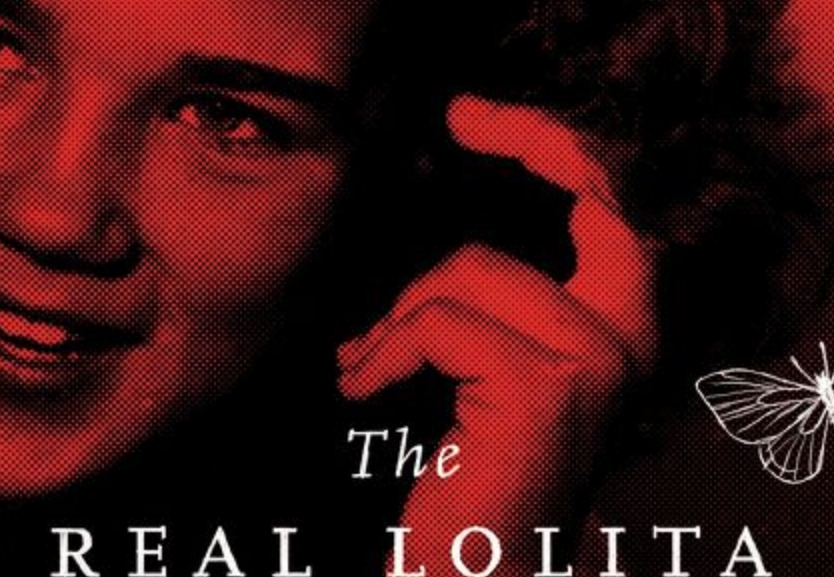
The Real Lolita: The Kidnapping of Sally Horner and the Novel That Scandalized the World
Sarah Weinman
Hardcover
$27.99
This item is currently out of stock online.
That hope turned out to be sadly abbreviated. Sally was killed in a car crash at age fifteen, leaving her forever unaware of and mute about the novel that immortalized her very soon afterward. She would have reached voting age around when Lolita became a bestseller, and she’d only be in her very plausible eighties today. In other words, in at least one of her dimensions, Humbert’s toy was a real human being.
Rescuing Sally from purely literary fame is the motor that drives Sarah Weinman’s The Real Lolita: The Kidnapping of Sally Horner And The Novel That Scandalized The World. Weinman succeeds at her most important task, which is to make sure we’ll never think about Lolita or Lolita again without sparing a thought for Sally Horner. Not to mention recognizing that Humbert Humbert, minus his “fancy prose style,” was and is every bit as creepy and horrible as Frank La Salle – who really was a 50-year-old mechanic, incidentally. Humbert’s peculiar aside even gets the year he abducted her right, interestingly suggesting that Nabokov meant to pack in as many of the case’s specifics as possible.
It was in March of 1948 that La Salle, newly out of jail after doing time for check-forging and statutory rape, spotted Sally swiping a five-cent notebook on a dare in a Woolworth’s in Camden, New Jersey. He told her he was an FBI agent and threatened to arrest her before saying he’d spare her from the reformatory for now if Sally agreed to “report” to him occasionally. Three months went by before La Salle intercepted the fifth-grader on her way home from school.
Still posing as an FBI man, he instructed her to talk her mother into letting her come with him to Atlantic City. Sally was to fib that he was the father of two school friends of hers and she’d been invited to join them on a family vacation.
Why Ella Horner agreed to this after a friendly chat with La Salle on the phone, not even a face-to-face meeting – she only glimpsed his silhouette on the bus taking Sally away — is a mystery that Weinman can’t plumb to her own satisfaction. Ella had barely been making ends meet since Sally’s father’s suicide when the little girl was six. Either she didn’t mind the idea of Sally being off her hands for a week or else she genuinely wanted her to have some fun for a change. The week had stretched into well over a month before Sally’s occasional phone calls and letters stopped for good and the light bulb went on: “I don’t think my little girl has stayed with that man all this time of her own accord.”
That got the Camden police involved at last. But La Salle and his victim had decamped from Atlantic City by then. And in some haste, leaving behind clothes, unmailed postcards, and a chilling snapshot – presumably taken by the kidnapper — of Sally in her Sunday best on a swing, her expression conveying “a mixture of fear and a bottomless desire to please,” as Weinman accurately puts it. Every photograph of Sally Horner reproduced here is haunting, but none more so than this one. The contrast with Sue Lyon’s saucy, knowing glance over her heart-shaped sunglasses in the famous poster for Stanley Kubrick’s screen version of Lolita couldn’t be more brutal.
Kidnapper and victim had moved on to Baltimore. According to Sally’s later testimony, that was where La Salle began raping her regularly. Then and later, he knew he couldn’t keep her out of school without arousing suspicion, especially since he was claiming to be her (divorced, then widowed) father – just as Humbert would during his and Lolita’s peregrinations. Despite having no known religious affiliations, he invariably enrolled her in Catholic institutions, and Weinman makes a harsh guess as to why. “Perhaps La Salle saw parochial schools for what they were: a place for complicity and enabling to flourish,” she writes. “A place where no one would ask Sally Horner if something horrible was happening to her.”
Weinman has to speculate about a good many other things besides La Salle’s choice of schools. (Her dogged reconstruction of what an average day in Baltimore might have been for Sally, based mostly on her probable route to school and back, is especially heartbreaking in the sheer tenacity of her gumshoeing guesswork.) All the principals are dead, leaving her to make the most of her few subsidiary witnesses, including the daughter of Ruth Janisch, the woman who finally coaxed Sally into revealing the truth about her relationship to her “father” in yet another trailer park in San Jose. Weinman also finds the woman who became Sally’s best friend in high school after her rescue, and, more unsettlingly, La Salle’s real daughter, who reconnected with him during his final year in prison.
Weinman tells all of their stories too, expanding on their connection with Sally to create thumbnail sketches of a whole series of overlooked lives and disturbing family memories. At times, the surfeit of sideshows reads like the padding that, at one level, it undeniably is. Far more often, however, you end up as fascinated as The Real Lolita’s author evidently was by these multiplying, Nabokov-negating glimpses of bedraggled Americans in a not especially lovely, trustful, or dreamy country – luckily for Humbert, we still do “enormous” pretty well — that alternates between seeming as extinct as the dodo and unexpectedly previewing the U.S.A. we live in now.
That’s especially true of the 1949 shooting spree in Camden that left 13 people dead the year after Sally’s abduction. Weinman sees this forgotten massacre as “the inflection point between progress and backlash, hope and despair, promise and decline” that eventually transformed Sally’s prosperous, upbeat hometown into a place she wouldn’t recognize today. Launched by the sort of unrepentantly blank-faced sociopath we’re now all too familiar with, that 1949 mass shooting is the best evidence for her contention that “a singular evil can become all too mundane” – something obviously true of Sally Horner’s fate, and much else besides.
All this, nonetheless, takes us far afield from Sally Horner’s (and Frank La Salle’s) connection to Lolita. Weinman’s interpolated chapters on Nabokov’s activities in the late 1940s and early 1950s feel a bit makeshift, partly because their content – unlike Sally Horner’s story – is already familiar to the great man’s fans. Here he is yet again, teaching at Cornell, taking hither-and-yawn butterfly-hunting trips in the Tetons and elsewhere, and writing the first version of Speak, Memory even as his most famous novel’s birth pangs get underway.
Nowadays, the vexed question of Nabokov’s preoccupation with pedophelia as a literary subject – a theme that cropped up from his earliest poems and stories onward, and unpleasantly recurred even after Lolita’s presumed last word on the subject – is a fairly familiar one too. Weinman doesn’t shed much new light on it. For her purposes, the only two questions that matter are when Nabokov first learned about Sally Horner and how that knowledge affected Lolita’s conception.
In fact, there’s no firm proof he knew anything about her before August 20, 1952, which is the date on a Lolita notecard – one of the relative few he didn’t destroy, incidentally — that transcribes a wire-service report of Sally’s gratuitously premature death. Lolita would have been well on its way to completion by then, making Humbert’s mention of Sally and La Salle a virtual afterthought. Yet enough of the real case’s details resurface in the novel – the father-daughter imposture, the reformatory threats to keep the victim in line, the cross-country travels, even the duration of Lolita’s and Sally’s respective captivities – to make it infinitely more likely that Nabokov had come across and been inspired to make use of Sally’s story much earlier than that.
One complication is that he always claimed he composed his novels out of sequence, so we have no way of knowing when he wrote which parts of this one. But it’s tempting to imagine that he was stumped by what to do next with his nymphet and her tormentor after Charlotte Haze’s death. What if La Salle and Sally’s skittish scramble across the U.S.A. gave him the idea for Humbert and Lolita’s much more elaborate and phantasmagoric car journeys in Part Two of Lolita? One of Weinman’s shrewdest notions is that the 1952 news story provided Nabokov with his denouement, since Lolita, too, dies terribly young – albeit in childbirth, not a car wreck.
As Weinman acknowledges, because it’s one more piece of the puzzle, The Real Lolita isn’t the first time these links have been investigated in print. Nugget magazine ran a piece establishing the connection as early as 1963, prompting a New York Post reporter to write to Nabokov directly to ask about it. He got a predictably airy denial that Sally Horner had inspired the novel, no less predictably written by gatekeeping Vera Nabokov rather than her aloof husband. Yet that doesn’t explain why, among “the considerable number of case histories” he supposedly studied, only Sally’s was important enough for him to embed her in the text, virtually guaranteeing she’d be rediscovered someday.
Subsequent biographers and scholars explained Sally Horner’s Lolita cameo in passing, but without doing the spadework that would have led them to realize how close the parallels between her story and Lolita’s actually were. Virtually the only exception was Nabokov specialist Alexander Dolinin, who gets full credit from Weinman for laying out the basic similarities in a 2005 article. What makes her approach unique, however, is that she’s the first writer on the subject to care more about the real little girl than the fictional one.
It irritates her that Sally Horner’s life has gotten “lost in the need for artistic license” and been reduced to a literary footnote. “The abuse that Sally Horner, and other girls like her, endured should not be subsumed by dazzling prose, no matter how brilliant,” she scolds us – and, by implication, Nabokov – early on. Yet one paradox Weinman doesn’t grapple with head-on with in her uneven but ultimately moving act of humanist revisionism is that it’s only because of Lolita that she, or anyone else, ever learned about Sally Horner at all. That’s what’s enabled her to turn Dolly Haze’s original into a stand-in for the myriad other real-world victims of long-ago pedophilia whose names truly are lost to us forever.
She wants us to remember Sally, and The Real Lolita all but guarantees we will. But in his recondite way, Nabokov plainly didn’t want her to be forgotten either. He put her in his book, adding an unexpected and poignant new dimension to Humbert’s famous conclusion: “And this is the only immortality you and I may share, my Lolita.”